Rideshare Accident Lawyer: Uber, Lyft & Delivery Claims (2026)

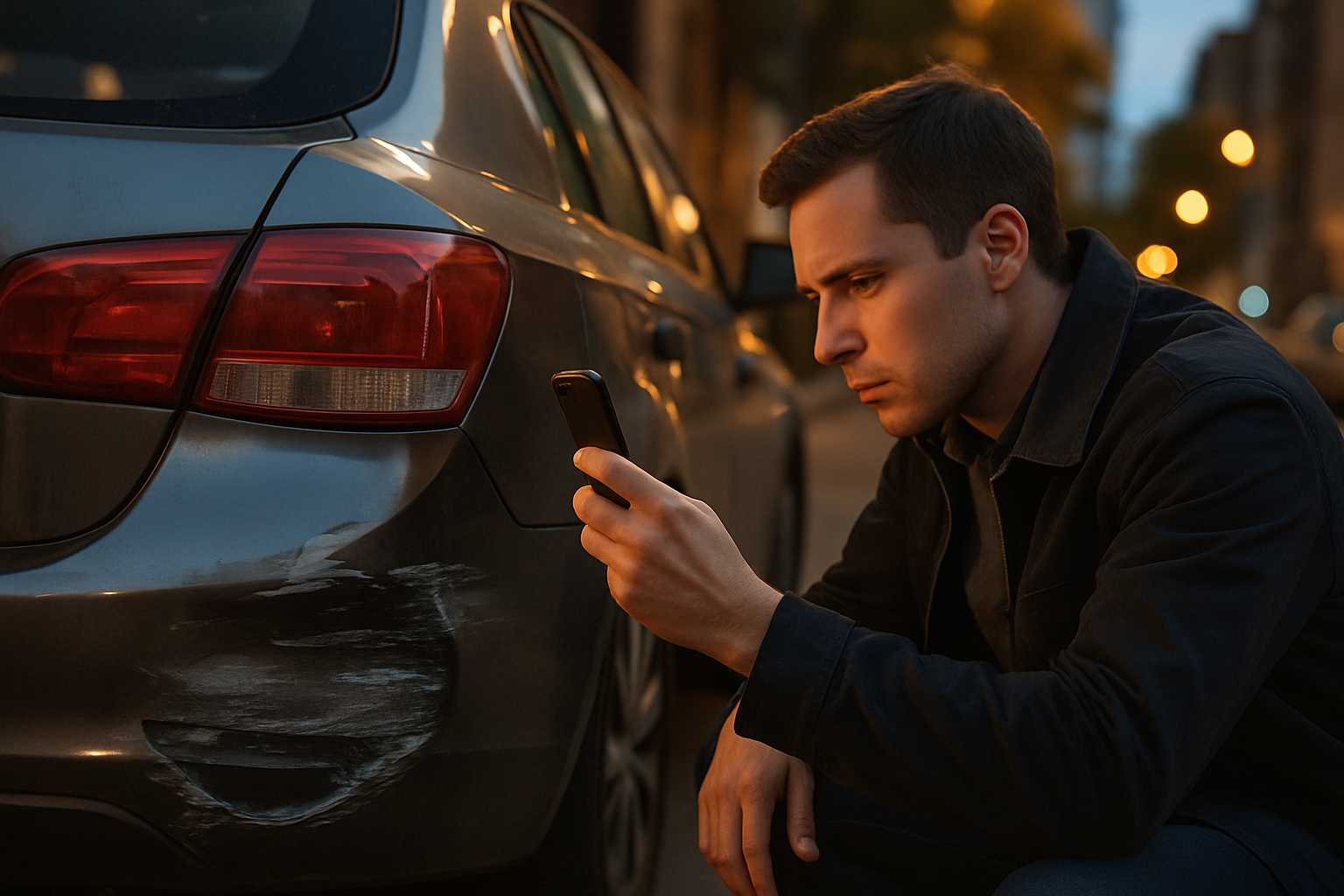
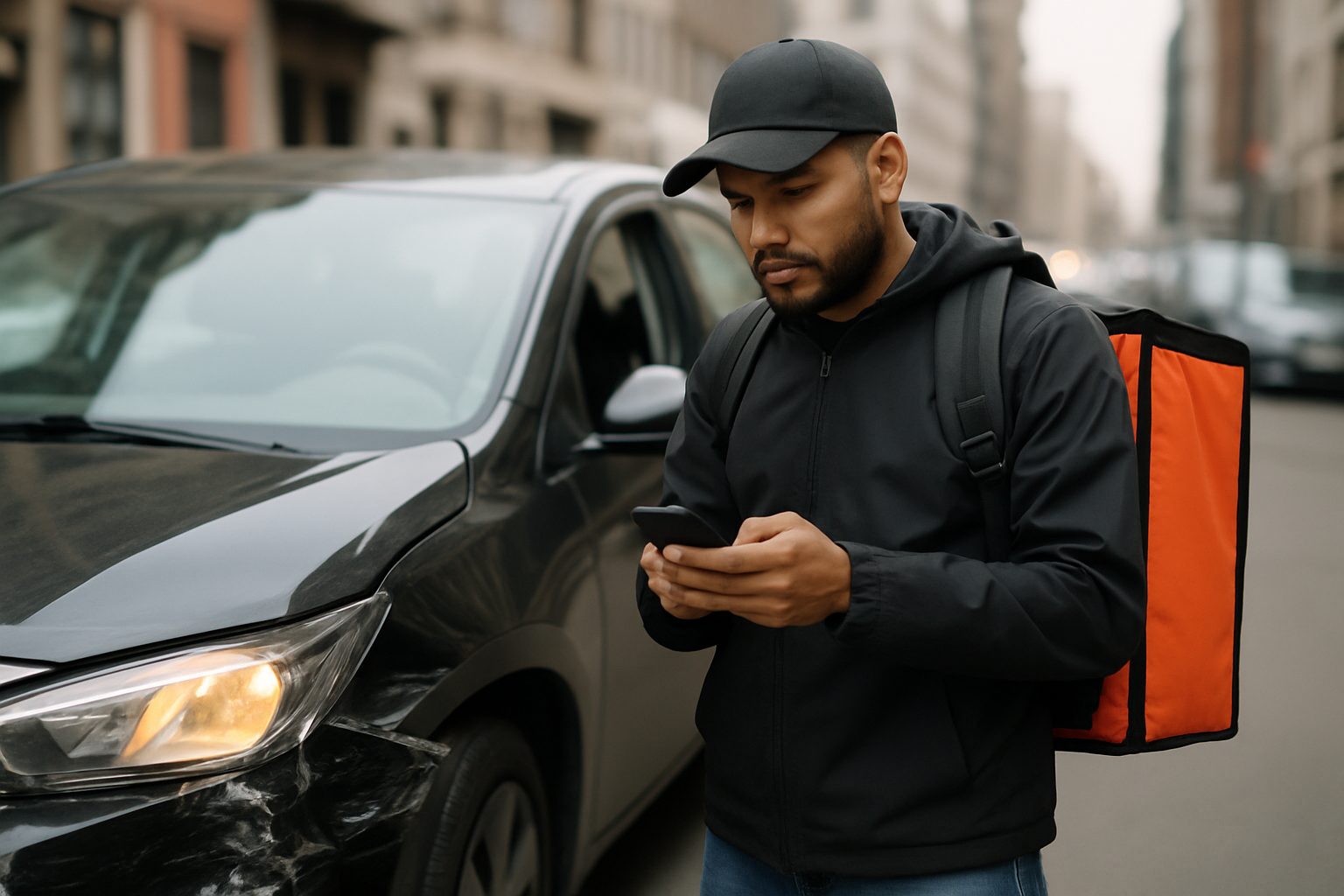
Rideshare and delivery driver after a minor collision

A rideshare accident lawyer handles crashes involving Uber, Lyft, and delivery apps — cases that are more complex than an ordinary wreck because multiple insurance policies overlap. When a rideshare app is active, companies like Uber and Lyft carry up to $1 million in liability coverage. Which policy pays depends on the app’s status, and a lawyer knows how to reach the right one. Most work on contingency with a free consultation.

Key Takeaways

  • Rideshare crashes involve overlapping insurance from the app, the driver, and others.
  • Uber and Lyft carry up to $1 million in liability coverage during an active trip.
  • Which policy pays depends on the driver’s app status at the moment of the crash.
  • Passengers, other drivers, cyclists, and pedestrians can all have valid claims.
  • Most rideshare accident lawyers work on contingency — no fee unless you win.

What Is a Rideshare Accident Lawyer?

A rideshare accident lawyer is a personal injury attorney who focuses on crashes involving app-based drivers — Uber, Lyft, and delivery services like DoorDash or Uber Eats. These claims differ from a standard crash because a corporation’s commercial insurance policy is involved, on top of the personal policies of the drivers.

That extra layer is exactly why specialized help matters. If your crash specifically involved an Uber, see our focused guide on the Uber accident lawyer and how those claims work.
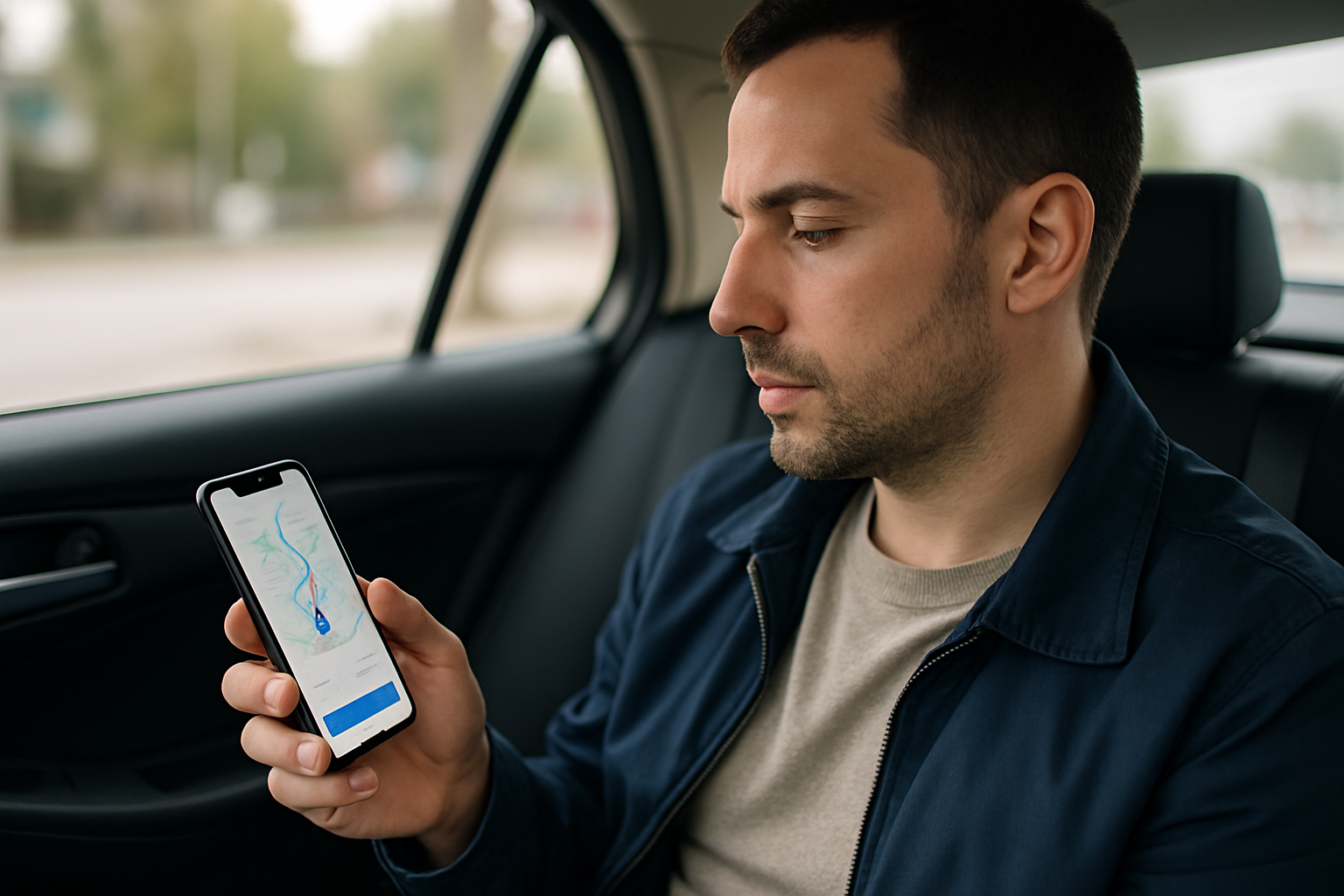
Checking a rideshare app trip record after a crash

How Does Rideshare Insurance Work?

The coverage that applies hinges entirely on what the rideshare driver was doing in the app when the crash happened. This is the single most important factor in your claim:

  • App off: only the driver’s personal auto insurance applies.
  • App on, waiting for a request: the company provides limited liability (about $50,000/$100,000).
  • En route to pick up or during a trip: the company’s $1 million liability policy applies.
  • Uninsured/underinsured motorist: the rideshare policy may cover you if an uninsured driver caused the crash.

Who Can File a Rideshare Accident Claim?

More people than you might expect. Because a rideshare vehicle shares the road with everyone, several categories of victim can pursue a claim:

  • Passengers — almost never at fault, so you can claim against whichever driver caused the crash.
  • Other drivers — hit by a rideshare vehicle during an active trip.
  • Pedestrians and cyclists — struck by an app-based driver.
  • The rideshare driver — injured by another at-fault driver while working.

If the at-fault party had no insurance, recovery gets harder — see our guide on being hit by an uninsured driver.

What Does a Rideshare Accident Lawyer Do?

A rideshare lawyer untangles the overlapping policies, identifies which insurer is responsible, and deals with corporate insurers built to minimize payouts. They gather evidence, prove the app’s status at the time, value your full damages, and negotiate — or file suit if needed.

Because most work on contingency, you pay a percentage only if they win — see what percentage a car accident lawyer takes. Consultations are typically free, so there’s no risk in asking.

How Do You Find a Good Rideshare Accident Lawyer?

Look for specific rideshare or Uber/Lyft experience, not just general car accident work — the insurance layers are different. A few quick checks:

  1. Confirm they’ve handled Uber, Lyft, or delivery-app cases before.
  2. Make sure they offer a free consultation and work on contingency.
  3. Check reviews and their state bar standing.
  4. Ask about typical results in rideshare cases like yours.

Our general checklist on how to find the best car accident lawyer applies here too.

Bottom line: rideshare crashes stack multiple insurance policies, and the app’s status decides who pays. A rideshare accident lawyer reaches the right insurer — often Uber or Lyft’s $1 million policy — and most cost nothing unless they win.

What Mistakes Should You Avoid After a Rideshare Crash?

A few early missteps can weaken an otherwise strong rideshare claim. Because multiple insurers are involved, protecting yourself matters even more:

  • Not reporting the crash in the app — Uber and Lyft require an in-app report to trigger their coverage.
  • Failing to screenshot the trip — the trip record proves the app was active, which decides coverage.
  • Giving a recorded statement to the insurer — your words can be used to reduce the payout.
  • Accepting a fast, low offer — corporate insurers open low, and a signed release is final.
  • Skipping medical care — a gap in treatment lets the insurer argue you weren’t hurt.

Document everything at the scene: the driver’s details, the app status, photos, and witnesses. Then let a rideshare accident lawyer handle the insurers — it keeps your leverage intact and your claim on track.

It also helps to understand the delivery-app angle. Crashes involving DoorDash, Uber Eats, Grubhub, and Instacart drivers follow the same logic as Uber and Lyft: coverage depends on whether the driver was actively on a delivery when the crash happened. If they were mid-delivery, the company’s commercial policy may apply; if they were off the clock, only their personal insurance does.

Proving that status is often the whole battle. A rideshare accident lawyer subpoenas the app’s trip and delivery records to establish exactly what the driver was doing — the single fact that unlocks the right insurance policy and, with it, a fair recovery.

Frequently Asked Questions

What does a rideshare accident lawyer do?

A rideshare accident lawyer handles crashes involving Uber, Lyft, or delivery apps. They identify which of the overlapping insurance policies applies, deal with the corporate insurer, prove the app’s status, value your damages, and negotiate a settlement — usually on contingency, so no fee unless you win.

How much does a rideshare accident lawyer cost?

Usually nothing upfront. Most work on a contingency fee of around one-third of the settlement, and charge no fee if they don’t win. Consultations are typically free, letting you learn your options at no financial risk.

How does Uber and Lyft insurance work after a crash?

It depends on the app’s status. If the app was off, the driver’s personal insurance applies. Waiting for a request triggers limited company coverage. En route or during a trip, the company’s $1 million liability policy applies.

Can a passenger sue after a rideshare accident?

Yes. Passengers are almost never at fault, so you can claim against whichever driver caused the crash. During an active trip, Uber or Lyft’s $1 million policy often covers passenger injuries. A lawyer identifies the right insurer to pursue.

Related Guides

Uber Accident Lawyer Near Me: How to Find the Right One (2026)

Rideshare passenger checking a phone after an Uber accident at night

Searching for an “Uber accident lawyer near me” is the right move after a rideshare crash — a local attorney knows your state’s insurance rules and how to reach Uber’s $1 million coverage. Because these cases involve Uber’s insurer, the other driver’s, and possibly your own, they’re more complex than a standard crash. Most local Uber accident lawyers offer a free consultation and work on contingency, so there’s no upfront cost.

Key Takeaways

  • A local lawyer knows your state’s rideshare insurance laws and courts.
  • Uber carries up to $1 million in liability coverage when a trip is active.
  • Which policy pays depends on the app’s status at the moment of the crash.
  • Most Uber accident lawyers near you offer a free consult and work on contingency.
  • You can be a passenger, another driver, a cyclist, or a pedestrian and still have a claim.

Why Search for an Uber Accident Lawyer Near You?

A nearby attorney offers real advantages a distant firm can’t. Rideshare insurance and injury laws vary by state, and a local lawyer knows exactly how yours works — plus the local courts, judges, and insurance adjusters your claim will pass through.

Proximity also makes it easier to meet in person, hand over documents, and stay updated. For the full picture of these claims, see our main guide on the Uber accident lawyer and when you need one.

Meeting a local Uber accident lawyer for a free consultation

Who Pays After an Uber Accident?

This is where rideshare crashes get complicated — and why local legal help matters. The coverage that applies depends entirely on what the Uber driver was doing in the app at the moment of the crash:

  • App off: the driver’s personal auto insurance applies, just like any crash.
  • App on, waiting for a ride: Uber provides limited liability (about $50,000 per person / $100,000 per accident).
  • On the way to pick up or during a trip: Uber’s $1 million liability coverage applies.
  • Uninsured/underinsured motorist: Uber’s policy may also cover you if another driver caused the crash and lacks insurance.

How Do You Find the Right Uber Accident Lawyer Near You?

Not every local lawyer handles rideshare cases well. Look for specific experience with Uber and Lyft claims, since the insurance layers differ from an ordinary crash. Use these steps to choose wisely:

  1. Search for lawyers who specifically list rideshare or Uber accident experience.
  2. Confirm they offer a free consultation and work on contingency — no fee unless you win.
  3. Check reviews and their standing with your state bar.
  4. Ask how many rideshare cases they’ve handled and their typical results.
  5. Make sure they’re licensed in the state where the crash happened.

For a deeper checklist that applies to any crash, see our guide on how to find the best car accident lawyer.

What Does an Uber Accident Lawyer Do for You?

A rideshare lawyer handles the parts you can’t easily do alone. They identify which of the overlapping policies applies, deal with Uber’s insurer (which is built to minimize payouts), gather evidence, and value your claim including future medical costs and pain and suffering.

They also negotiate the settlement and, if needed, file suit. Most work on contingency, taking a percentage only if they win — see what percentage a car accident lawyer takes.

How Much Does a Local Uber Accident Lawyer Cost?

Almost always nothing upfront. Uber accident lawyers typically work on a contingency fee — usually around one-third of the settlement — and charge no fee at all if they don’t recover money for you. Combined with free consultations, this means you can learn your options at no financial risk.

So the real question isn’t whether you can afford a lawyer, but whether a rideshare claim this complex is worth handling alone. When Uber’s $1 million policy and multiple insurers are involved, professional help usually pays for itself.

When Should You Call an Uber Accident Lawyer?

Sooner is better. Evidence disappears, deadlines run, and insurers move fast to settle low. Contact a local Uber accident lawyer promptly if any of these apply:

  • You were injured as an Uber passenger, driver, or in another vehicle.
  • Uber’s insurer or the driver’s insurer denied or lowballed your claim.
  • There’s a dispute over whether the app was active at the time.
  • You’re facing significant medical bills or missed work.

Acting quickly also protects your right to sue before your state’s deadline — and a faster claim can mean a faster payout, though a good lawyer won’t rush a lowball. See how long a settlement takes.

Bottom line: after an Uber crash, a local lawyer who handles rideshare cases is your best path to the right insurer and a fair payout. The coverage depends on the app’s status, the case is more complex than an ordinary crash, and most local Uber accident lawyers cost nothing unless they win.

Frequently Asked Questions

Do I need a local lawyer for an Uber accident?

It helps. A local Uber accident lawyer knows your state’s rideshare insurance rules, the local courts, and the insurers involved. Because these claims involve Uber’s policy plus others, a nearby attorney who handles rideshare cases can navigate the complexity and is easy to meet in person.

How much does an Uber accident lawyer near me cost?

Usually nothing upfront. Most work on a contingency fee, typically around one-third of the settlement, and charge no fee if they don’t win. Consultations are generally free, so you can learn your options at no financial risk before deciding.

Who pays after an Uber accident?

It depends on the app’s status. If the app was off, the driver’s personal insurance applies. If they were waiting for a ride, Uber offers limited coverage. If they were en route or on a trip, Uber’s $1 million liability policy applies.

Can an Uber passenger sue after a crash?

Yes. As a passenger you’re almost never at fault, so you can typically claim against whichever driver caused the crash — and Uber’s $1 million policy often covers passenger injuries during an active trip. A local lawyer can identify the right insurer to pursue.

Related Guides

Does Health Insurance Cover Car Accident Injuries?

Person reviewing paperwork and holding an insurance card after a car accident

Yes — your health insurance generally covers car accident injuries, but it’s often not the first payer, and it may seek repayment from your settlement. Auto coverages like PIP or MedPay usually pay first, and if you win a settlement, your health insurer can place a ‘lien’ to recover what it paid. Understanding the order of payment protects your recovery.

Key Takeaways

  • Health insurance covers accident injuries, but often isn’t the first to pay.
  • PIP or MedPay auto coverage typically pays first, before health insurance.
  • Your health insurer can place a lien to recover costs from your settlement.
  • Order of payment and lien rules vary by state and plan type.
  • A lawyer can often negotiate liens down, leaving you more of your settlement.

Does Health Insurance Cover Car Accident Injuries?

In general, yes — your health insurance covers medical treatment for injuries from a car accident, just like any other injury. But it’s frequently not the first payer. If you have auto medical coverage — Personal Injury Protection (PIP) or Medical Payments (MedPay) — that usually pays first, regardless of who was at fault.

So the practical question isn’t whether you’re covered, but in what order. For how to start a claim, see our guide on filing a car accident insurance claim.

Medical bills and a calculator on a desk after a car accident

What Pays First After a Car Accident?

The order of payment matters because it affects your out-of-pocket costs and any later repayment. Typically:

  1. PIP / MedPay — your auto medical coverage pays first, regardless of fault.
  2. Health insurance — steps in once auto coverage is exhausted, or if you have none.
  3. The at-fault driver’s liability — ultimately responsible, recovered through a claim or settlement.

Using PIP/MedPay and health insurance keeps your providers paid while your liability claim against the at-fault driver is negotiated — which can take months.

What Is a Health Insurance Lien on Your Settlement?

Here’s the catch many people miss: when your health insurer pays for accident-related treatment, it often has the right to be reimbursed out of any settlement you win from the at-fault driver. This is called subrogation, and the amount claimed is a ‘lien.’

So a settlement isn’t entirely yours — your health insurer may take back what it paid. This is closely related to how auto insurers recover costs; see our guide on subrogation after a car accident.

Can You Negotiate a Health Insurance Lien Down?

Often, yes. Liens are frequently negotiable, and reducing one leaves more of your settlement in your pocket. Common grounds include the ‘made-whole’ doctrine (you should be fully compensated before the insurer recovers) and the fact that your attorney’s work secured the recovery in the first place.

One important distinction: self-funded employer plans governed by federal ERISA law often have stronger reimbursement rights than state-regulated plans, making them harder to negotiate. A lawyer who knows the difference can protect more of your money.

Should You Use Health Insurance or Wait for a Settlement?

Generally, use your available coverage — PIP/MedPay first, then health insurance — rather than letting bills go unpaid while you wait. Unpaid medical bills can hurt your credit and your health, and providers won’t wait months for a settlement.

The liens get sorted out at settlement. A lawyer coordinates the coverages, keeps your treatment on track, and negotiates the liens so you keep more of your recovery — see our complete car accident lawyer guide.

Bottom line: health insurance does cover car accident injuries, but usually pays after your auto medical coverage and may claim part of your settlement through a lien. Use your coverage to stay treated, and let a lawyer coordinate the payers and negotiate liens so you keep more.

How Do Medical Liens Affect Your Final Payout?

The size of the liens directly shapes how much of a settlement you actually keep. After a settlement, the money is typically distributed in a set order, and understanding it prevents unpleasant surprises:

  • Attorney fees — usually a contingency percentage of the gross settlement.
  • Case costs — filing fees, records, expert reports.
  • Medical liens — repayment to health insurers, PIP, hospitals, or providers.
  • Your net recovery — what remains after the above.

This is why lien negotiation matters so much: every dollar shaved off a lien is a dollar that stays with you. A lawyer who reduces a $10,000 lien to $6,000 has effectively added $4,000 to your net — often more than covering their fee. Always confirm liens are resolved before you sign a release.

One more factor affects the order of payment: whether you live in a ‘no-fault’ or ‘at-fault’ state. In no-fault states, your PIP coverage is the required first payer for medical bills up to its limit, regardless of who caused the crash, and you only pursue the at-fault driver for serious injuries. In at-fault states, MedPay and health insurance carry more of the early load while liability is sorted out.

Either way, the practical advice is the same: don’t let bills go to collections while you wait. Give your providers your health insurance and any auto medical coverage up front, keep every bill and explanation-of-benefits statement, and let your settlement reconcile the liens at the end. Good record-keeping is what lets a lawyer prove exactly what was paid — and negotiate the liens down accordingly.

Frequently Asked Questions

Does health insurance cover car accident injuries?

Yes, health insurance generally covers accident injuries, but it’s often not the first payer. Auto medical coverage (PIP or MedPay) usually pays first, and your health insurer may later seek repayment from your settlement through a lien.

What pays first after a car accident?

Usually your auto medical coverage — PIP or MedPay — pays first, regardless of fault. Health insurance steps in once that’s exhausted or if you have none. The at-fault driver’s liability is ultimately responsible, recovered through a claim or settlement.

Can a health insurer take money from my settlement?

Often yes. When your health insurer pays for accident treatment, it can place a lien to be reimbursed from your settlement, through a process called subrogation. So part of a settlement may go back to your health insurer.

Can you negotiate a health insurance lien?

Often, yes — liens are frequently negotiable, which leaves more of your settlement for you. The ‘made-whole’ doctrine and your attorney’s role in the recovery are common grounds. Note that ERISA self-funded employer plans are harder to reduce.

Related Guides

Diminished Value Claim: How to Recover Your Car’s Lost Value

Vehicle appraiser inspecting a repaired car to assess its diminished value

A diminished value claim compensates you for the resale value your car loses after an accident — even after perfect repairs — simply because it now has a crash history. In almost every state (all except Michigan), you can file this against the at-fault driver’s insurer. Insurers often use the ‘17c formula,’ which typically undervalues the loss, so documentation is key.

Key Takeaways

  • Diminished value = your car’s lost resale value after a crash, even after good repairs.
  • File against the AT-FAULT driver’s insurer (third-party) — your own policy rarely covers it.
  • All states except Michigan allow third-party diminished value claims.
  • Insurers use the ‘17c formula,’ which caps the loss at 10% and usually undervalues it.
  • An independent appraisal ($300–$500) is the best tool to beat a lowball offer.

What Is a Diminished Value Claim?

Diminished value is the difference between your car’s market price before and after an accident. Even with quality repairs using original parts, a vehicle with a crash history is worth less, because buyers pay less for it. The most common type is ‘inherent’ diminished value — the loss that occurs simply from having an accident on record.

This is separate from a total loss. If your car was totaled, you’re paid its full pre-accident value — see our guide on totaled car value. Diminished value applies when the car is repaired, not written off.

Car owner holding keys next to a repaired vehicle

How Is Diminished Value Calculated? (The 17c Formula)

Insurers commonly use the ‘17c formula,’ which came from the 2001 Georgia case State Farm v. Mabry. It is not required by any law, but insurers adopted it because it’s simple and predictable. The formula is: Diminished Value = (Market Value × 10%) × Damage Multiplier × Mileage Multiplier.

  • Step 1: Take your car’s pre-accident market value (KBB/NADA) and multiply by 10% — this caps the maximum.
  • Step 2: Multiply by a damage multiplier (0.00–1.00) based on severity.
  • Step 3: Multiply by a mileage multiplier (0.00–1.00) based on odometer.

Example: a $15,000 car with moderate damage and 20,000 miles: $15,000 × 0.10 = $1,500; × 0.50 = $750; × 0.80 = $600.

Why Does the 17c Formula Undervalue Your Claim?

The formula is widely criticized as flawed. The 10% cap is arbitrary — just the precedent from the original case — and mileage reduces your value twice (once in market value, again in the multiplier). Courts have repeatedly found that the 17c formula understates real market losses.

Independent appraisals that document actual market impact with comparable sales data consistently beat the formula in negotiations. While the formula might yield a few hundred dollars, real losses on mid-to-high-value vehicles often run $3,000 to $8,000.

Which States Allow Diminished Value Claims?

The good news: if another driver is at fault, all states except Michigan allow you to recover diminished value, under the principle that the at-fault party must make you ‘whole.’ Only about 18 states recognize it explicitly by statute or case law — including Georgia (the most favorable), Texas, New York, Virginia, and the Carolinas — while others allow it under general negligence rules.

Most claims must be filed as third-party claims (against the at-fault driver’s insurer), since your own policy rarely covers diminished value. One exception: if the at-fault driver is uninsured or fled, you may file with your own insurer.

How Do You File and Win a Diminished Value Claim?

Because the 17c formula lowballs you, documentation wins claims. Build the strongest case you can:

  1. Document everything — photos before repairs, repair invoices, and a pre-accident valuation.
  2. Get an independent appraisal from a certified diminished value appraiser ($300–$500).
  3. Gather comparable listings showing clean-title cars priced above accident-history ones.
  4. File with the at-fault driver’s insurer — ask for their diminished value department.
  5. Negotiate — insurers often open at 40–60% of true value.

Mind the deadline: your state’s statute of limitations (often 2–4 years) applies, but claims are strongest within 30–90 days of the crash.

Bottom line: your car loses real resale value after a crash, and in nearly every state you can claim it from the at-fault driver’s insurer. Don’t accept the 17c formula’s lowball number — document the loss and get an independent appraisal for anything significant.

Is It Worth Filing a Diminished Value Claim?

For newer or higher-value cars, almost always. The lost value grows with the car’s worth and the severity of the crash, so the potential recovery can far exceed the cost of an appraisal. A quick way to gauge it:

  • Newer car (under 5–6 years) — strong claim; late-model cars lose the most resale value.
  • Low mileage — higher value retention means a larger loss to recover.
  • Structural or frame damage — the biggest driver of diminished value.
  • Clear liability — the other driver clearly at fault makes the third-party claim far easier.

If your car is older, has high mileage, or had only minor cosmetic damage, the recovery may be modest — sometimes below the appraisal cost. But for a late-model vehicle with real structural repairs, an unrecovered diminished value loss of several thousand dollars is money left on the table.

Frequently Asked Questions

What is a diminished value claim?

It’s compensation for the resale value your car loses after an accident, even after quality repairs, simply because it now has a crash history. The most common type, ‘inherent’ diminished value, applies regardless of how well the car was repaired.

How is diminished value calculated?

Insurers often use the 17c formula: (Market Value × 10%) × damage multiplier × mileage multiplier. It caps the loss at 10% of value and typically undervalues the real loss, which is why an independent appraisal usually recovers more.

Which states allow diminished value claims?

All states except Michigan allow third-party diminished value claims when another driver is at fault. About 18 recognize them explicitly by statute or case law — Georgia is the most favorable — while others allow them under general negligence principles.

Can you file a diminished value claim with your own insurance?

Usually no — standard policies rarely cover diminished value for your own car, so most claims are third-party (against the at-fault driver’s insurer). One exception: if the at-fault driver is uninsured or fled, you may be able to file with your own insurer.

Related Guides

Hit-and-Run Lawyer: How to Get Paid After a Hit-and-Run

Driver photographing damage to a parked car after a hit-and-run accident

After a hit-and-run, compensation usually comes from your own insurance — not the driver who fled. Your Uninsured Motorist (UM) coverage is typically the primary source, because a fleeing driver is treated as uninsured. Acting fast matters: many policies require you to report a UM claim within 72 hours. A lawyer can help maximize a payout your own insurer has incentive to minimize.

Key Takeaways

  • A fleeing driver is treated as uninsured, triggering your UM coverage.
  • Report the hit-and-run to police and your insurer fast — often within 24–72 hours.
  • UM, collision, and PIP/MedPay coverages can all apply, depending on your policy.
  • Your payout is capped by your policy limits.
  • Your own insurer still tries to minimize payouts — a lawyer can push back.

Who Pays After a Hit-and-Run?

Since the at-fault driver fled, you generally can’t collect from them — so compensation comes from your own policy. When a driver leaves the scene, they’re treated as uninsured under most state laws, which triggers your Uninsured Motorist (UM) coverage for both injuries and vehicle damage.

This is the same coverage that protects you against a driver with no insurance. For that broader scenario, see our guide on being hit by an uninsured driver.

Two people meeting with a lawyer after a car accident

What Should You Do Immediately After a Hit-and-Run?

Your actions in the first hours protect your claim. Don’t chase the fleeing car — prioritize safety, then move methodically:

  1. Pull over safely and check everyone for injuries.
  2. Call the police and file a report — often required within 24 hours.
  3. Photograph the damage, the scene, and any debris left behind.
  4. Get witness names and contact details.
  5. Notify your own insurer immediately to open a UM claim — often within 72 hours.

A police report is especially important for a hit-and-run, since it documents the crash and the missing driver. See why in our guide on police reports.

Which Coverages Apply to a Hit-and-Run?

Depending on your policy and state, several coverages can help — and knowing which applies avoids paying out of pocket:

  • Uninsured Motorist Bodily Injury (UMBI) — medical bills, lost wages, and often pain and suffering.
  • Uninsured Motorist Property Damage (UMPD) — vehicle damage, but not offered in every state, and some exclude hit-and-runs.
  • Collision coverage — pays for your car’s damage regardless of fault; often the easiest route.
  • PIP / MedPay — medical costs regardless of fault.

Why Is Timing So Important?

Deadlines are strict. Many insurers require an uninsured motorist claim to be filed within 72 hours, and some states require reporting a ‘phantom vehicle’ (one that caused a crash without contact) to police within 72 hours too. Missing these windows can jeopardize your claim entirely.

Some states also have a ‘physical contact’ rule, requiring the fleeing car to actually hit yours before UM applies — a complication when a driver runs you off the road without touching your vehicle. A lawyer knows how to navigate these state-specific traps.

How Much Can You Recover?

Your recovery is capped by your policy limits. If you carry $50,000 in UM coverage but suffered $20,000 in damages, you can claim up to your actual losses. Some states allow ‘stacking’ — combining coverage across multiple vehicles on your policy — which can raise your available limit substantially.

A lawyer helps ensure you claim everything you’re owed, including non-economic damages like pain and suffering, which your insurer may leave out of an initial offer.

Do You Need a Lawyer for a Hit-and-Run?

Often, yes. Even though you’re dealing with your own insurer, UM negotiations can be as adversarial as fighting another driver’s company — because your insurer still has a financial incentive to pay less. A lawyer can push for non-economic damages and handle the state-specific complexities. Most offer free consultations and work on contingency, so it’s low-risk — see our complete car accident lawyer guide.

Bottom line: after a hit-and-run, your own UM coverage is usually the path to compensation — but act fast, document everything, and know your policy’s deadlines and limits. Because your insurer still aims to minimize the payout, a lawyer can help you recover more, often at no upfront cost.

What Mistakes Should You Avoid After a Hit-and-Run?

A few common missteps can shrink or sink your claim. Avoid these to protect your recovery:

  • Chasing the fleeing driver — it’s dangerous and can be treated as leaving the scene yourself.
  • Delaying the police report — a late or missing report gives your insurer a reason to deny the UM claim.
  • Assuming your rates will spike — in many states, a not-at-fault UM claim can’t be used to raise your premium.
  • Accepting the first offer — initial UM offers routinely omit pain and suffering and future medical costs.
  • Giving a recorded statement without advice — your words can be used to reduce the payout.

Because a hit-and-run turns your own insurer into the party writing the check, the relationship can quickly become adversarial. Keeping your paperwork tight and your statements careful preserves your leverage — and is exactly where a lawyer earns their contingency fee.

Frequently Asked Questions

Who pays after a hit-and-run accident?

Usually your own insurance, not the driver who fled. Because a fleeing driver is treated as uninsured, your Uninsured Motorist (UM) coverage typically pays for injuries and damage. Collision and PIP/MedPay coverage may also apply depending on your policy.

How soon must you report a hit-and-run?

Fast — file a police report often within 24 hours, and notify your own insurer to open a UM claim, sometimes within 72 hours. Some states also require reporting a ‘phantom vehicle’ crash within 72 hours. Missing these deadlines can jeopardize your claim.

Does uninsured motorist coverage cover hit-and-run?

Yes, in most cases — a fleeing driver is treated as uninsured, so UM coverage applies. Note some states have a ‘physical contact’ rule requiring the other car to actually hit yours, and some exclude hit-and-runs from UM property damage.

Do you need a lawyer for a hit-and-run claim?

Often yes. UM negotiations with your own insurer can be adversarial since they still aim to pay less, and state rules are complex. A lawyer can pursue pain and suffering and navigate the traps. Most offer free consultations on contingency.

Related Guides

Uber Accident Lawyer: Who Pays After a Rideshare Crash?

A person using a rideshare app in a car

An Uber accident lawyer helps you navigate a uniquely messy claim — because Uber and Lyft carry up to $1 million in coverage while the crash is active, but insurers frequently point fingers at each other. Whether you were a passenger, another driver, or a pedestrian, a lawyer cuts through the finger-pointing and the arbitration clauses to get you paid.

Key Takeaways

  • Uber/Lyft carry up to $1 million in liability coverage while a ride is active.
  • Coverage depends on the driver’s ‘period’ — passengers get the highest tier.
  • Insurers often point fingers — personal policy vs rideshare policy.
  • Rideshare drivers are contractors, making it hard to sue Uber/Lyft directly.
  • Screenshot your trip immediately — it’s key proof of ride status.

How Much Insurance Does Uber or Lyft Carry?

It depends on what the driver was doing at the moment of the crash. From the moment the driver accepts your ride until you exit the vehicle (‘Period 3’), Uber and Lyft provide up to $1 million in third-party liability coverage. As a passenger, you’re covered by this highest tier if the rideshare driver is at fault.

If another driver hit your Uber, you’d file against that driver like any crash — but Uber’s uninsured/underinsured coverage can also apply if their coverage is inadequate. For that scenario, see our guide on being hit by an uninsured driver.

A smartphone showing a map in a car

Who Pays After an Uber or Lyft Crash?

It hinges on fault and the driver’s status. If your rideshare driver caused the crash while carrying you, the rideshare company’s $1 million policy is the primary source. If another motorist caused it, you pursue that driver — with Uber’s UM/UIM coverage as backup.

The frustration is that insurers pass the blame: the driver’s personal insurer says Uber should pay, while Uber may point back at the personal policy. This finger-pointing is a major reason to have a lawyer push back against delays and denials.

Can You Sue Uber or Lyft Directly?

This is where it gets legally tricky. Because rideshare drivers are classified as independent contractors, not employees, it’s difficult to hold Uber or Lyft directly responsible for a driver’s negligence — the usual ‘respondeat superior’ rule that applies to employers generally doesn’t apply to contractors.

There’s also an arbitration hurdle: if your claim is denied, Uber and Lyft often argue you agreed to resolve disputes through arbitration when you accepted their terms. A lawyer knows how to work around these obstacles.

What About Rental or Company Vehicles in Rideshare?

Coverage gets more complicated with Uber/Lyft rental vehicles or when other parties share blame. Rental coverage differs from regular insurance — high deductibles and gaps are common — so ‘full coverage’ doesn’t always mean full protection.

Other parties can also share liability: a defective vehicle part could make the manufacturer responsible, or a negligent recent repair could implicate a maintenance company. A lawyer identifies every possible source of compensation.

What Should You Do After an Uber or Lyft Accident?

Protect your claim immediately. The single most important step is to open your Uber or Lyft app and screenshot the trip page — it proves your ride status, the driver’s info, and the time, which determines coverage. Then take the usual steps:

  • Screenshot the trip details in the app right away.
  • Get a police report and photograph the scene.
  • Seek medical attention, even if you feel fine.
  • Exchange information with all drivers involved.
  • Avoid giving recorded statements before getting advice.

Bottom line: Uber and Lyft carry up to $1 million in coverage while a ride is active, but insurers point fingers and the contractor rules and arbitration clauses make claims tricky. Screenshot your trip, protect your evidence, and an Uber accident lawyer can cut through the confusion to get you paid.

What Coverage Applies in Each Rideshare Period?

Uber and Lyft coverage changes with the driver’s status, which is why proving the ‘period’ matters. When the app is off, only the driver’s personal insurance applies. When the app is on but no ride is accepted (Period 1), limited liability coverage applies. Once a ride is accepted or a passenger is aboard (Periods 2–3), the full up-to-$1 million policy is active.

This is exactly why screenshotting your trip matters so much — it proves which period was active, which determines how much coverage you can claim. A lawyer uses that proof to secure the highest applicable tier.

Do You Need a Lawyer for a Minor Uber Accident?

For a truly minor crash with no injuries, you may be able to handle it yourself. But rideshare claims get complicated fast — the finger-pointing between insurers, the contractor rules, and the arbitration clauses all favor the companies. If you were injured or the insurers are stalling, a free consultation with an Uber accident lawyer is low-risk, since most work on contingency and only get paid if you win.

Frequently Asked Questions

How much insurance does Uber carry for accidents?

Up to $1 million in third-party liability while a ride is active (‘Period 3’ — from accepting the ride until the passenger exits). Passengers injured when the rideshare driver is at fault are covered by this highest tier.

Who pays if you’re in an Uber accident?

It depends on fault. If your rideshare driver caused it, Uber/Lyft’s $1 million policy is primary. If another driver caused it, you pursue that driver, with Uber’s uninsured/underinsured coverage as backup. Insurers often point fingers, which a lawyer counters.

Can you sue Uber or Lyft directly?

It’s difficult. Rideshare drivers are independent contractors, so the usual employer-liability rule doesn’t apply, and Uber/Lyft often require disputes to go through arbitration. A lawyer knows how to work around these hurdles.

What should you do after an Uber accident?

Screenshot the trip in the app immediately — it proves ride status and time, which determine coverage. Then get a police report, photograph the scene, seek medical care, exchange information, and avoid recorded statements before getting legal advice.

Related Guides

Motorcycle Accident Lawyer: Fighting Rider Bias (2026)

Motorcycle and rider

A motorcycle accident lawyer is often essential because injured riders face a built-in prejudice — ‘biker bias’ — that assumes they were reckless simply for riding. This bias shapes police reports, insurance adjusters, and juries, even though most crashes are caused by drivers who fail to see riders. A lawyer replaces assumptions with hard evidence.

Key Takeaways

  • ‘Biker bias’ wrongly assumes riders are reckless — it affects every stage of a claim.
  • Most motorcycle crashes are caused by drivers, often left-turn ‘SMIDSY’ collisions.
  • Bias can inflate your comparative-fault percentage and slash your settlement.
  • Insurers use helmet and gear as a distraction from who actually caused the crash.
  • A lawyer counters bias with black-box data, witnesses, and reconstruction experts.

What Is Biker Bias?

Biker bias is the unfair assumption that motorcyclists are reckless or partly to blame for a crash simply because they ride. It influences insurance adjusters, police officers, and juries — sometimes openly (‘he must have been speeding’) and sometimes subtly (believing the driver’s account while doubting the rider’s).

This prejudice is why motorcycle claims are uniquely hard — not because injuries are worse, but because the deck is stacked before evidence is even examined. For how blame affects payouts generally, see our guide on comparative fault.

Motorcycle helmet

Why Does Bias Start at the Accident Scene?

The prejudice often begins before any evidence is examined. Onlookers may speculate about ‘reckless riding,’ and those ideas find their way into initial police reports. Worse, an injured rider is frequently taken to the hospital and can’t give their side — so the driver speaks first, and a rushed ‘the motorcycle came out of nowhere’ note can shape the claim for months.

In reality, most motorcycle accidents happen because drivers don’t see riders or violate their right of way. The classic example is the left-turn ‘SMIDSY’ crash (Sorry, Mate, I Didn’t See You), where a driver turns across an oncoming rider’s path.

How Does Bias Affect Your Fault and Compensation?

Bias becomes costly under comparative-fault rules, where any blame assigned to you reduces your recovery. Adjusters may inflate your fault percentage based on assumptions about lane position or speed. Even a modest increase — 15% or 20% — can cut a settlement by tens or hundreds of thousands of dollars.

The rules vary by state: modified comparative fault bars recovery if you’re 50%+ at fault; pure comparative negligence reduces your award by your percentage; and in strict contributory-negligence states like North Carolina, even 1% fault can bar you entirely — giving insurers huge incentive to blame riders.

How Do Insurers Use Your Helmet and Gear Against You?

Insurers frequently try to weaponize safety equipment, even when it’s irrelevant to fault. Whether you wore a helmet doesn’t determine who caused the crash, yet adjusters scrutinize gear with absurd intensity — suggesting leg injuries were ‘your fault’ for not wearing armored pants.

A motorcycle accident lawyer keeps the focus where it belongs: on the driver’s actions, not your gear. Helmet use may matter only to injury severity in some states, never to who is liable for the crash itself.

How Does a Lawyer Fight Biker Bias?

The key is replacing assumptions with objective evidence. A skilled lawyer secures physical proof and tests witness accounts against real crash data. They use event data recorders (black boxes) showing speed and braking, traffic-camera footage, and accident-reconstruction experts to prove the driver’s negligence.

Just as importantly, a lawyer reframes the narrative around verifiable facts rather than prejudice — neutralizing biased assumptions before they influence a settlement or verdict. Early intervention, before you talk to adjusters, matters most.

What Should You Do After a Motorcycle Crash?

Protect your own claim from the start. Photograph the scene, your injuries, and the bike; save your helmet and gear if they show impact; keep every medical record; and follow your treatment plan. Crucially, avoid discussing fault or apologizing — even a polite ‘I’m sorry’ can be twisted into an admission that feeds biker stereotypes.

Then consult a motorcycle accident lawyer before any settlement talks. Since most offer free consultations and work on contingency, getting advice early is low-risk — see our complete car accident lawyer guide.

Bottom line: motorcycle claims are uniquely hard because of biker bias, not because injuries are worse. A lawyer neutralizes that bias with objective evidence and keeps the focus on the driver’s fault. Protect your own claim early, avoid admitting fault, and consult a lawyer before settlement talks.

Why Are Motorcycle Injuries Often More Severe?

Riders have far less protection than people in cars, so even a low-speed crash can cause serious injuries — road rash, broken bones, spinal damage, and traumatic brain injuries. Ironically, insurers use this severity against riders, questioning whether injuries are ‘really that bad’ or claiming gear should have prevented them.

This makes thorough medical documentation essential. A lawyer ties your injuries directly to the crash with clear records, countering the adjuster’s skepticism and ensuring the full extent of your harm is accounted for in any settlement.

Frequently Asked Questions

What is biker bias?

Biker bias is the unfair assumption that motorcyclists are reckless or partly to blame for a crash just because they ride. It influences police reports, insurance adjusters, and juries — often before any evidence is examined — and can unfairly reduce a rider’s compensation.

Do most motorcycle accidents get caused by riders?

No. Most are caused by drivers who don’t see riders or violate their right of way — commonly the left-turn ‘SMIDSY’ crash. Despite this, insurers often start with an assumption that the rider was reckless, which a lawyer must counter with evidence.

Can insurers use my helmet against me?

They try to, even though whether you wore a helmet doesn’t determine who caused the crash. Helmet use may only matter to injury severity in some states. A lawyer keeps the focus on the driver’s actions, not your safety gear.

How does a motorcycle accident lawyer help?

They replace biased assumptions with hard evidence — black-box data, traffic footage, witness accounts, and reconstruction experts — to prove the driver’s fault. They also reframe the narrative around facts before bias can influence a settlement or verdict.

Related Guides

Truck Accident Lawyer: Why These Cases Are Different (2026)

A semi truck on a highway

A truck accident lawyer handles cases that are far more complex than car crashes — involving federal trucking regulations, multiple liable parties, and insurance policies of $750,000 to $5 million. Because trucking companies move fast to protect themselves and key evidence disappears quickly, hiring a specialized lawyer early can make a major difference in your recovery.

Key Takeaways

  • Truck cases involve federal FMCSA rules that don’t exist in car accidents.
  • Multiple parties can be liable: driver, trucking company, cargo loader, broker, and more.
  • Commercial trucks carry $750,000–$5 million in insurance — far more than cars.
  • Critical evidence (logs, black box data) vanishes fast — act quickly.
  • Most work on contingency — no fee unless you win.

Why Are Truck Accident Cases Different From Car Accidents?

The biggest difference is a layer of federal regulation. Commercial trucks are governed by the Federal Motor Carrier Safety Administration (FMCSA), with rules covering driver hours, vehicle maintenance, drug testing, and cargo loading. Violating these rules can establish negligence automatically — something that simply doesn’t exist in an ordinary car accident case.

A general lawyer who mostly handles car crashes may not know what records to request or how fast they disappear. This is why truck cases need specialized knowledge. For the basics of hiring, see our complete car accident lawyer guide.

Trucks on interstate

Who Can Be Held Liable in a Truck Accident?

Unlike a car crash — usually just the two drivers — a truck accident can involve many liable parties, each with separate insurance. This creates multiple sources of compensation:

  • The truck driver — for negligent driving.
  • The trucking company — under ‘respondeat superior’ for its employee, or for negligent hiring.
  • Maintenance contractors — for mechanical failures.
  • Cargo loaders — for improperly secured loads.
  • Parts manufacturers — for defective components.
  • Freight brokers — for negligently hiring an unsafe carrier.

How Do Federal Trucking Regulations Help Your Case?

FMCSA rules give your lawyer extra ways to prove fault. For example, driver fatigue that violates Hours of Service rules creates ‘negligence per se’ — the violation itself establishes fault. Trucking companies must keep inspection records, conduct drug testing, and verify driver qualifications, and breaking these standards often proves negligence automatically.

A 2026 US Supreme Court case, Montgomery v. Caribe Transport II, also confirmed that freight brokers can be sued under state law if they negligently hired the carrier whose driver caused the crash — expanding who you can hold responsible.

Why Are the Insurance Stakes So Much Higher?

The money involved is on a different scale. Standard car insurance caps around $100,000 to $300,000, but federal law requires commercial trucks to carry at least $750,000, with many holding $1 million to $5 million. Hazmat trucks must carry $5 million.

Those large policies change everything: the insurer sends specialists, not generalists, and deploys teams of adjusters and defense lawyers to protect multi-million-dollar exposure. You need a lawyer equipped to negotiate against that.

Why Does Evidence Disappear So Quickly?

Critical proof in a truck case is time-sensitive. Electronic logging device (ELD) records, dispatch messages, maintenance logs, and driver files can be overwritten or lost within weeks. Meanwhile, the trucking company often starts its own investigation immediately — sometimes controlling the evidence while you’re still recovering.

A specialized lawyer counters this by sending preservation letters right away, using federal rules that require carriers to keep and produce these documents. Acting fast is often the difference between having the evidence and losing it.

Should You Hire a Specialized Truck Accident Lawyer?

If you were seriously injured, yes. The mix of federal regulations, multiple defendants, and huge insurance policies demands knowledge a general practitioner may lack. A dedicated truck accident lawyer knows FMCSA rules, reads black-box data, and pursues every liable party. Since most work on contingency, a free consultation carries no risk — see when to hire a lawyer and what a lawyer costs.

Bottom line: truck accident cases are more complex and higher-stakes than car crashes — federal rules, multiple defendants, and million-dollar policies. A specialized truck accident lawyer can preserve vanishing evidence and pursue every liable party. With free consultations and contingency fees, getting advice early is low-risk.

What Kind of Compensation Can You Recover?

Because truck crashes cause severe injuries and involve large policies, recoverable damages are often substantial. They include current and future medical bills, lost wages and reduced earning capacity, pain and suffering, and property damage. In cases of egregious violations — like falsified logs or knowingly unsafe trucks — punitive damages may also apply.

With multiple defendants each carrying separate coverage, a skilled lawyer pursues every source to maximize your recovery rather than settling with the first insurer that makes an offer.

How Soon Should You Act After a Truck Crash?

Immediately, if you can. Beyond preserving evidence, every state sets a statute of limitations on filing a claim, and truck cases often need months of investigation across multiple defendants. The sooner a lawyer sends preservation letters and starts building the case, the stronger your position. Waiting risks both lost evidence and a missed deadline that can end your claim entirely.

Frequently Asked Questions

Why do you need a special lawyer for a truck accident?

Truck cases involve federal FMCSA regulations, multiple liable parties, and insurance policies of $750,000 to $5 million — none of which exist in ordinary car crashes. A specialized lawyer knows what evidence to preserve and how to pursue every responsible party.

Who is liable in a truck accident?

Potentially many parties: the driver, the trucking company (via respondeat superior or negligent hiring), maintenance contractors, cargo loaders, parts manufacturers, and even freight brokers. Each carries separate insurance, creating multiple sources of compensation.

How much insurance do trucking companies carry?

Federal law requires at least $750,000 for commercial trucks, and many carry $1 million to $5 million. Hazmat carriers must hold $5 million — far above the $100,000–$300,000 typical for cars, which raises the stakes of your claim.

How soon should you hire a truck accident lawyer?

As soon as possible. Key evidence like electronic logging records and black-box data can be overwritten within weeks, and the trucking company starts its own investigation immediately. A lawyer can send preservation letters to stop critical evidence from disappearing.

Related Guides

Car Accident Lawyer: When You Need One, Cost & How to Choose (2026)

A car accident lawyer meeting a client in a professional office

A car accident lawyer helps you recover fair compensation after a crash — investigating fault, valuing your claim, handling the insurance company, and negotiating your settlement. Most work on contingency, meaning no upfront cost and no fee unless you win. This guide covers when you need one, what they cost, and how to choose the right lawyer.

Key Takeaways

  • A car accident lawyer investigates fault, values your claim, and negotiates with insurers.
  • Most work on contingency — typically about one-third of the settlement, nothing if you lose.
  • You may not need one for a minor, no-injury crash with a fair offer.
  • Hire one for serious injuries, disputed fault, or a lowball insurance offer.
  • Consultations are almost always free, so getting advice carries little risk.

What Does a Car Accident Lawyer Do?

A car accident lawyer takes the legal and negotiation burden off you while you recover. Their core work is investigating the crash, proving who was at fault, valuing your claim (including future medical costs), handling all communication with insurers, and negotiating a fair settlement. If a fair deal can’t be reached, they can file a lawsuit and represent you in court.

Each of these steps is a place where an unrepresented claimant can lose money or make a costly mistake. For a full breakdown, see our guide on what a car accident lawyer does.

A handshake between lawyer and client

Do You Need a Car Accident Lawyer?

Not always. For a genuinely minor crash with no injuries, clear fault, and a fair insurance offer, you can often handle the claim yourself and keep the entire settlement. The moment injuries, disputed fault, or a low offer enter the picture, a lawyer usually protects — and increases — your recovery.

Certain situations strongly favor hiring a lawyer:

  • You suffered injuries, especially serious or lasting ones.
  • Fault is disputed or the insurer is blaming you.
  • The settlement offer clearly doesn’t cover your costs.
  • Multiple vehicles or parties were involved.
  • The at-fault driver was uninsured or underinsured.
  • You’re being pressured to sign a release quickly.

For the borderline cases, see when you should hire a car accident lawyer, whether you need one for a minor accident, or a crash that wasn’t your fault. If you’re weighing going it alone, compare a lawyer versus handling it yourself.

How Much Does a Car Accident Lawyer Cost?

Most car accident lawyers work on a contingency fee — they take a percentage of your settlement only if they win, with no upfront or hourly charges. The standard rate is around one-third (33%), though it commonly ranges from 25% to 40% and can rise if the case goes to trial.

Because there’s usually no fee unless you win, the financial risk of hiring one is low. Learn more in our guides on how much a car accident lawyer costs and what percentage a car accident lawyer takes.

Is Hiring a Lawyer Worth It?

For injury claims, usually yes. Represented claimants often recover more — frequently enough to net more even after the contingency fee. One Insurance Research Council study found injured claimants with attorneys received settlement offers several times larger than those without. For a minor, no-injury claim, the fee may not be justified.

The value comes from accurate claim valuation, skilled negotiation, and knowing what similar cases settle for. Since the consultation is free, you can compare a lawyer’s estimate against the insurer’s offer before committing.

How Do You Choose the Best Car Accident Lawyer?

Choosing well matters. Look for a lawyer who focuses specifically on personal injury and car accidents, has a track record with cases like yours, is transparent about fees, and communicates clearly. Use free consultations to compare two or three before deciding.

  • Confirm they work on contingency — no fee unless you win.
  • Check reviews and their standing with the state bar.
  • Ask who will actually handle your case day to day.
  • Make sure you understand the fee percentage and any case costs.
  • Watch for red flags: guarantees of a specific amount, or pressure to sign fast.

For the full process, see how to find the best car accident lawyer and the key questions to ask before hiring.

What Happens After You Hire a Lawyer?

Once retained, your lawyer takes over communication with the insurers, investigates fault, and builds your claim. They’ll usually wait until you reach maximum medical improvement — when your condition stabilizes — before sending a demand, so the settlement reflects your full costs, including future care.

Most cases settle out of court within a few months to a year. For realistic timing, see how long car accident lawyers take to settle. If the at-fault driver has no insurance, a lawyer can also help you pursue your own uninsured motorist coverage.

Car Accident Lawyer vs. Handling It Yourself

The dividing line is injuries and disputes. A minor, no-injury, clear-fault claim is a reasonable do-it-yourself project — document everything, negotiate directly, and accept a fair figure. But once you’re injured or the insurer pushes back, the stakes rise fast, and a lawyer’s experience typically recovers more than the fee costs.

The biggest risk of going alone is undervaluing your claim, then signing a release you can’t reopen. Weigh the trade-offs in our lawyer vs. DIY comparison before deciding.

Bottom line: a car accident lawyer is worth it whenever injuries, disputed fault, or a low offer are involved — they typically recover more than their contingency fee costs, at no upfront risk. For a minor, no-injury crash, you may be fine on your own. Either way, a free consultation is the smartest first step.

Frequently Asked Questions

What does a car accident lawyer do?

They investigate the crash, prove fault, value your claim including future costs, handle all insurer communication, and negotiate your settlement. If needed, they file a lawsuit and represent you in court — though most cases settle first.

Do I need a lawyer for a car accident?

Not for a minor, no-injury crash with a fair offer. But if you’re injured, fault is disputed, the offer is low, or the at-fault driver is uninsured, a lawyer usually protects and increases your recovery. Consultations are free.

How much does a car accident lawyer cost?

Most work on contingency — about one-third of the settlement, nothing if you lose, and no upfront fees. The rate commonly ranges from 25% to 40% and can rise if the case goes to trial. Always confirm the terms in writing.

Is it worth getting a car accident lawyer?

For injury claims, usually yes — represented claimants often recover more, frequently enough to net more even after the fee. For a minor, no-injury crash, you may be able to handle it yourself. A free consultation helps you decide.

How do I choose a car accident lawyer?

Pick one who focuses on personal injury and car accidents, has a track record with similar cases, is transparent about fees, and communicates clearly. Use free consultations to compare two or three, and watch for red flags like guaranteed outcomes.

Should You Give a Recorded Statement to the Insurance Company?

Person on the phone thinking carefully

You are not required to give a recorded statement to the other driver’s insurance company, and doing so early — before you know the full extent of your injuries — can hurt your claim. You generally must cooperate with your own insurer, but even then, stick to facts and avoid speculating about fault or injuries.

Key Takeaways

  • You are NOT required to give a recorded statement to the other driver’s insurer.
  • Recorded statements are often used to minimize or deny your claim.
  • You generally must cooperate with your OWN insurer — but keep it factual.
  • Never speculate about fault, speed, or the extent of your injuries.
  • When in doubt, consult a lawyer before giving any recorded statement.

Do You Have to Give a Recorded Statement?

It depends on whose insurer is asking. You are not legally required to give a recorded statement to the other driver’s (third-party) insurance company. Their adjuster works to pay as little as possible, so a recorded statement mainly gives them material to dispute your claim.

Smartphone on a desk during a call

Your own insurer is different — your policy usually requires you to cooperate, which can include a statement. Even then, you can stick to basic facts and decline to speculate about things you’re unsure of.

Why Do Insurers Want a Recorded Statement?

Adjusters seem friendly, but the recorded statement is a tool. They look for anything they can use to reduce or deny your payout — an offhand ‘I’m fine’ that contradicts a later injury claim, or a guess about speed or fault that shifts blame onto you.

Because injuries like whiplash and concussions can appear days later, saying ‘I feel okay’ right after a crash can be used against you once symptoms surface. That’s why timing and caution matter so much.

What Should You Say (and Not Say)?

If you do give a statement, keep it short and factual. Stick to what you know for certain, and don’t fill silences with speculation. Here’s the practical rule of thumb:

  • Do state the basic facts: date, time, location, and that a crash occurred.
  • Don’t speculate about fault, speed, or distances.
  • Don’t say ‘I’m fine’ or downplay injuries — you may not know yet.
  • Don’t guess — ‘I’m not sure’ is a complete answer.
  • Do say you’re still being evaluated by a doctor if asked about injuries.

A simple ‘I’d prefer to provide details in writing’ is enough to slow things down while you get advice.

What Happens if You Decline the Other Insurer?

Nothing bad. Declining a recorded statement to the at-fault driver’s insurer is your right, and it doesn’t forfeit your claim. You can still provide written information and documentation through the proper channels.

Often the smartest move is to let your own insurer or an attorney handle communication with the other side entirely. That removes the risk of saying something that gets used against you.

When Should You Talk to a Lawyer First?

If you were injured, fault is disputed, or the insurer is pressing hard for a recorded statement, talk to a lawyer before giving one. An attorney can handle the statement or coach you on what to say, protecting you from common traps.

Since most car accident lawyers offer free consultations and work on contingency, getting that guidance before you speak on the record carries little downside and can protect the value of your claim.

Bottom line: you don’t have to give a recorded statement to the other driver’s insurer, and early statements often hurt more than help. Stick to facts, never guess or downplay injuries, and when in doubt, let a lawyer handle the conversation.

Can a Recorded Statement Be Used Against You Later?

Yes — that’s the core risk. Anything you say in a recorded statement becomes part of the claim file and can be quoted back to you months later. A casual guess about speed, or an early ‘I feel fine’ before symptoms appear, can be used to dispute fault or minimize your injuries.

Because the statement is recorded and permanent, there’s no taking it back. That permanence is why caution — or letting a lawyer handle it — matters so much in the days right after a crash.

What’s the Difference Between Your Insurer and the Other Insurer?

It’s the key distinction. Your own insurer is bound by your policy to act in your interest (within limits), and cooperation is usually required — but you can still keep it factual. The other driver’s insurer owes you nothing and is actively trying to limit its payout.

So a recorded statement to your own insurer is sometimes necessary; one to the other side’s insurer almost never is. When the third-party adjuster calls, it’s usually best to decline and route everything through your insurer or attorney.

Frequently Asked Questions

Do you have to give a recorded statement to insurance?

Not to the other driver’s insurer — that’s your right to decline. You generally must cooperate with your own insurer, which can include a statement, but you can stick to basic facts and avoid speculating about fault or injuries.

Why is giving a recorded statement risky?

Adjusters use recorded statements to find reasons to reduce or deny your claim. An offhand ‘I’m fine’ can contradict a later injury claim, and guesses about speed or fault can shift blame onto you. Injuries like whiplash often appear days later.

What should you say in a recorded statement?

Keep it short and factual: date, time, location, and that a crash occurred. Don’t speculate about fault or speed, don’t downplay injuries, and say ‘I’m not sure’ rather than guessing. If asked about injuries, say you’re still being evaluated.

What happens if you refuse a recorded statement?

If it’s the other driver’s insurer, nothing — declining is your right and doesn’t forfeit your claim. You can provide written information instead, or let your own insurer or an attorney handle communication with the other side.

Related Guides