
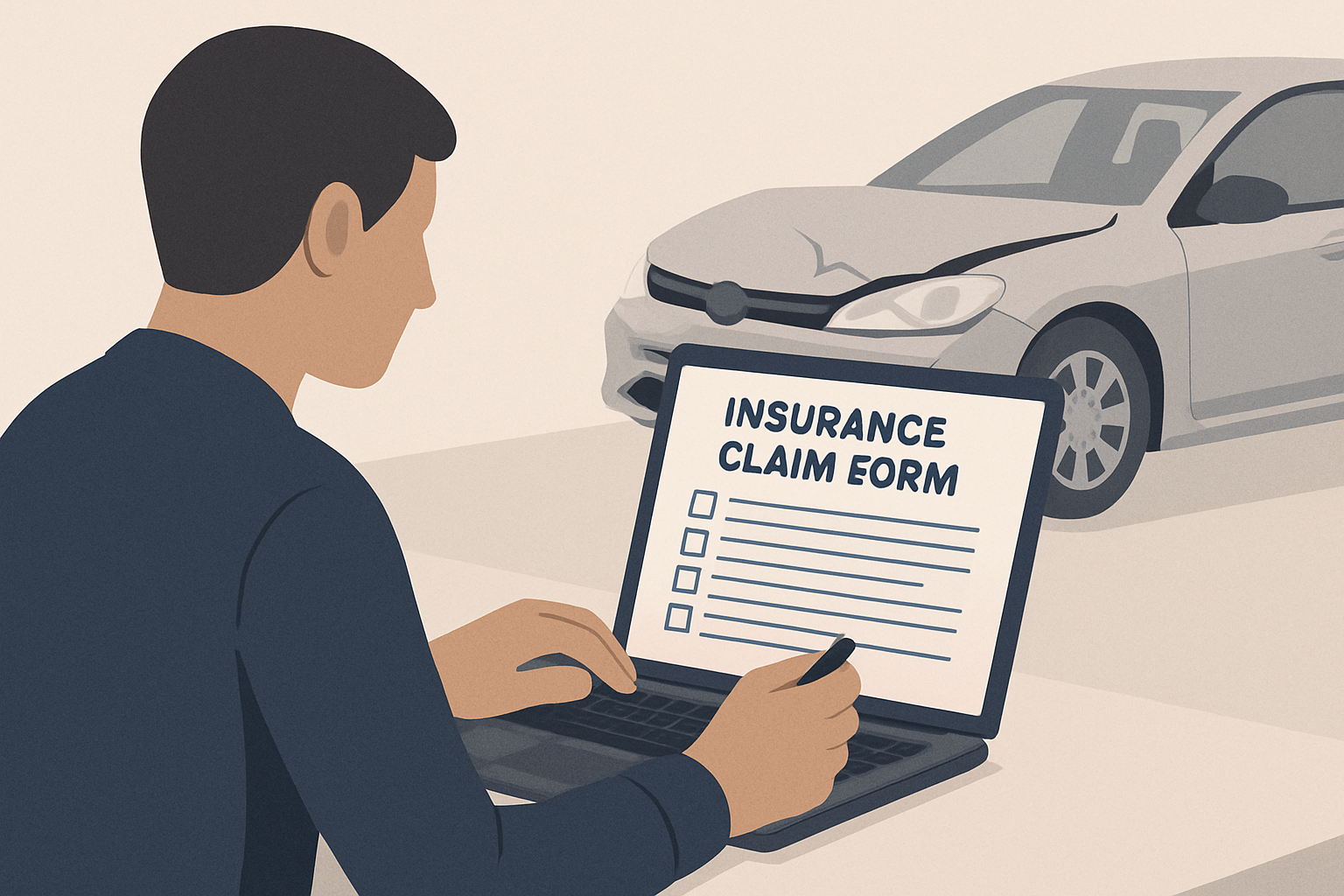
Filing a car accident insurance claim comes down to a few clear steps: report promptly, document everything, and avoid accepting the first lowball offer. With about 2.42 million people injured in U.S. crashes in 2024 (Advocates for Highway and Auto Safety, citing NHTSA, 2025), insurers process millions of these claims — knowing the process protects your payout.

Key Takeaways
- Report the crash to your insurer promptly — some deadlines are just days.
- Document damage, injuries, and the scene before anything is repaired.
- You’re not required to give a recorded statement to the other driver’s insurer.
- First offers are usually low; don’t accept before knowing your full costs.
Step 1: Report the Accident to Your Insurer
Notify your insurance company as soon as possible after the crash. Many policies require “prompt” notice, and some set deadlines of just a few days. Reporting early starts your claim and avoids giving the insurer a reason to deny it later.
Step 2: Gather and Submit Documentation
Strong documentation is what moves a claim forward smoothly. Submit everything you collected at the scene, plus any follow-up records.
- Photos of all vehicle damage and the accident scene
- The police report number
- The other driver’s insurance and contact details
- Medical records and bills, if you were injured
Step 3: Work With the Claims Adjuster
An adjuster will review your claim, inspect the damage, and estimate a payout. Be factual and cooperative with your own insurer. But you are not required to give a recorded statement to the other driver’s insurance company — those statements can be used to reduce your claim.
Step 4: Review the Settlement Offer Carefully
Initial settlement offers are typically below the real value of your claim. Once you accept, it’s final — you can’t reopen the claim if you later need more treatment or repairs. Make sure the offer covers all current and likely future costs before signing.
Insurer offering less than you expected? A free attorney review can tell you if it’s fair.
What If Your Claim Is Denied or Underpaid?
A denial is not the end of the road. Insurers must give a reason, so start by requesting the denial in writing and identifying the exact basis — a missed deadline, a coverage gap, or a fault dispute. Many denials come down to missing documentation that you can still supply.
If you believe the decision is wrong, you can appeal directly with the insurer, escalate to a supervisor, or file a complaint with your state’s department of insurance. For larger disputes, a personal injury attorney can review the file and press the claim — often the leverage that turns a denial into a fair payment.
How Long Does the Claims Process Take?
Simple property-damage claims can resolve in a few weeks, while injury claims typically take months because they can’t be settled fairly until you reach maximum medical improvement — the point where your condition stabilizes. Settling before then risks leaving future medical costs uncovered.
Several factors stretch the timeline: disputed fault, severe injuries, multiple parties, or an uncooperative insurer. Staying organized, responding promptly to requests, and keeping thorough records are the best ways to keep your claim moving as quickly as possible.
What Documents Do You Need to File a Claim?
A well-documented claim moves faster and settles higher. Before you contact the insurer, gather the core paperwork so you can respond to any request without delay. Missing documents are one of the most common reasons claims stall or get denied.
- The police report or its report number.
- Photos of the damage, the scene, and any visible injuries.
- Names, contact details, and insurance info for all drivers.
- Witness names and contact information.
- All medical records and bills related to the crash.
- Receipts for out-of-pocket costs and proof of lost wages.
Should You Use Your Own Insurance or the Other Driver’s?
It depends on fault and your state’s rules. In no-fault states, you generally file with your own insurer for injury costs regardless of who caused the crash. In at-fault states, you can pursue the at-fault driver’s insurer for your damages.
Using your own collision coverage can be faster even when the other driver is at fault — your insurer pays your repair, then recovers from the other side and refunds your deductible. Weigh speed against the deductible when deciding which route to take.
Finally, keep a simple timeline of every contact with the insurer: dates, names, and what was said. If a dispute arises later, this running log is powerful evidence that you acted in good faith and met every deadline — and it keeps you from repeating information or losing track of promises the adjuster made.
Frequently Asked Questions
How long do I have to file an insurance claim?
Insurance deadlines are separate from legal ones and are usually much shorter — sometimes just a few days to report. Check your policy and notify your insurer immediately. The legal statute of limitations for a lawsuit is typically 2 to 3 years.
Should I file with my insurer or the other driver’s?
It depends on fault and your state. In no-fault states, you file with your own insurer first. In at-fault states, you may claim against the responsible driver’s policy. When unsure, report to your own insurer and ask how to proceed.
What if my claim is denied?
A denial isn’t always final. Ask for the reason in writing, fix any missing documentation, and appeal. If the denial seems unfair or involves serious injuries, a free attorney consultation can help you challenge it.
Conclusion
Filing a car accident insurance claim is manageable when you act fast and document thoroughly. Report promptly, keep detailed records, and scrutinize any settlement offer before accepting. When injuries or denials complicate things, a free legal review can protect what you’re owed.
Disclaimer: This article is for general informational purposes only and does not constitute legal or insurance advice. Policies and laws vary. Consult a licensed attorney or your insurer for advice about your specific situation.