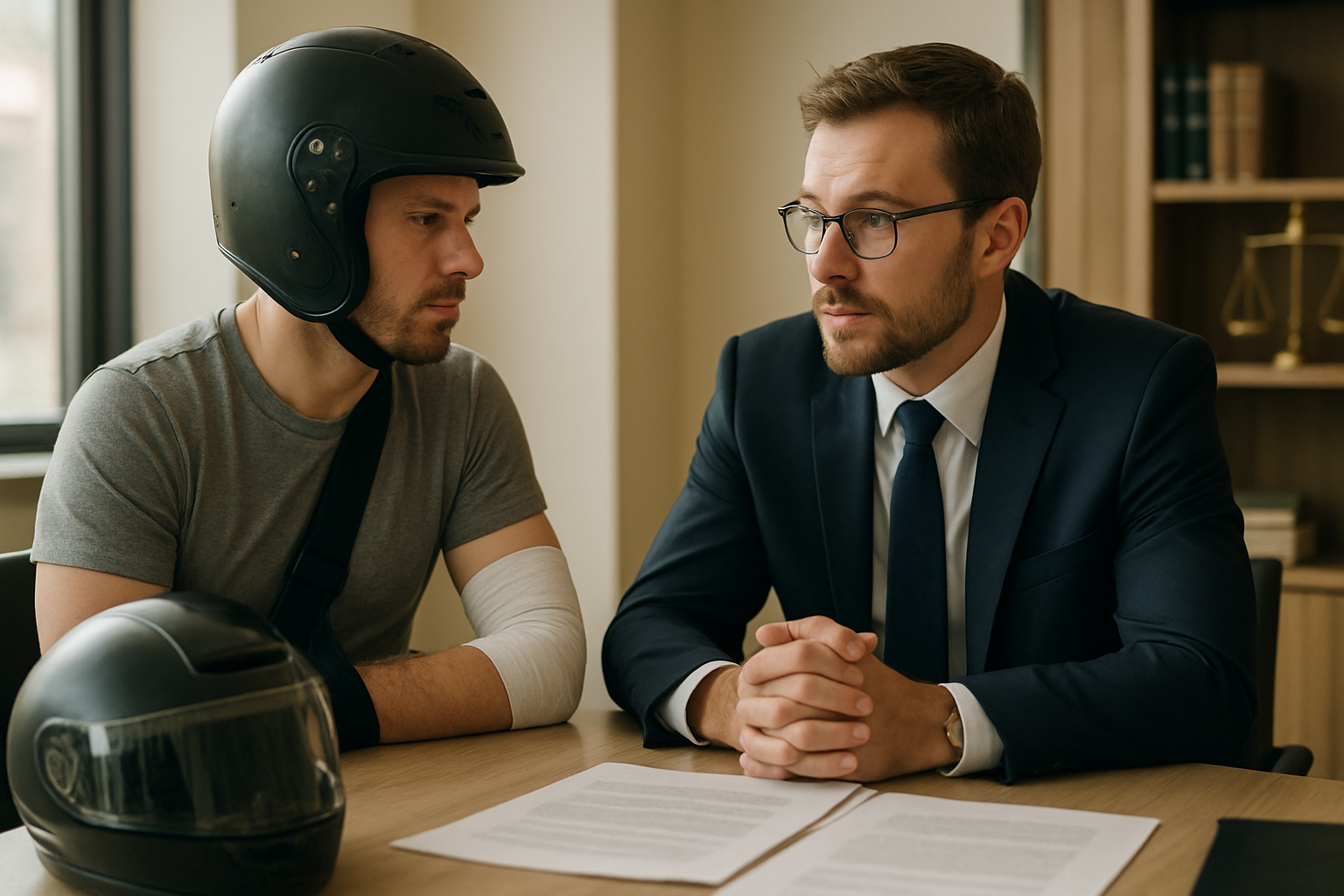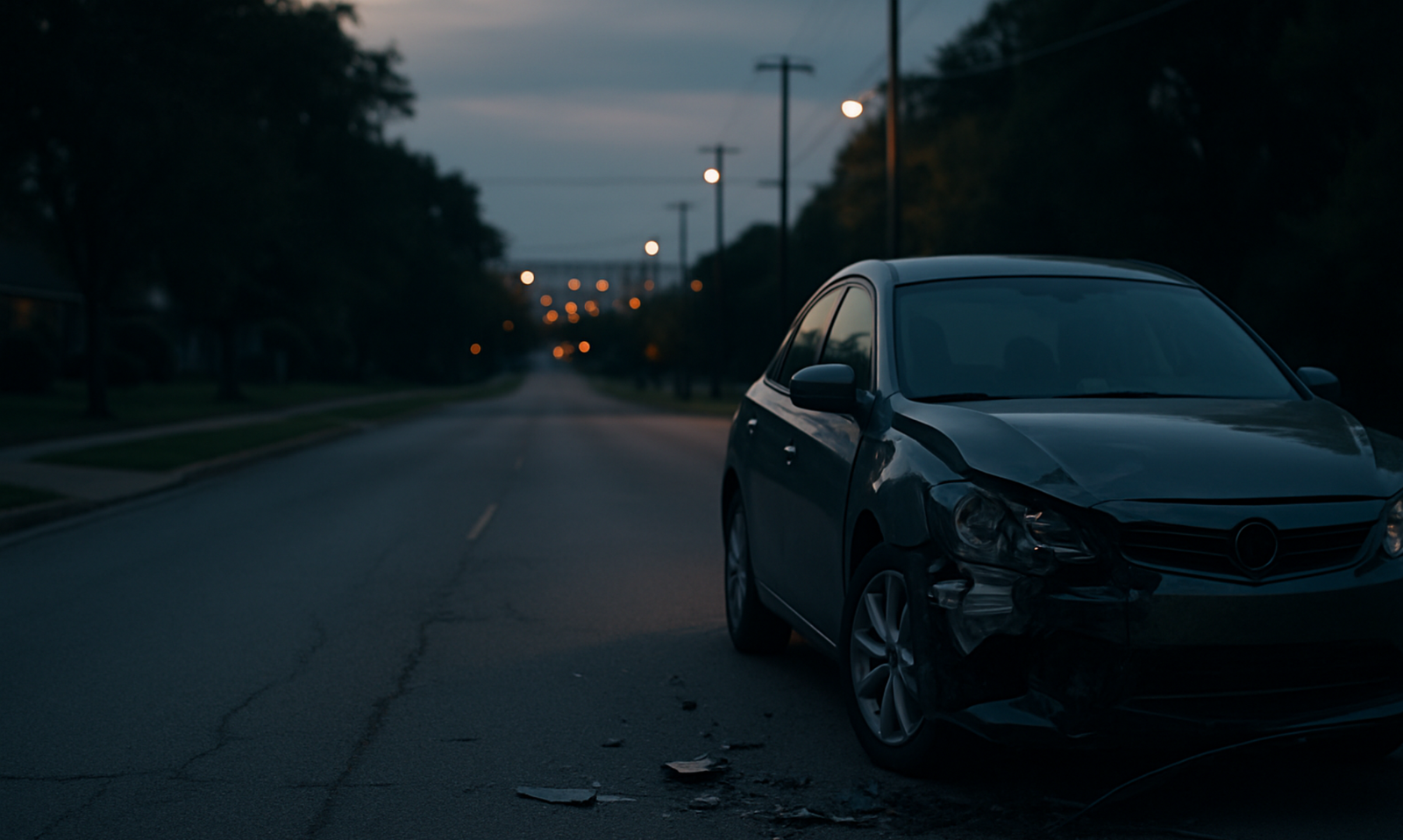
T-Bone Accident Lawyer: Who Is at Fault and How to Claim

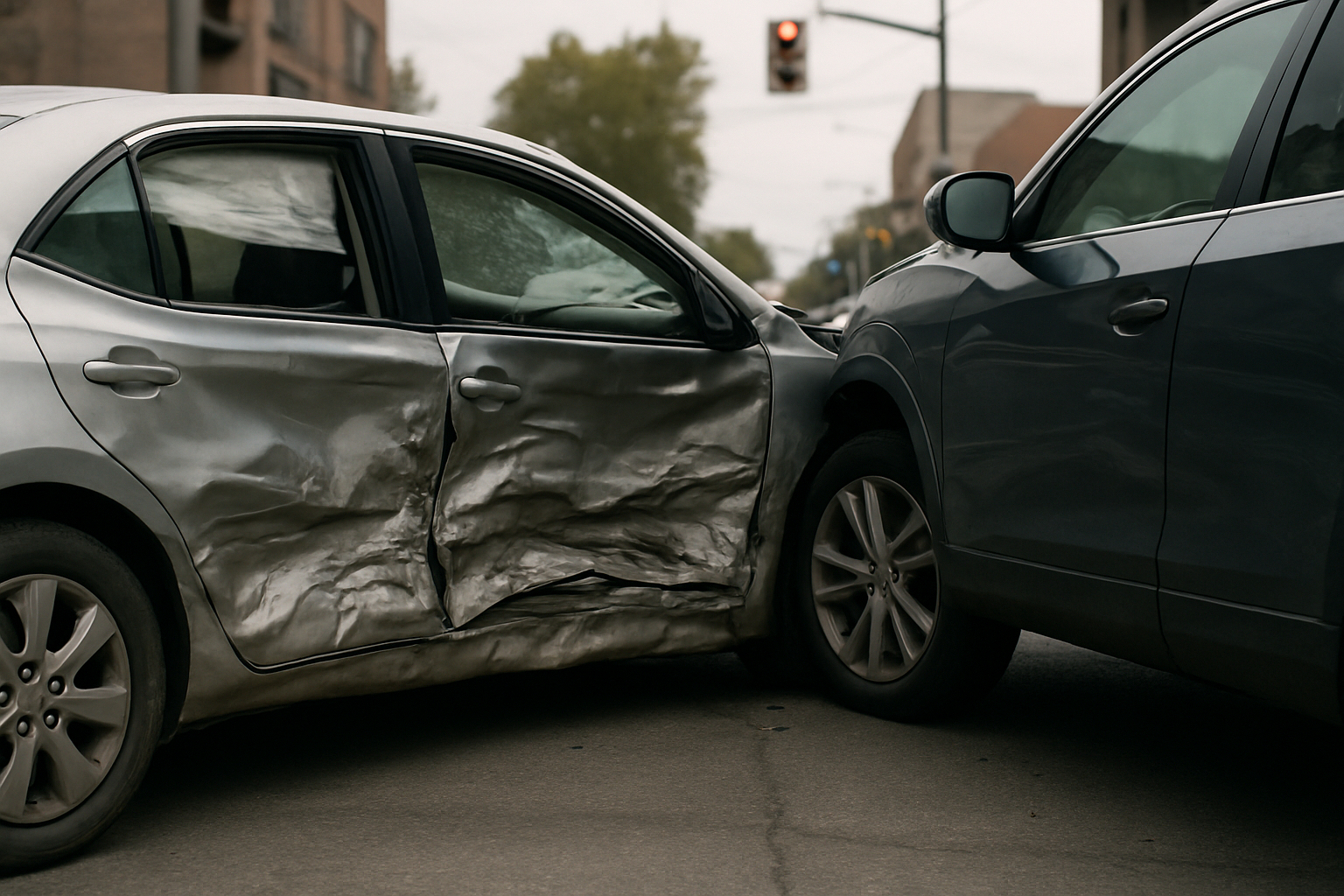
Side-impact T-bone collision at an intersection

A T-bone accident lawyer helps victims of side-impact crashes recover compensation — and fault usually comes down to who had the right of way at the intersection. These crashes cause serious injuries because the side of a car offers little protection. Most T-bone accident lawyers offer a free consultation and work on contingency, so there’s no upfront cost.

Key Takeaways

  • T-bone (side-impact) crashes usually happen at intersections.
  • Fault turns on who had the right of way — a red light or failure to yield.
  • Side impacts cause severe injuries; the car’s side offers little protection.
  • Evidence like traffic-camera footage and witnesses is often decisive.
  • Most T-bone accident lawyers work on contingency — no fee unless you win.

Who Is at Fault in a T-Bone Accident?

Fault in a T-bone crash almost always comes down to right of way. Whoever failed to yield — by running a red light, rolling a stop sign, or turning across traffic — is usually at fault. The challenge is proving which driver had the green light or right of way.

That’s why evidence is decisive here. Traffic-camera footage, witness statements, and the police report often settle the dispute. See our guide on how fault is determined.
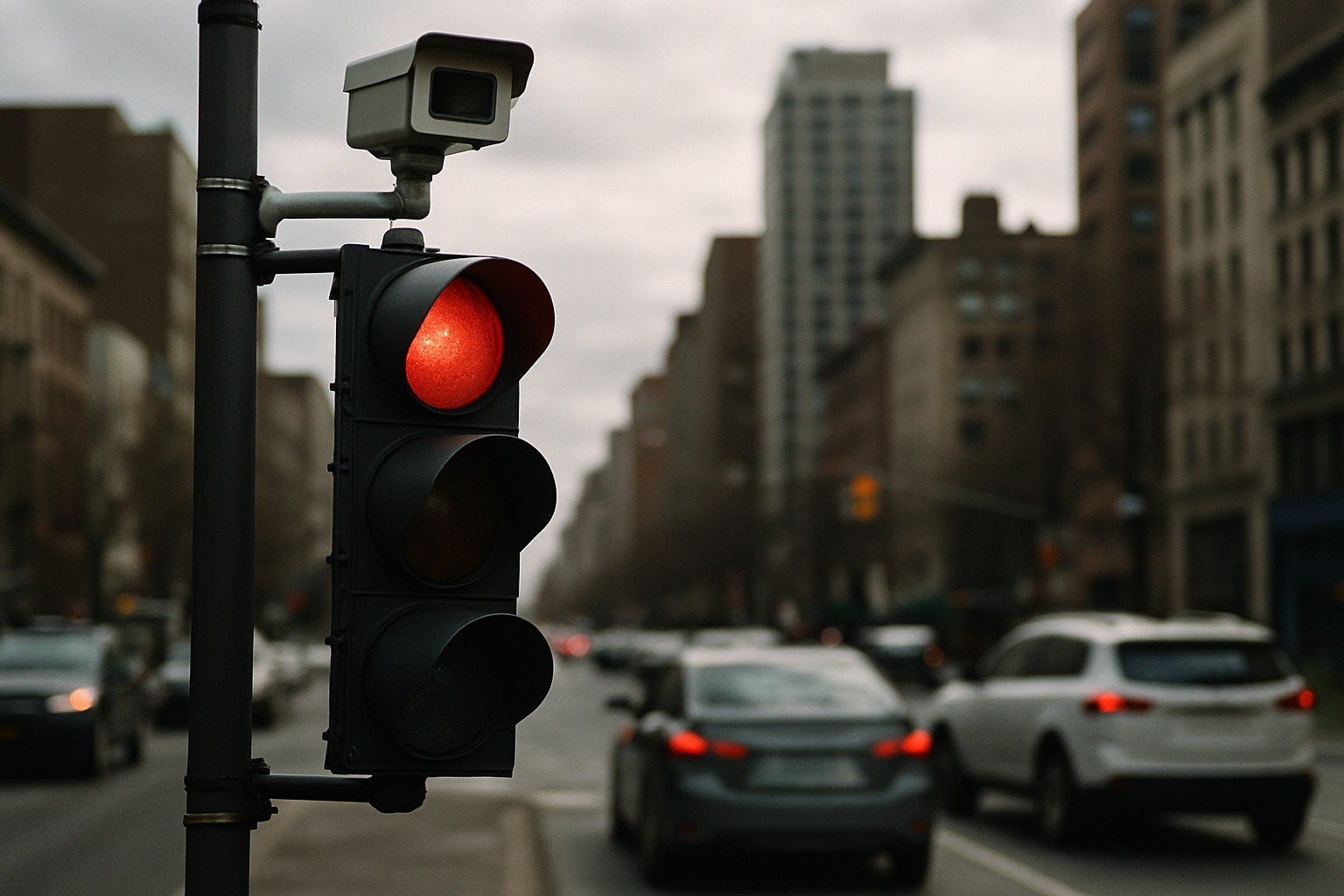
Intersection traffic camera that captures T-bone crashes

Why Are Side-Impact Injuries So Serious?

A T-bone hits the side of the vehicle, where there’s only a door between the occupant and the other car — far less crumple zone than the front or rear. That means side impacts often cause severe injuries, even at moderate speeds:

  • Broken ribs and internal injuries — from direct side force.
  • Head and brain injuries — from being thrown sideways.
  • Pelvic and hip fractures — common in side impacts.
  • Spinal injuries — from the sudden lateral motion.

How Do You Prove Fault in a T-Bone Crash?

Because both drivers often claim they had the green light, proving who actually had the right of way is the heart of the case. A lawyer gathers the evidence that decides it:

  1. Traffic-camera or red-light-camera footage — the clearest proof.
  2. Witness statements — neutral third parties who saw the signals.
  3. The police report — including the officer’s assessment.
  4. Vehicle damage patterns — which can show the angle and timing of impact.

Shared fault is possible too — see our guide on comparative fault and how it affects your recovery.

What Does a T-Bone Accident Lawyer Do?

A lawyer moves fast to secure intersection footage before it’s overwritten, gathers witness accounts, proves who had the right of way, and values your side-impact injuries fully. They counter the other driver’s claim that they had the green light.

Most work on contingency, taking a percentage only if they win — see what percentage a lawyer takes. Consultations are typically free.

When Should You Call a T-Bone Accident Lawyer?

Quickly — intersection camera footage can be overwritten within days. Contact a lawyer if:

  • You were injured in a side-impact crash at an intersection.
  • Both drivers claim they had the green light.
  • The insurer is disputing fault or blaming you.
  • You suffered serious injuries like fractures or head trauma.

Fast action preserves the footage that wins these cases and protects your deadline — see how long a settlement takes.

Bottom line: a T-bone crash usually comes down to who had the right of way, and the side impact causes serious injuries. Proving fault takes evidence like intersection footage — which fades fast. A T-bone accident lawyer secures it and proves your case, usually at no cost unless they win.

Can Fault Be Shared in a T-Bone Accident?

Yes — T-bone crashes aren’t always one driver’s fault. Even if another driver ran the light, you could be assigned partial fault for speeding or being distracted, which reduces your recovery under comparative negligence rules. This is exactly what insurers try to exploit.

  • Pure comparative states — your award is reduced by your share of fault.
  • Modified comparative states — you recover only if you’re under 50–51% at fault.
  • Contributory-negligence states — even 1% fault can bar recovery entirely.

Because a small shift in the assigned fault percentage can cost you thousands, it’s worth documenting the crash thoroughly and letting a lawyer challenge any unfair share of blame. In an intersection crash where both drivers claim the green, that fault percentage is often the whole battle.

Timing is critical in T-bone cases because the best evidence disappears fastest. Traffic-camera and red-light-camera footage is frequently overwritten within days to weeks, and nearby business surveillance cameras recycle even faster. Once that footage is gone, an intersection crash can come down to one driver’s word against the other’s.

That’s why calling a lawyer quickly matters so much here. A T-bone accident lawyer can send preservation requests to the city and nearby businesses within days, locking down the footage that proves who ran the light — before it’s erased. That single step often decides the entire case.

Frequently Asked Questions

Who is at fault in a T-bone accident?

Usually the driver who failed to yield the right of way — by running a red light, rolling a stop sign, or turning across traffic. The challenge is proving which driver had the green light, which is why camera footage, witnesses, and the police report are decisive.

How do you prove fault in a T-bone crash?

With evidence of who had the right of way: traffic-camera or red-light-camera footage, witness statements, the police report, and vehicle damage patterns showing the angle of impact. A lawyer moves fast to secure intersection footage before it’s overwritten.

Why are T-bone accident injuries so serious?

Because the impact hits the side of the car, where only a door separates the occupant from the other vehicle — far less crumple zone than the front or rear. This causes severe injuries like broken ribs, internal damage, head trauma, and pelvic fractures, even at moderate speeds.

Do I need a lawyer for a T-bone accident?

Often yes, because fault is frequently disputed — both drivers may claim the green light — and injuries tend to be serious. A T-bone accident lawyer secures intersection footage, proves right of way, and values your injuries. Consultations are free and most work on contingency.

Related Guides

Head-On Collision Lawyer: How to Recover After a Serious Crash

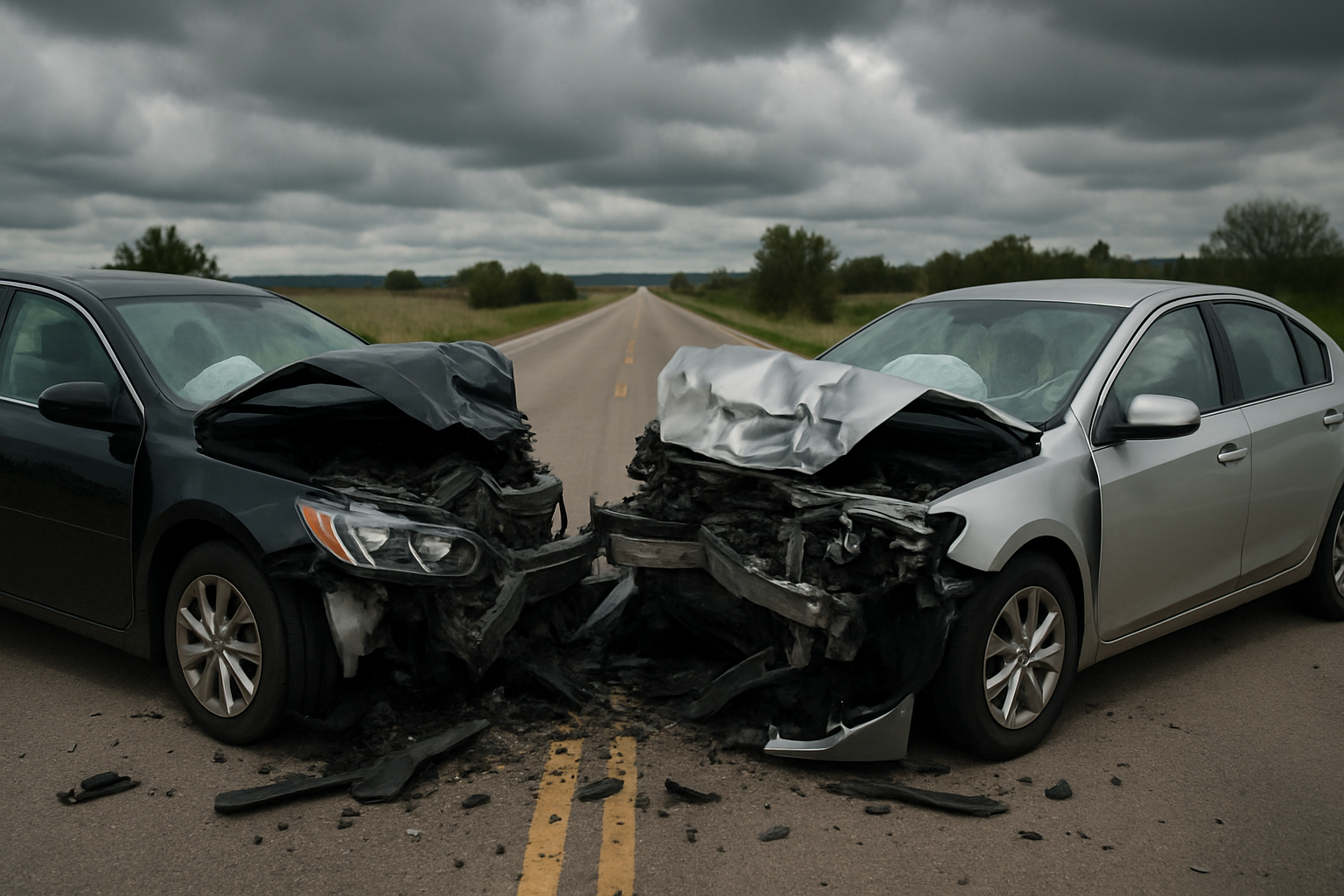
Two cars after a head-on collision on a highway

A head-on collision lawyer helps victims of these catastrophic crashes recover compensation — and the stakes are high, because head-on impacts combine the speed of both vehicles and cause the most severe injuries. Fault often turns on which driver crossed the center line. Most head-on collision lawyers offer a free consultation and work on contingency, so there’s no upfront cost.

Key Takeaways

  • Head-on crashes are among the deadliest, causing catastrophic injuries.
  • Fault usually turns on which driver crossed the center line or drove wrong-way.
  • Claims are high-value — and insurers fight hard to limit them.
  • Multiple parties (a road defect, another driver) can sometimes share blame.
  • Most head-on collision lawyers work on contingency — no fee unless you win.

What Causes Head-On Collisions?

Head-on crashes usually happen when a driver ends up in oncoming traffic. The cause points directly to fault, so identifying it matters. Common causes include:

  • Distracted or drowsy driving — drifting across the center line.
  • Impaired driving — drunk or drugged drivers going the wrong way.
  • Unsafe passing — overtaking into oncoming traffic.
  • Wrong-way entry — entering a highway ramp the wrong way.

Whoever left their lane is usually at fault, but a road defect or another driver can share blame. See our guide on how fault is determined.

Investigating a head-on collision to prove fault

Why Are Head-On Collision Claims High-Value?

Because a head-on impact combines the speed of both vehicles, the forces are enormous and injuries are typically catastrophic — traumatic brain injuries, spinal damage, multiple fractures, or worse. That makes these claims high-value, covering extensive medical care and long-term costs.

Insurers know the stakes and fight hard to limit payouts. For fatal crashes, families may have a separate claim — a lawyer can explain how these connect to overall settlement values.

What Compensation Can You Recover?

Given the severity, a head-on collision claim can be substantial. It may include:

  • Medical bills — emergency care, surgery, and long-term rehabilitation.
  • Lost income — and lost future earning capacity if you can’t return to work.
  • Pain and suffering — the severe physical and emotional harm.
  • Future care costs — ongoing treatment for permanent injuries.

What Does a Head-On Collision Lawyer Do?

A lawyer investigates who crossed the center line, gathers evidence (skid marks, witness accounts, vehicle data), proves fault, and values the full extent of catastrophic injuries including lifelong care. They deal with insurers built to minimize these large claims.

Most work on contingency, taking a percentage only if they win — see what percentage a lawyer takes. Consultations are typically free.

When Should You Call a Head-On Collision Lawyer?

As soon as possible. These claims are high-value and complex, and evidence must be preserved. Contact a lawyer if:

  • You or a loved one suffered serious injuries in a head-on crash.
  • There’s a dispute over who crossed the center line.
  • The insurer contacts you quickly with an offer.
  • The at-fault driver was impaired, wrong-way, or uninsured.

Fast action preserves evidence and protects your deadline — see how long a settlement takes. If the driver was uninsured, see hit by an uninsured driver.

Bottom line: a head-on crash is among the most serious, with catastrophic injuries and high-value claims. Fault usually turns on who crossed the center line, and insurers fight hard to limit payouts. A head-on collision lawyer proves fault and values lifelong costs, usually at no cost unless they win.

What If a Loved One Died in a Head-On Crash?

Head-on collisions are among the most likely to be fatal, and when a family loses someone, they may have a separate wrongful death claim. This lets surviving family recover for their loss — funeral costs, lost income the person would have provided, and the loss of companionship.

It’s a civil claim, entirely separate from any criminal case against the at-fault driver, and it’s the family’s to pursue. A lawyer handles it with compassion so the family can focus on grieving. Even if the at-fault driver faces no charges, the family can still bring the civil claim — and most lawyers handle these on contingency, with no upfront cost.

A key early step in a head-on case is preserving the vehicles themselves. The cars hold crucial evidence — the airbag control module (the ‘black box’) records speed and braking, and the damage patterns show the angle of impact. Once a vehicle is repaired or scrapped, that evidence is gone for good.

A head-on collision lawyer sends an early legal hold to preserve the vehicles and their data, then works with accident-reconstruction experts to prove exactly who crossed the center line. In a high-value catastrophic-injury case, that technical proof is often what secures a full settlement rather than a disputed, reduced one.

The sooner an experienced head-on collision lawyer is involved, the more of this critical evidence can be preserved and the stronger your case becomes. Because these crashes cause such severe, life-altering injuries, having the full picture documented from the start is what separates a fair settlement from a lowball offer, and it costs nothing upfront to get that help.

Frequently Asked Questions

Who is at fault in a head-on collision?

Usually the driver who crossed the center line or drove the wrong way, since staying in your lane is a basic duty. Causes like distraction, impairment, or unsafe passing point to fault. Occasionally a road defect or another driver shares blame, which a lawyer investigates.

Why are head-on collision claims worth more?

Because a head-on impact combines both vehicles’ speed, the forces are enormous and injuries are typically catastrophic — brain, spinal, or multiple-fracture injuries. That makes claims high-value, covering extensive and long-term medical care, so insurers fight hard to limit them.

Do I need a lawyer for a head-on collision?

Almost always. These are high-value, complex claims with severe injuries, and insurers work hard to minimize them. A head-on collision lawyer proves fault, values lifelong care costs, and negotiates from strength. Consultations are free and most work on contingency.
What compensation can I get after a head-on crash?

You may recover medical bills, lost income and future earning capacity, pain and suffering, and long-term care costs. Because injuries are often catastrophic, these claims can be substantial. A lawyer documents the full extent so the insurer can’t undervalue it.

Related Guides

Rear-End Collision Lawyer: Who Pays and How to Claim

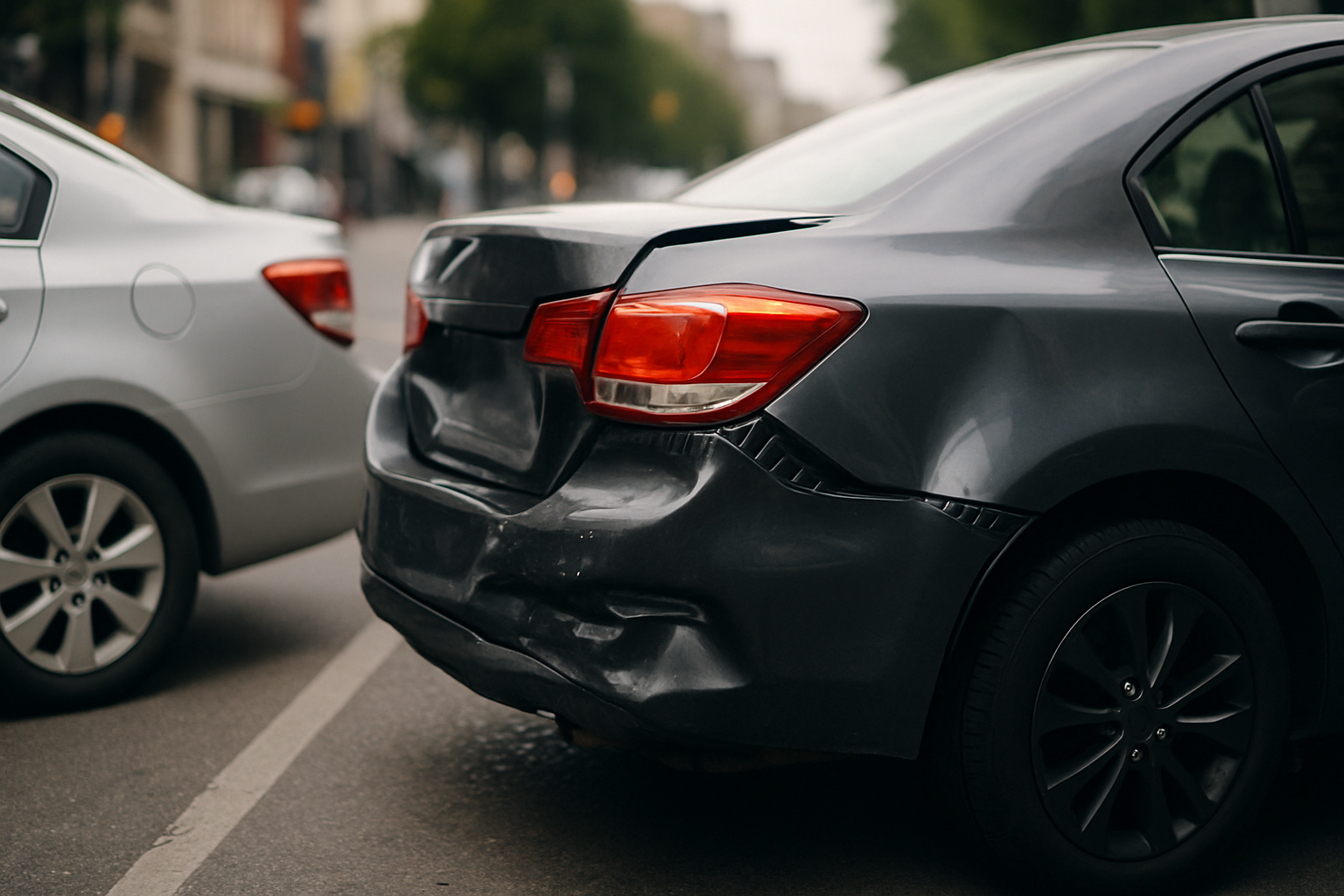
Two cars after a rear-end collision on a city street

A rear-end collision lawyer helps you recover compensation after being hit from behind — and these are often strong claims, because the rear driver is usually at fault for following too closely or being distracted. Injuries like whiplash are common and sometimes surface days later. Most rear-end collision lawyers offer a free consultation and work on contingency, so there’s no upfront cost.

Key Takeaways

  • The rear driver is presumed at fault in most rear-end crashes.
  • Whiplash and back injuries are common and can appear days later.
  • Insurers often lowball soft-tissue injuries — a lawyer pushes back.
  • You can still recover even if the rear-end presumption is disputed.
  • Most rear-end collision lawyers work on contingency — no fee unless you win.

Who Is at Fault in a Rear-End Collision?

In most rear-end crashes, the driver who hit you from behind is presumed at fault. Drivers are legally required to keep a safe following distance and stay alert, so hitting the car in front usually means following too closely, speeding, or distraction.

But the presumption isn’t absolute — the lead driver can share blame (e.g., a sudden unsafe stop or broken brake lights). For how blame is decided, see our guide on how fault is determined.

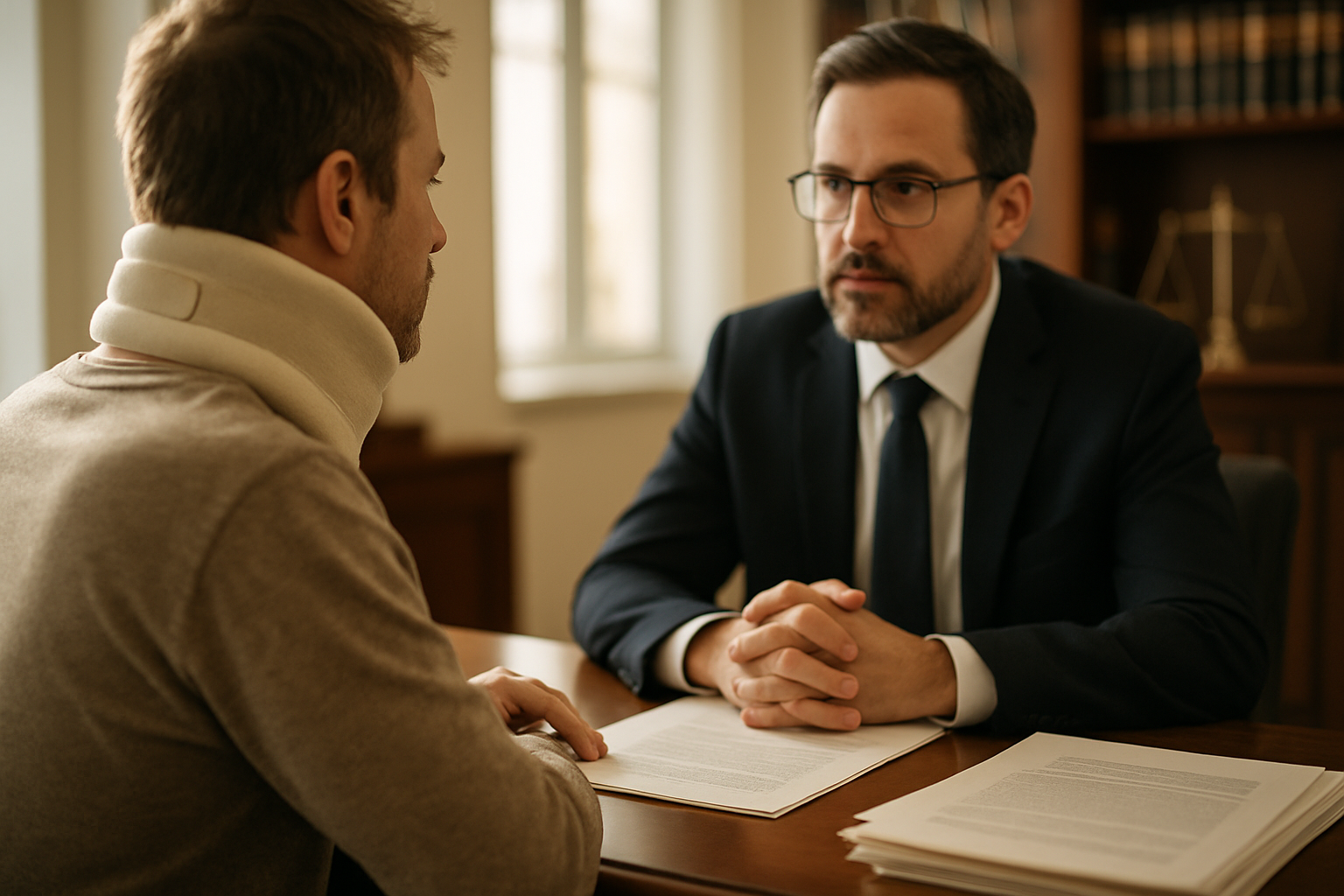
Whiplash victim consulting a rear-end collision lawyer

What Injuries Are Common in Rear-End Crashes?

Even a low-speed rear-end hit can cause real injury, because your body is jolted forward and back suddenly. Common injuries include:

  • Whiplash — neck strain that often appears hours or days later.
  • Back and spine injuries — herniated discs and soft-tissue damage.
  • Concussions — from the head snapping or hitting the headrest.
  • Shoulder and wrist injuries — from bracing on the wheel.

Why Do Insurers Undervalue Rear-End Claims?

Here’s the catch: because whiplash and soft-tissue injuries don’t show up on an X-ray, insurers routinely argue they’re minor or pre-existing, and offer far less than the claim is worth. They may also point to a low-speed impact to claim you couldn’t be seriously hurt.

A lawyer counters this with medical documentation tying your injuries to the crash. Seeing a doctor promptly is critical — see our guide on whiplash after a car accident and delayed injuries.

What Does a Rear-End Collision Lawyer Do?

A lawyer proves the rear driver’s fault, documents your injuries fully (including future care), and counters the insurer’s attempt to minimize soft-tissue claims. They value your full damages and negotiate — or file suit if needed.

Most work on contingency, taking a percentage only if they win — see what percentage a lawyer takes. Consultations are typically free.

When Should You Call a Rear-End Collision Lawyer?

Promptly, especially if you’re hurt. Insurers move fast to settle low before your injuries are clear. Contact a lawyer if:

  • You have neck, back, or head symptoms — even mild ones.
  • The insurer is blaming you or disputing fault.
  • You’re offered a quick, low settlement.
  • The other driver was uninsured or fled.

Acting fast preserves evidence and protects your deadline — see how long a settlement takes. If the driver had no insurance, see hit by an uninsured driver.

Bottom line: a rear-end crash usually gives you a strong claim — the driver behind is presumed at fault — but insurers lowball the whiplash injuries that come with it. A rear-end collision lawyer proves fault and documents your injuries, usually at no cost unless they win.

What Should You Do After Being Rear-Ended?

Your actions right after the crash protect both your health and your claim. If you’re able:

  • See a doctor promptly — whiplash can surface days later; early records tie it to the crash.
  • Photograph everything — both vehicles, the road, and any skid marks.
  • Get the other driver’s details and witness contacts.
  • Don’t downplay your injuries — ‘I’m fine’ can be used against your claim.
  • Keep every medical bill and record tied to the crash.

Prompt, consistent medical treatment is your strongest protection against the insurer’s favorite argument — that a low-speed rear-end couldn’t have hurt you. A documented gap-free treatment history makes that argument much harder to sustain.

One more thing insurers watch for is a gap in treatment. If you see a doctor once and then stop, they’ll argue you recovered or weren’t really hurt. Following through on the full treatment plan — physical therapy, follow-ups, imaging — both helps you heal and protects the value of your claim.

It also helps to keep a simple journal of how the injury affects daily life: missed work, disrupted sleep, activities you can no longer do. This kind of record supports a pain-and-suffering claim that goes beyond the medical bills, which a rear-end collision lawyer can use to argue for full, fair compensation.

Frequently Asked Questions

Who is at fault in a rear-end collision?

Usually the rear driver, who is presumed at fault for following too closely or being distracted. The presumption isn’t absolute — the lead driver can share blame for a sudden unsafe stop or broken brake lights — but in most rear-end crashes the driver behind is liable.

How much is a rear-end collision claim worth?

It depends on your injuries, but insurers routinely undervalue whiplash and soft-tissue claims because they don’t show on an X-ray. A lawyer documents your injuries and future care to counter lowball offers. Most work on contingency, so no fee unless you win.

Do I need a lawyer for a rear-end collision?

If you’re injured, often yes. Insurers frequently argue whiplash is minor or pre-existing and offer far less than the claim is worth. A rear-end collision lawyer proves fault and documents your injuries. Consultations are free and most work on contingency.
Can I claim for whiplash after being rear-ended?

Yes. Whiplash is a real, compensable injury even though it doesn’t appear on an X-ray. It often surfaces hours or days later, so see a doctor promptly. Prompt medical records tying the injury to the crash are key to a successful claim.

Related Guides

Wrongful Death Car Accident Lawyer: How Families Recover

A memorial flower and candle representing loss after a fatal crash

A wrongful death car accident lawyer helps families recover compensation after a fatal crash caused by another driver. These claims let surviving family members pursue damages for their loss — funeral costs, lost income, and the loss of companionship. Rules on who can file and the deadline vary by state. Most wrongful death lawyers offer a free, compassionate consultation and work on contingency.

Key Takeaways

  • A wrongful death claim lets surviving family recover after a fatal crash.
  • Only certain relatives can file — usually a spouse, children, or parents.
  • Damages include funeral costs, lost income, and loss of companionship.
  • It’s a civil claim — separate from any criminal case against the driver.
  • Most wrongful death lawyers work on contingency — no fee unless you win.

What Is a Wrongful Death Claim?

A wrongful death claim is a civil lawsuit brought when someone dies because of another person’s negligence — here, a fatal car accident caused by another driver. It lets the family recover for the financial and emotional losses the death caused, since the victim can no longer bring their own claim.

It’s entirely separate from any criminal case. Even if the driver faces no charges, the family can still pursue a civil wrongful death claim. For the broader picture, see our complete car accident lawyer guide.

A family consulting a wrongful death lawyer with compassion

Who Can File a Wrongful Death Claim?

State law decides who has the right to file, and it’s usually limited to close family. Typically eligible are:

  • A surviving spouse — almost always has the primary right.
  • Children — including adult children in most states.
  • Parents — especially for a deceased minor or unmarried adult.
  • The estate’s representative — who may file on the family’s behalf.

What Damages Can a Family Recover?

Wrongful death damages aim to cover both economic and human losses. A claim may include:

  • Funeral and burial costs.
  • Medical bills — from the crash before the death.
  • Lost income and benefits — the earnings the victim would have provided.
  • Loss of companionship, guidance, and support — the human loss to the family.

Some states also allow punitive damages if the driver’s conduct was especially reckless, such as drunk or extreme reckless driving.

How Is a Wrongful Death Claim Different From a Criminal Case?

They’re separate, and the family controls the civil claim. A criminal case punishes the driver (fines, jail) and is brought by the state; a wrongful death claim seeks money for the family and is theirs to pursue. A criminal conviction can help the civil case, but isn’t required — this mirrors how a drunk driving accident claim works.

Even if the at-fault driver was uninsured, the family may still recover through other coverage — see being hit by an uninsured driver.

When Should a Family Call a Wrongful Death Lawyer?

As soon as they’re able. Evidence fades and each state sets a filing deadline — often one to three years, but sometimes shorter. Contact a lawyer if:

  • A family member died in a crash caused by another driver.
  • An insurer contacts you quickly with a settlement offer.
  • You’re unsure who can file or what the claim is worth.
  • The driver was reckless, drunk, or fled the scene.

A lawyer handles the legal process with compassion so the family can focus on grieving — and most work on contingency, so there’s no upfront cost. See what percentage a lawyer takes.

Bottom line: after a fatal crash, a wrongful death claim lets the family recover for funeral costs, lost income, and their profound loss — separate from any criminal case. A wrongful death car accident lawyer handles it with compassion, usually at no cost unless they win.

How Much Is a Wrongful Death Claim Worth?

There’s no fixed figure — it depends on the victim’s circumstances and the losses to the family — but several factors shape the value of a wrongful death claim:

  • The victim’s income and age — the future earnings the family lost.
  • Dependents — a spouse and children who relied on that support.
  • Medical and funeral costs — the direct expenses of the crash and death.
  • The nature of the loss — companionship, guidance, and care that can’t be replaced.
  • Egregious conduct — drunk or reckless driving may add punitive damages.

Because these calculations involve future earnings and hard-to-quantify human losses, insurers often open with a low figure that undervalues the family’s true loss. A wrongful death lawyer builds the full economic picture — often with financial experts — so the family isn’t shortchanged during the hardest time of their lives.

Families often hesitate to call a lawyer while grieving, worried about cost or confrontation. But a wrongful death consultation is free and carries no obligation, and most lawyers handle these cases with real sensitivity — taking the legal burden off the family entirely so they can focus on each other.

Acting within the deadline also protects the family’s options. Insurers sometimes approach grieving families early with a quick, low settlement, hoping they’ll accept before understanding the claim’s true value. A lawyer makes sure the family isn’t pressured into signing away their rights at their most vulnerable moment.

Frequently Asked Questions

What is a wrongful death car accident claim?

It’s a civil lawsuit brought by surviving family after someone dies in a crash caused by another driver’s negligence. It lets the family recover for funeral costs, lost income, and loss of companionship. It’s separate from any criminal case against the driver.

Who can file a wrongful death claim?

State law decides, but it’s usually close family — a surviving spouse, children (often including adult children), or parents. In some states the estate’s representative files on the family’s behalf. A lawyer confirms who has the right in your state.

What damages can a family recover?

A wrongful death claim can cover funeral and burial costs, the victim’s medical bills before death, lost income and benefits, and loss of companionship, guidance, and support. Some states also allow punitive damages if the driver was especially reckless, such as drunk driving.

How long do you have to file a wrongful death claim?

It varies by state — often one to three years from the date of death, but sometimes shorter, and government-vehicle cases can be much shorter. Missing the deadline usually bars the claim, so contacting a lawyer promptly protects the family’s rights.

Related Guides

Bus Accident Lawyer: How to Recover After a Bus Crash

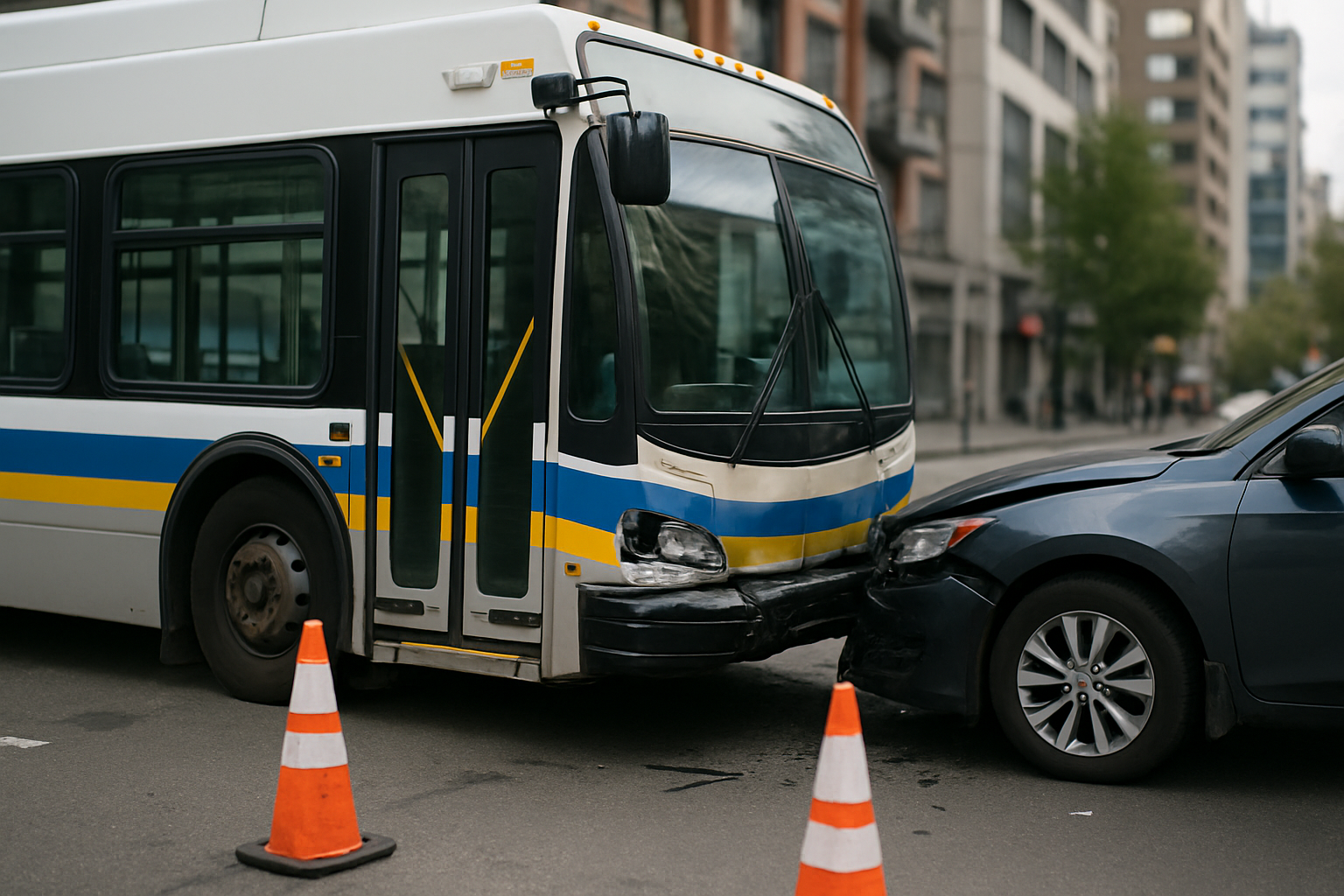
City bus after a collision on an urban street

A bus accident lawyer helps passengers and others injured in a bus crash recover compensation — claims that are often complex because the bus may be run by a government agency or a private company, each with different rules. Injuries can be serious and multiple victims may share one insurance policy. Most bus accident lawyers offer a free consultation and work on contingency.

Key Takeaways

  • Bus crashes can involve public transit, school, or private charter buses — each with different rules.
  • Claims against a government-run bus have shorter deadlines and special notice rules.
  • Passengers are almost never at fault, so they usually have a strong claim.
  • Many victims may share a limited policy, so acting fast protects your share.
  • Most bus accident lawyers work on contingency — no fee unless you win.

Who Is Liable in a Bus Accident?

It depends on the type of bus and who caused the crash. The bus driver, the bus company or transit agency, another driver, or a maintenance provider can all be liable. As a passenger, you’re almost never at fault, so you can usually claim against whichever party caused the crash.

If another driver caused it, that driver’s insurance may also apply. For how blame is decided, see our guide on finding the right lawyer to handle it.

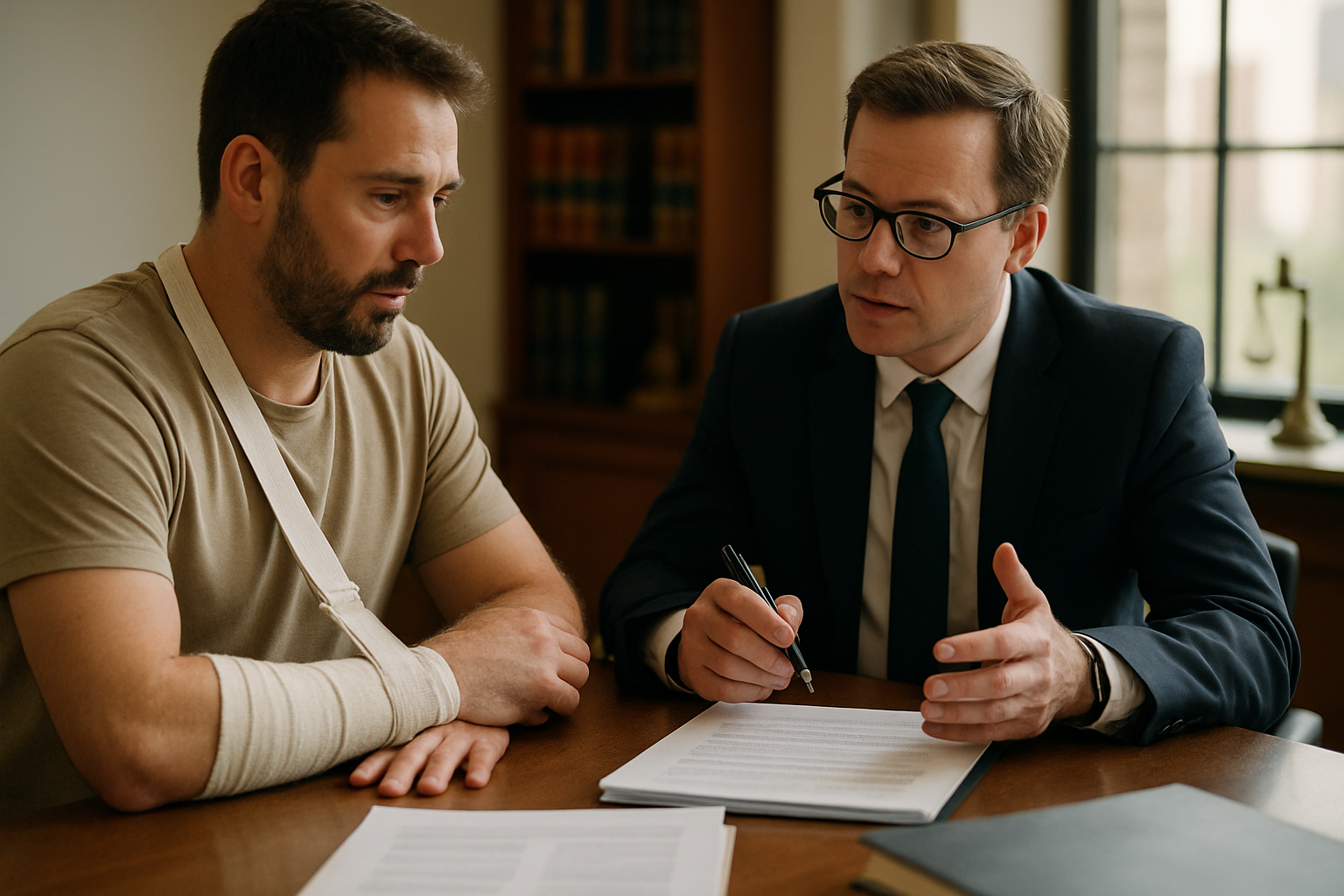
Bus accident victim consulting a lawyer

Why Are Government Bus Claims Different?

This is the biggest trap in bus cases. If the bus is run by a city, county, or transit authority, you’re filing against a government entity — which comes with special rules that can sink an unprepared claim:

  • Shorter deadlines — some require a formal notice of claim within 30–180 days.
  • Notice requirements — a specific written notice before you can even sue.
  • Damage caps — some governments limit how much you can recover.
  • Sovereign immunity — special legal protections that a lawyer must navigate.

What Compensation Can You Recover?

Because bus injuries can be serious, claims are often substantial. You may recover medical bills, lost wages, pain and suffering, and future care costs. If the at-fault party was uninsured — for example, a private driver who caused the crash — your own coverage may help.

If an uninsured driver caused the bus crash, see our guide on being hit by an uninsured driver. A lawyer identifies every policy that applies.

What Does a Bus Accident Lawyer Do?

A lawyer identifies whether the bus is public or private, meets the strict government deadlines if they apply, gathers evidence, and values your claim against insurers built to pay less. When many victims share one policy, they act fast to protect your share.

Most work on contingency, taking a percentage only if they win — see what percentage a lawyer takes. Consultations are typically free.

When Should You Call a Bus Accident Lawyer?

Immediately — especially with a government bus, where deadlines can be as short as 30 days. Contact a lawyer if:

  • You were injured as a bus passenger, pedestrian, or in another vehicle.
  • The bus was run by a city, school, or transit agency.
  • Multiple people were injured in the same crash.
  • You’re facing significant medical bills or lasting injury.

Fast action protects the short government deadline and preserves evidence — see how long a settlement takes.

Bottom line: a bus crash can give you a strong claim, but government-run buses carry short deadlines and special rules that catch people out. A bus accident lawyer meets those deadlines, pursues every liable party, and usually costs nothing unless they win.

What Should You Do After a Bus Accident?

Your actions afterward protect both your health and your claim — and with a government bus, the clock starts ticking immediately. If you’re able:

  • Get medical attention — even if you feel okay; some injuries surface later.
  • Report the crash — make sure an official incident report is filed.
  • Photograph the scene — the bus, other vehicles, and your injuries.
  • Get details — the bus number, route, operator, and witness contacts.
  • Note the bus operator — whether it’s a city, school, transit agency, or private company.

That last point is critical: identifying whether the bus is public or private determines your deadline. A government-run bus may require a formal notice of claim in as little as 30 days, so the sooner a lawyer knows who operated the bus, the sooner they can protect your right to file at all.

It also helps to understand why bus injuries can be deceptively serious. Unlike cars, most buses have no seatbelts, so passengers are thrown around in a crash — causing head injuries, fractures, and spinal damage even at moderate speeds. Standing passengers on transit buses are especially vulnerable.

These injuries can surface or worsen in the days after the crash, which is another reason to see a doctor promptly and keep every record. A bus accident lawyer ties that medical documentation to the crash, countering an insurer’s attempt to argue the injuries weren’t serious or weren’t caused by the collision.

Frequently Asked Questions

What does a bus accident lawyer do?

A bus accident lawyer determines whether the bus is public or private, meets the strict government notice deadlines if they apply, identifies every liable party, gathers evidence, and values your claim. Most work on contingency, so no fee unless they win.

Who is liable in a bus accident?

It depends on the crash. The bus driver, the bus company or transit agency, another at-fault driver, or a maintenance provider can be liable. As a passenger you’re almost never at fault, so you can usually claim against whoever caused the crash.

How long do I have to sue after a bus accident?

It varies — and government buses are the catch. A crash involving a city, county, or transit-agency bus may require a formal notice of claim within 30 to 180 days, far shorter than a normal deadline. Missing it can bar your claim, so contact a lawyer fast.

Can a bus passenger sue after a crash?

Yes. Passengers are almost never at fault, so you can typically claim against whichever party caused the crash — the bus operator, another driver, or both. A lawyer identifies the right insurer and meets any special deadlines that apply.

Related Guides

18-Wheeler Accident Lawyer: How to Recover After a Semi Crash

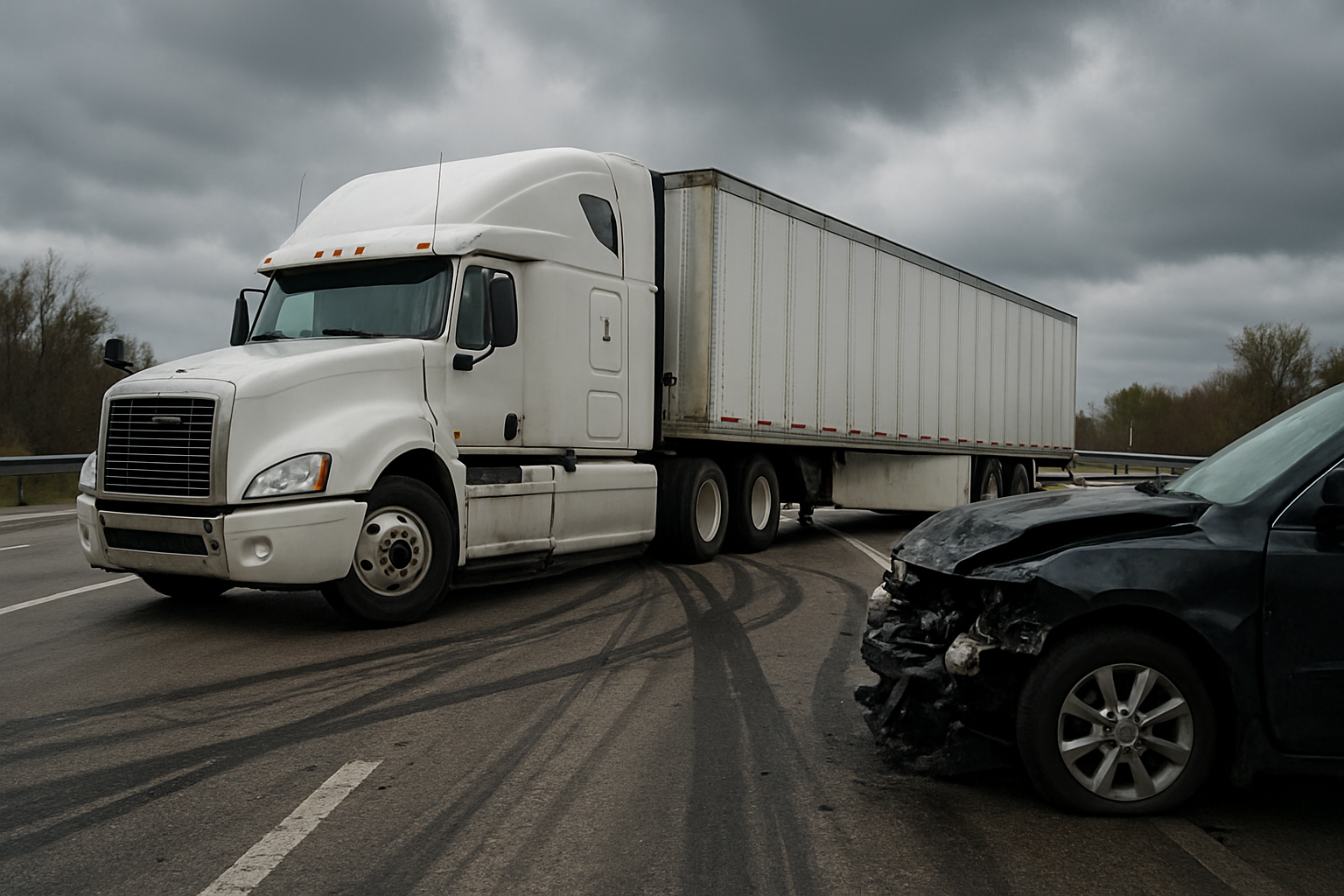
Jackknifed 18-wheeler semi truck after a highway accident

An 18-wheeler accident lawyer helps victims of semi-truck crashes recover compensation — often far more than a car crash, because injuries are catastrophic and multiple parties can be liable. Federal trucking regulations create unique evidence, but trucking companies dispatch investigators within hours, so acting fast is critical. Most 18-wheeler accident lawyers offer a free consultation and work on contingency.

Key Takeaways

  • 18-wheeler crashes cause severe injuries and larger settlements than car crashes.
  • Liability can extend to the driver, trucking company, loader, and manufacturer.
  • Federal regulations create key evidence — logs, black box data, inspections.
  • Trucking companies send investigators fast, so evidence must be preserved quickly.
  • Most 18-wheeler accident lawyers work on contingency — no fee unless you win.

Why Are 18-Wheeler Accidents Different From Car Crashes?

A loaded semi can weigh 80,000 pounds — about 20 times a passenger car. That mass makes collisions far more destructive, so injuries are typically severe and claims are high-value. The legal side is also more complex, because commercial trucking is governed by federal safety rules a car isn’t.

That extra layer is why specialized help matters. For the broader picture of these claims, see our main guide on the truck accident lawyer.

Lawyer inspecting a semi truck after a crash

Who Can Be Liable in an 18-Wheeler Accident?

Unlike a typical car crash, a semi accident often involves several responsible parties — which can mean more sources of compensation. A lawyer investigates each:

  • The truck driver — for fatigue, speeding, or distraction.
  • The trucking company — for poor hiring, training, or pushing illegal hours.
  • The cargo loader — for improperly secured or overweight loads.
  • The maintenance provider or parts maker — for brake or tire failures.

What Evidence Matters in an 18-Wheeler Crash?

Trucking is heavily regulated, creating evidence you won’t find in a car crash — but it disappears fast. A lawyer moves to preserve:

  • The truck’s black box (ECM) — recording speed, braking, and hours driven.
  • Driver hours-of-service logs — proving fatigue-rule compliance or violations.
  • Maintenance and inspection records.
  • Dashcam and traffic camera footage.

Because carriers dispatch investigators within hours, a lawyer’s early ‘preservation letter’ is often what keeps this evidence from vanishing.

How Much Is an 18-Wheeler Accident Case Worth?

There’s no fixed figure, but semi cases typically settle higher than car crashes because injuries are severe, multiple parties can pay, and commercial trucks carry far larger insurance policies. Regulatory violations can raise the value further. See average settlement amounts for context.

Most 18-wheeler accident lawyers work on contingency, taking a percentage only if they win — see what percentage a lawyer takes. Consultations are typically free.

When Should You Call an 18-Wheeler Accident Lawyer?

Immediately. Evidence like logs and black box data can be overwritten, and the trucking company is already building its defense. Contact a lawyer if:

  • You or a loved one was seriously injured in a crash with a semi.
  • The trucking company or its insurer contacted you quickly.
  • Fault is disputed or multiple vehicles were involved.
  • You’re facing major medical bills or lasting injury.

Fast action preserves the regulatory evidence that wins these cases and protects your filing deadline — see how long a settlement takes. For a local lawyer, see truck accident lawyer near me.

Bottom line: an 18-wheeler crash gives you a high-value but hard-fought claim — severe injuries, multiple liable parties, and federal evidence that must be preserved fast. An 18-wheeler accident lawyer pursues every source, usually at no cost unless they win.

What Are the Most Common Causes of 18-Wheeler Accidents?

Knowing the cause matters because each one points to who is liable. Semi crashes rarely come down to a single simple mistake — they often trace back to pressures in the trucking industry itself:

  • Driver fatigue — illegal or pushed hours-of-service, implicating both driver and carrier.
  • Speeding and tight schedules — a heavy truck needs far more stopping distance.
  • Improper or overweight loading — pointing to the cargo loader.
  • Poor maintenance — brake and tire failures that a carrier should have caught.
  • Distracted or impaired driving — the same dangers as any driver, amplified by 80,000 pounds.

Because these causes often trace back to company decisions, not just the driver, an 18-wheeler case can reach the trucking company’s much larger insurance policy. That’s a key reason these claims are worth more — and why the company fights so hard to control the narrative from the first hours after a crash.

One more reason to act fast: the federal hours-of-service and electronic logging device (ELD) data that can prove a fatigued driver is only kept for a limited time before it may be overwritten or lost. A lawyer’s early legal hold is often the only thing that secures it.

That evidence frequently makes or breaks an 18-wheeler case. When a lawyer can show the driver exceeded legal driving hours or the carrier ignored a maintenance issue, the claim’s value rises sharply — which is exactly why preserving it in the first days after the crash matters so much.

Frequently Asked Questions

What does an 18-wheeler accident lawyer do?

An 18-wheeler accident lawyer investigates who is liable — driver, trucking company, loader, or manufacturer — preserves federal evidence like logs and black box data, values your severe injuries, and negotiates against large commercial insurers. Most work on contingency, so no fee unless they win.

Why do 18-wheeler accidents settle for more?

Because a loaded semi weighs up to 80,000 pounds, injuries are typically catastrophic and claims are high-value. Multiple parties can share liability, commercial trucks carry far larger insurance policies, and federal regulation violations can strengthen and increase your claim.

Who is liable in an 18-wheeler accident?

Often more than one party. The truck driver, the trucking company, the cargo loader, and a maintenance provider or parts manufacturer can all share fault. A lawyer identifies every responsible party, which can mean more sources of compensation.

How much does an 18-wheeler accident lawyer cost?

Usually nothing upfront. Most work on a contingency fee of around one-third of the settlement and charge no fee if they don’t win. Consultations are typically free, so you can learn your options at no financial risk.

Related Guides

Car Accident Lawyer Near Me: How to Find the Right One (2026)

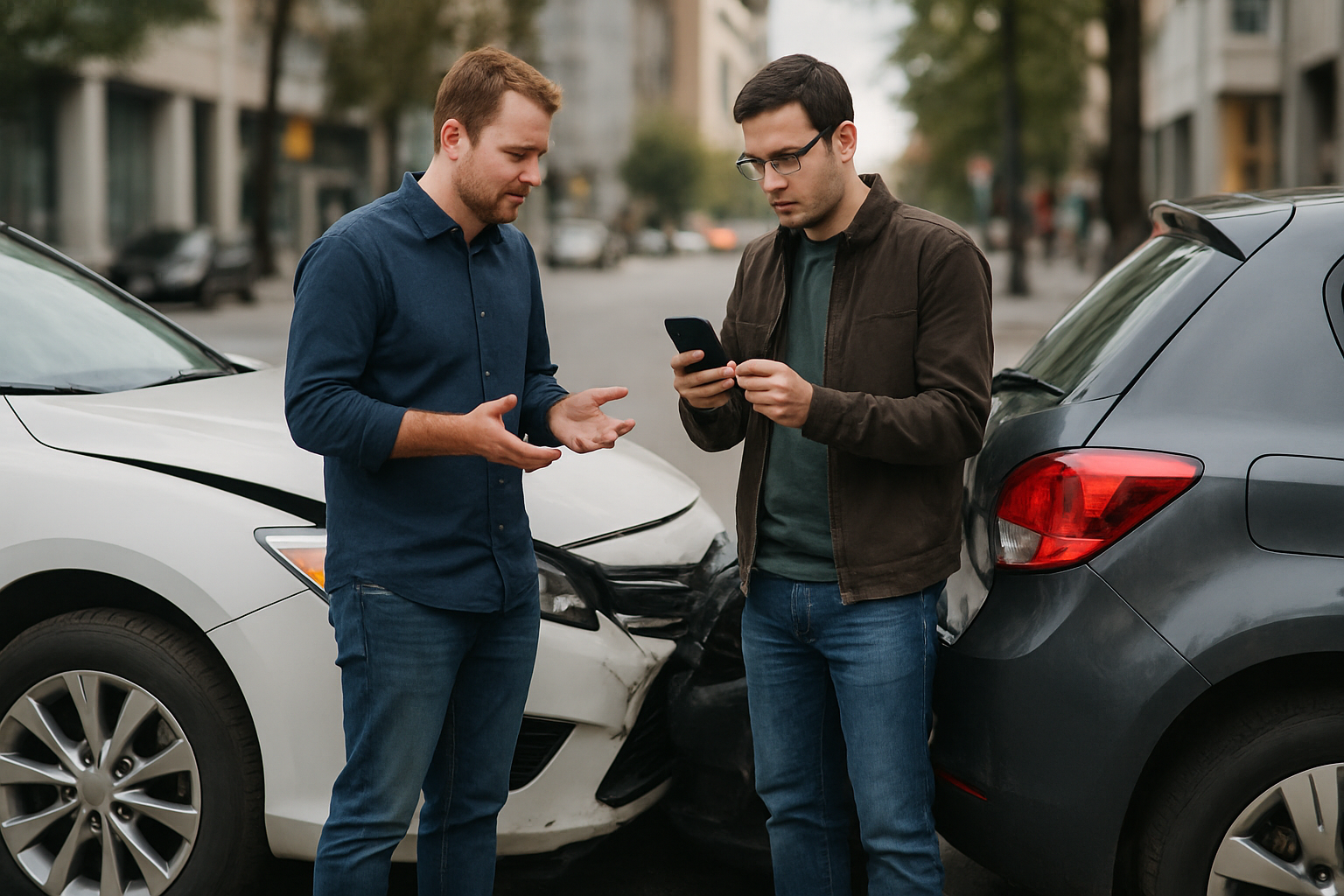
Drivers exchanging information after a car accident

Searching for a “car accident lawyer near me” is the right move after a crash — a local attorney knows your state’s insurance and injury laws, the local courts, and the adjusters your claim will face. A nearby lawyer is also easier to meet in person and stays close to your case. Most local car accident lawyers offer a free consultation and work on contingency, so there’s no upfront cost.

Key Takeaways

  • A local lawyer knows your state’s laws, courts, and insurers.
  • Proximity makes meetings, document handoffs, and updates easier.
  • Look for specific car accident and personal injury experience.
  • Most local car accident lawyers offer a free consult and work on contingency.
  • You typically pay nothing unless the lawyer wins your case.

Why Search for a Car Accident Lawyer Near You?

A nearby attorney offers advantages a distant firm can’t match. Insurance rules, fault laws, and filing deadlines vary by state, and a local lawyer knows exactly how yours apply — plus the local courts, judges, and insurance adjusters your case will pass through.

Proximity also makes it easier to meet in person, share records, and stay updated. For the full picture of when you need one, see our complete car accident lawyer guide.

Meeting a local car accident lawyer for a consultation

How Do You Find the Right Car Accident Lawyer Near You?

Not every local lawyer is the right fit — experience with cases like yours matters. Use these steps to choose wisely:

  1. Search for lawyers who focus on car accidents and personal injury, not general practice.
  2. Confirm they offer a free consultation and work on contingency — no fee unless you win.
  3. Check reviews and their standing with your state bar.
  4. Ask about their experience and results with cases similar to yours.
  5. Make sure they’re licensed in the state where the crash happened.

For a deeper checklist, see our guide on how to find the best car accident lawyer.

What Does a Local Car Accident Lawyer Do?

A lawyer handles the parts you can’t easily do alone. They value your claim (including future medical costs), deal with insurers built to minimize payouts, gather evidence to prove fault, and negotiate — or file suit if needed.

They also know your state’s deadlines and fault rules. Most work on contingency, taking a percentage only if they win — see what percentage a car accident lawyer takes.

How Much Does a Local Car Accident Lawyer Cost?

Almost always nothing upfront. Car accident lawyers typically work on a contingency fee — usually around one-third of the settlement — and charge no fee if they don’t recover money for you. Combined with free consultations, you can learn your options at no financial risk.

So the real question isn’t whether you can afford a lawyer, but whether handling a disputed or injury claim alone is worth the risk. When an insurer is involved, professional help often pays for itself.

When Should You Call a Car Accident Lawyer?

Sooner is better. Evidence fades, deadlines run, and insurers move fast to settle low. Contact a local car accident lawyer if:

  • You or a passenger was injured in the crash.
  • The insurer denied or lowballed your claim.
  • Fault is disputed between the drivers.
  • The other driver was uninsured or fled the scene.

Acting quickly protects your evidence and your filing deadline — and a faster claim can mean a faster payout, though a good lawyer won’t rush a lowball. See how long a settlement takes.

Bottom line: after a crash, a local lawyer who handles car accident cases is your best path to a fair payout — they know your state’s laws and insurers, and are easy to reach. Most local car accident lawyers cost nothing unless they win.

What Should You Bring to a Car Accident Lawyer?

Coming prepared to your free consultation helps the lawyer assess your case quickly and accurately. Gather what you have:

  • The police report — or the report number.
  • Photos of the scene, vehicles, and injuries.
  • Insurance information — yours and the other driver’s.
  • Medical records and bills — anything tied to the crash.
  • A written timeline — what happened, in your own words.

Don’t worry if you don’t have everything — a good lawyer can obtain missing records. But the more you bring, the faster they can tell you whether you have a strong claim and what it may be worth. The consultation is free, so there’s no risk in simply asking.

It’s also worth understanding how contingency fees protect you. Because the lawyer only gets paid if they win, they have every incentive to maximize your settlement — your interests and theirs are aligned. It also means you get access to experienced representation without paying anything out of pocket, no matter your financial situation.

This is why hiring a lawyer rarely leaves you worse off on an injury claim: studies and insurer data consistently show represented claimants tend to recover more overall, even after the fee. The free consultation lets you compare a lawyer’s estimate of your claim’s value against the insurer’s offer before you commit to anything.

Frequently Asked Questions

Do I need a local car accident lawyer?

It helps. A local car accident lawyer knows your state’s insurance and fault laws, the local courts, and the adjusters involved — and is easy to meet in person. Because rules and deadlines vary by state, nearby experience makes a real difference to your claim.

How much does a car accident lawyer near me cost?

Usually nothing upfront. Most work on a contingency fee of around one-third of the settlement and charge no fee if they don’t win. Consultations are typically free, so you can learn your options at no financial risk before deciding.

When should I contact a car accident lawyer?

As soon as possible if you were injured, fault is disputed, the insurer lowballed you, or the other driver was uninsured or fled. Early involvement preserves evidence, prevents mistakes with insurers, and protects your state’s filing deadline.

What does a car accident lawyer do?

A lawyer values your claim including future costs, deals with insurers, gathers evidence to prove fault, and negotiates a settlement — or files suit if needed. They know your state’s deadlines and fault rules, and most work on contingency, so no fee unless you win.

Related Guides

Bicycle Accident Lawyer: How to Recover After a Bike Crash

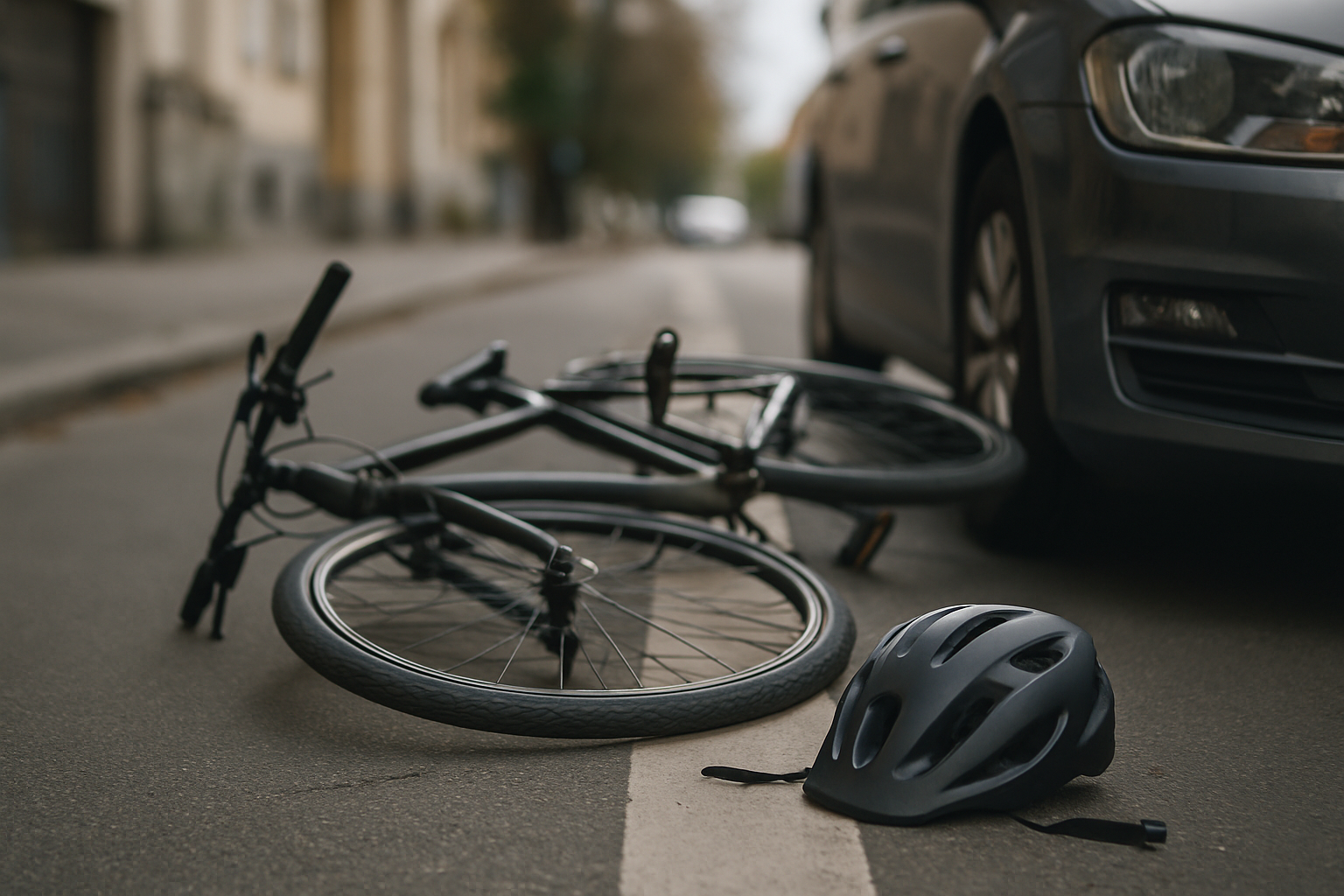
Bicycle and car after a collision in a bike lane

A bicycle accident lawyer helps cyclists hit by a vehicle recover compensation — often more than victims expect, because bike injuries are severe and drivers are frequently at fault. Cyclists face bias too: insurers assume the rider broke a rule. A lawyer counters that with evidence and pursues every source of payment. Most offer a free consultation and work on contingency, so there’s no upfront cost.

Key Takeaways

  • Cyclists have the same road rights as cars in nearly every state.
  • Bike injuries are severe, making claims high-value.
  • Drivers are often at fault — unsafe turns, opening doors, or failing to yield.
  • Your own auto insurance (PIP/UM) may pay even though you were on a bike.
  • Most bicycle accident lawyers work on contingency — no fee unless you win.

Who Is at Fault in a Bicycle Accident?

Cyclists have the same rights and duties as drivers in nearly every state, and drivers must share the road safely. Common driver-fault scenarios include unsafe right turns across a bike lane, ‘dooring’ (opening a door into a cyclist), failing to yield, and distracted driving.

But like motorcyclists, cyclists face bias — insurers assume the rider ran a light or rode recklessly. For how blame is decided, see our guide on how fault is determined.

Injured cyclist meeting a bicycle accident lawyer

What Can a Cyclist Recover After a Crash?

Because bike injuries are often severe, these claims can be substantial. You may recover:

  • Medical bills — emergency care, surgery, and rehabilitation.
  • Lost wages — and reduced future earning capacity.
  • Pain and suffering — physical and emotional harm.
  • Bike and gear replacement — your damaged bicycle and equipment.

Which Insurance Pays After a Bicycle Accident?

Many cyclists don’t realize their own auto policy can help even though they were on a bike. Several policies may apply:

  • Driver’s liability coverage — the primary source for your injuries.
  • Your own PIP/MedPay — may cover medical costs regardless of fault, even on a bike.
  • Uninsured/underinsured motorist coverage — applies if the driver had no insurance or fled.

If the driver was uninsured or fled the scene, your own coverage becomes critical — see being hit by an uninsured driver.

What Does a Bicycle Accident Lawyer Do?

A lawyer fights the anti-cyclist bias head-on. They gather evidence — traffic and dashcam footage, witness statements, the police report — to prove the driver’s fault, value your injuries fully, and deal with insurers built to minimize payouts.

Most work on contingency, taking a percentage only if they win — see what percentage a car accident lawyer takes. Consultations are typically free.

When Should You Call a Bicycle Accident Lawyer?

Promptly. Evidence disappears and insurers move fast to blame the rider. Contact a lawyer if:

  • You were seriously injured after being hit while cycling.
  • The insurer is blaming you or disputing fault.
  • The driver fled or had no insurance.
  • You’re facing major medical bills or lasting injury.

Fast action preserves footage and witness memories and protects your deadline — see how long a settlement takes.

Bottom line: a cyclist hit by a car usually has a strong claim — you have road rights, injuries are severe, and multiple policies may pay. A bicycle accident lawyer fights the bias and pursues every source, usually at no cost unless they win.

What Should You Do After a Bicycle Crash?

The steps you take right after a crash can make or break your claim. If you’re able:

  • Call 911 — get medical attention and a police report.
  • See a doctor promptly — injuries like concussions can surface later.
  • Photograph everything — the vehicle, your bike, the road, and your injuries.
  • Keep your damaged bike and gear — they’re evidence of the impact.
  • Get witness details and the driver’s insurance — and avoid admitting fault.

Preserving your damaged bike and helmet is especially important — they physically demonstrate the force of the collision, which helps counter an insurer’s attempt to downplay your injuries. Early, thorough documentation is your strongest protection against the anti-cyclist bias.

It also helps to know your state’s specific cycling laws, because they shape fault. Rules on bike lanes, required signaling, helmet use, and how far drivers must give when passing all vary — and a violation by either party affects the claim. Many states now require drivers to leave at least three feet when passing a cyclist.

A bicycle accident lawyer who knows your local rules can turn a driver’s violation into strong evidence of fault. That local knowledge, combined with footage and witnesses, is what defeats the assumption that the cyclist must have done something wrong.

Finally, don’t settle before you know the full extent of your injuries. Bike crashes often cause injuries — concussions, soft-tissue damage, and joint problems — whose true impact only emerges over weeks. Accepting a quick offer means signing away the right to claim for those later costs, because a settlement release is final.

A bicycle accident lawyer waits for medical clarity before settling and pushes back on early lowball offers. That patience, backed by evidence of the driver’s fault, is what turns a disputed, bias-heavy claim into a fair recovery that actually covers your losses.

Frequently Asked Questions

Who is at fault in a bicycle accident?

Often the driver, since cyclists have the same road rights as cars. Unsafe turns, ‘dooring,’ failing to yield, and distraction typically mean driver fault. But insurers assume the cyclist broke a rule, so evidence like footage and witnesses is essential to prove otherwise.

How much does a bicycle accident lawyer cost?

Usually nothing upfront. Most work on a contingency fee of around one-third of the settlement and charge no fee if they don’t win. Consultations are typically free, so you can learn your options at no financial risk.

Can I use my car insurance after a bicycle accident?

Often yes. Your own PIP or MedPay may cover your medical costs regardless of fault, even though you were on a bike, and your uninsured motorist coverage can apply if the driver had none or fled. A lawyer identifies every policy that applies.

Are cyclists allowed on the road?

Yes. In nearly every US state, bicycles are legally entitled to use the road with the same rights and duties as cars. Drivers must share the road safely, and a driver who fails to do so and causes a crash is generally liable for the cyclist’s injuries.

Related Guides

Pedestrian Accident Lawyer: How to Recover After Being Hit

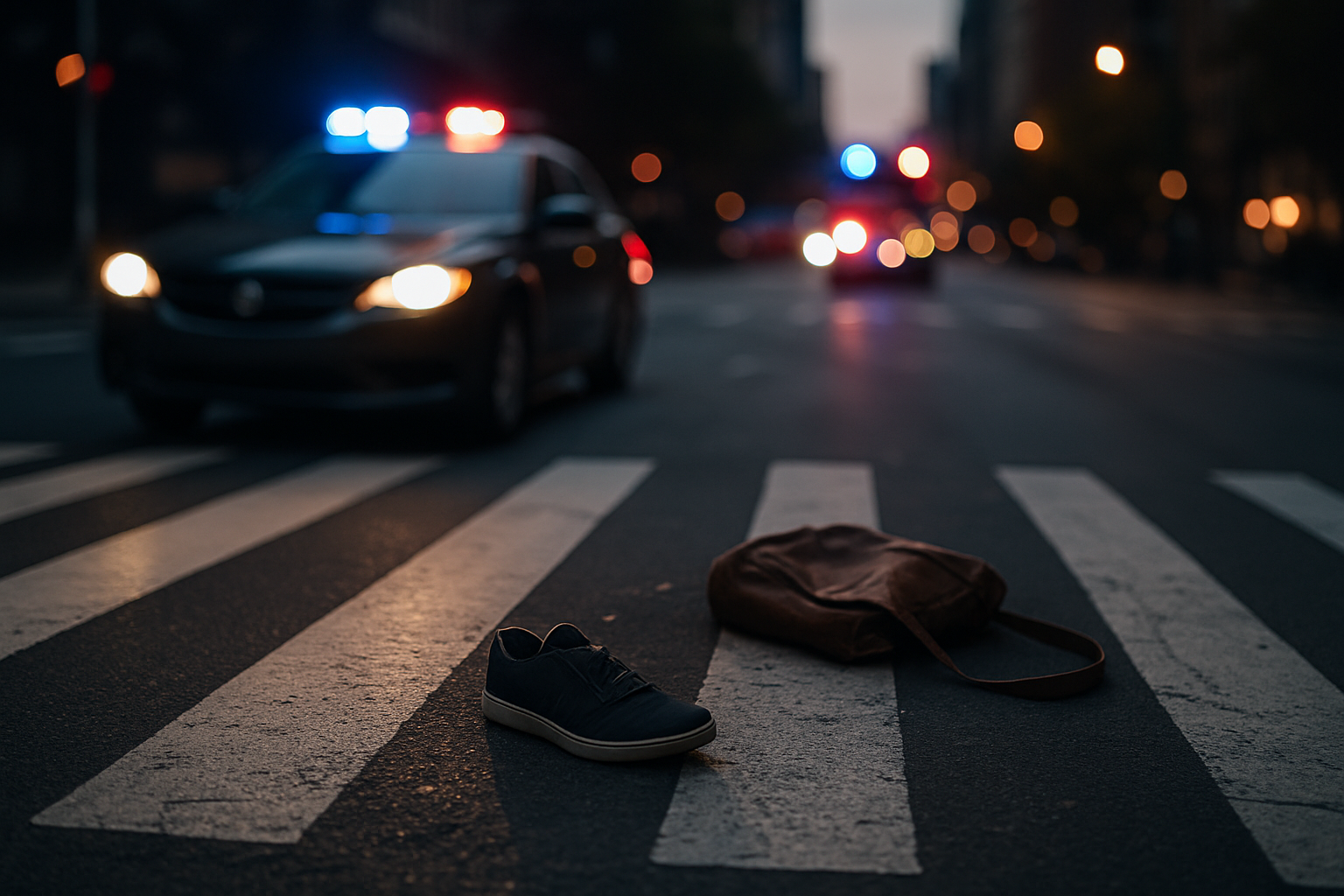
City crosswalk after a pedestrian accident

A pedestrian accident lawyer helps people hit by a car recover compensation — and these claims are often high-value because pedestrian injuries are severe. Because you have no vehicle protection, a collision can cause life-changing harm, and the driver is frequently at fault for failing to yield. Most pedestrian accident lawyers offer a free consultation and work on contingency, so there’s no upfront cost.

Key Takeaways

  • Pedestrian injuries are usually severe, making claims high-value.
  • Drivers are often at fault for failing to yield at crosswalks.
  • You may recover from the driver’s insurance, and sometimes your own auto policy.
  • Even a partly at-fault pedestrian can often still recover in most states.
  • Most pedestrian accident lawyers work on contingency — no fee unless you win.

Who Is at Fault When a Car Hits a Pedestrian?

Fault depends on the facts, but drivers carry a high duty of care toward pedestrians. A driver who fails to yield at a crosswalk, speeds, runs a red light, or is distracted is usually at fault. Still, insurers often try to blame the pedestrian for jaywalking or crossing carelessly.

That’s why fault is fiercely contested in these cases. For how blame is decided, see our guide on how fault is determined.

Injured pedestrian consulting a lawyer

What Compensation Can a Pedestrian Recover?

Because pedestrian injuries tend to be serious, the claims are often substantial. You may be able to recover:

  • Medical bills — emergency care, surgery, and long-term rehab.
  • Lost wages — time off work and reduced future earning capacity.
  • Pain and suffering — physical and emotional harm.
  • Future care costs — ongoing treatment for lasting injuries.

Which Insurance Pays After a Pedestrian Accident?

This surprises many people: more than one policy may apply. The at-fault driver’s liability insurance is the primary source, but your own auto insurance can also help even though you were on foot:

  • Driver’s liability coverage — the main source for your injuries.
  • Your own PIP/MedPay — may cover your medical costs regardless of fault, even as a pedestrian.
  • Uninsured motorist coverage — applies if the driver had no insurance or fled.

If the driver was uninsured or left the scene, your own coverage becomes critical — see being hit by an uninsured driver.

What Does a Pedestrian Accident Lawyer Do?

A lawyer fights the ‘you stepped out’ narrative insurers use to shift blame. They gather evidence — traffic camera footage, witness statements, the police report — prove the driver’s fault, value your full damages, and negotiate against an insurer built to pay less.

Most work on contingency, taking a percentage only if they win — see what percentage a car accident lawyer takes. Consultations are typically free.

When Should You Call a Pedestrian Accident Lawyer?

Quickly. Evidence fades and insurers move fast to shift blame onto you. Contact a lawyer promptly if:

  • You suffered serious injuries after being hit by a vehicle.
  • The insurer is blaming you for the crash.
  • The driver fled or had no insurance.
  • You’re facing large medical bills or lasting injuries.

Acting fast preserves footage and witness memories, and protects your filing deadline. A faster claim can also mean a faster payout — see how long a settlement takes.

Bottom line: a pedestrian hit by a car usually has a strong, high-value claim — drivers owe you a duty of care, and multiple policies may pay. A pedestrian accident lawyer fights the blame-shifting and pursues every source, usually at no cost unless they win.

What Should You Do Immediately After Being Hit?

Your actions in the first minutes protect both your health and your claim. If you’re able, and it’s safe to do so:

  • Call 911 — get medical help and a police report on record.
  • Get checked by a doctor — even if you feel okay; adrenaline masks serious injuries.
  • Photograph the scene — the vehicle, the crosswalk, road signs, and your injuries.
  • Get the driver’s details and witness contacts — names, numbers, and insurance.
  • Don’t admit fault or downplay injuries — your words can be used against your claim.

Prompt medical care also ties your injuries directly to the crash, which is critical when an insurer later argues your injuries came from something else. The stronger your early documentation, the harder it is to shift blame onto you.

One factor that often raises a pedestrian claim’s value is the ‘eggshell’ principle: a driver takes their victim as they find them. If you had a pre-existing condition that the crash worsened, the at-fault driver is still responsible for that aggravation — insurers can’t use your prior health to escape paying for the harm they caused.

A pedestrian accident lawyer knows how to document this and rebut the common insurer tactic of blaming your injuries on something other than the crash. That’s often the difference between a lowball offer and a settlement that truly covers your recovery.

Frequently Asked Questions

Who is at fault when a car hits a pedestrian?

Usually the driver, who owes pedestrians a high duty of care — failing to yield at a crosswalk, speeding, or distraction typically means driver fault. But insurers often try to blame the pedestrian for jaywalking, so evidence like camera footage and witnesses is key.

How much does a pedestrian accident lawyer cost?

Usually nothing upfront. Most work on a contingency fee of around one-third of the settlement and charge no fee if they don’t win. Consultations are typically free, so you can learn your options at no financial risk.

Can a pedestrian claim on their own car insurance?

Often yes. Your own PIP or MedPay may cover your medical costs regardless of fault, even though you were on foot, and your uninsured motorist coverage can apply if the driver had none or fled. A lawyer identifies every policy that applies.

Can I recover if I was partly at fault as a pedestrian?

In most states, yes — your compensation is reduced by your share of fault under comparative negligence rules. Only a few strict states bar recovery for any fault. A lawyer works to minimize the blame assigned to you.

Related Guides

Motorcycle Accident Lawyer Near Me: How to Find the Right One

Motorcycle and car after a collision on a city street

Searching for a “motorcycle accident lawyer near me” is the right first step after a bike crash — a local attorney knows your state’s helmet and insurance laws, the local courts, and how to fight the bias riders often face. Motorcycle injuries are typically severe, so these claims are high-value but harder-fought. Most local motorcycle accident lawyers offer a free consultation and work on contingency, so there’s no upfront cost.

Key Takeaways

  • A local lawyer knows your state’s motorcycle, helmet, and insurance laws.
  • Motorcycle injuries are often severe, making claims high-value but hard-fought.
  • Riders face bias — a lawyer counters the assumption that the biker was reckless.
  • Helmet-law and lane-splitting rules vary by state and affect your claim.
  • Most local motorcycle accident lawyers offer a free consult and work on contingency.

Why Search for a Motorcycle Accident Lawyer Near You?

A nearby attorney gives you advantages a distant firm can’t. Motorcycle laws — helmet requirements, lane-splitting rules, and insurance minimums — vary by state, and a local lawyer knows exactly how yours apply, plus the local courts and adjusters your claim will face.

Proximity also makes meetings, document handoffs, and updates easier. For the full picture of these claims, see our main guide on the motorcycle accident lawyer and when you need one.

Injured motorcyclist consulting a local lawyer

Why Are Motorcycle Accident Claims Different?

Two things set bike crashes apart, and both raise the stakes. First, injuries are usually far more severe than in a car — riders have little protection, so broken bones, road rash, and head trauma are common. Second, riders face a built-in bias:

  • Severe injuries — higher medical costs and larger potential settlements.
  • Rider bias — insurers and juries often assume the motorcyclist was speeding or reckless.
  • Helmet-law disputes — insurers may argue a lack of helmet reduced your claim.
  • Visibility arguments — the ‘I didn’t see the motorcycle’ defense is common and beatable with evidence.

How Do You Find the Right Motorcycle Accident Lawyer Near You?

Not every local lawyer handles motorcycle cases well — and rider bias means experience matters even more. Choose carefully:

  1. Look for lawyers who specifically handle motorcycle cases, not just car crashes.
  2. Confirm a free consultation and contingency fee — no fee unless you win.
  3. Ask whether they ride or truly understand motorcycle dynamics and defenses.
  4. Check reviews and their state bar standing.
  5. Make sure they’re licensed where the crash happened.

Our general checklist on how to find the best car accident lawyer applies here too.

What Does a Motorcycle Accident Lawyer Do for You?

A rider-savvy lawyer fights the bias head-on. They gather evidence to prove the driver — not the motorcyclist — caused the crash, counter the ‘reckless biker’ narrative, value your severe injuries fully, and deal with insurers built to pay less.

They also handle the helmet-law and lane-splitting arguments specific to your state, then negotiate or file suit. Most work on contingency — see what percentage a car accident lawyer takes.

How Much Does a Local Motorcycle Accident Lawyer Cost?

Almost always nothing upfront. Motorcycle accident lawyers typically work on a contingency fee — usually around one-third of the settlement — and charge no fee if they don’t recover money for you. With free consultations, you can learn your options at zero financial risk.

Given how severe motorcycle injuries tend to be, and how hard insurers fight these claims, professional help usually pays for itself. The real risk is handling a high-value, bias-heavy claim alone.

When Should You Call a Motorcycle Accident Lawyer?

Quickly. Evidence fades and insurers move fast to blame the rider. Contact a local motorcycle accident lawyer promptly if:

  • You suffered serious injuries as a rider or passenger.
  • The insurer is blaming you or citing your lack of a helmet.
  • Fault is disputed or the driver claims they ‘didn’t see’ you.
  • The at-fault driver was uninsured or underinsured.

Acting fast preserves evidence and protects your filing deadline. If the driver had no insurance, see being hit by an uninsured driver, and how long a settlement takes.

Bottom line: after a motorcycle crash, a local lawyer who handles rider cases is your best defense against bias and your best path to a fair, high-value payout. The injuries are severe and the fight is real, but most local motorcycle accident lawyers cost nothing unless they win.

What Evidence Strengthens a Motorcycle Accident Claim?

Because riders start at a disadvantage, strong evidence is what wins these claims. A local lawyer moves quickly to gather and preserve the proof that counters the “reckless biker” assumption:

  • The police report — a neutral account of how the crash happened.
  • Photos and dashcam or helmet-cam footage — showing the driver’s fault.
  • Witness statements — neutral third parties who saw the driver’s error.
  • Traffic and surveillance video — often the clearest proof of a left-turn or lane-change violation.
  • Medical records — tying your injuries directly to the crash.

The most common motorcycle-crash scenario — a driver turning left across a rider’s path, then claiming they never saw the bike — is highly winnable with the right footage and reconstruction. That is exactly the kind of case a rider-savvy local lawyer builds, turning a bias-heavy claim into a strong, well-documented one.

Frequently Asked Questions

Do I need a local lawyer for a motorcycle accident?

It helps significantly. A local motorcycle accident lawyer knows your state’s helmet and lane-splitting laws, the local courts, and how to counter the bias riders face. Because these claims are high-value and hard-fought, specific local experience matters.

How much does a motorcycle accident lawyer near me cost?

Usually nothing upfront. Most work on a contingency fee of around one-third of the settlement and charge no fee if they don’t win. Consultations are typically free, so you can learn your options at no financial risk.

Why are motorcycle accident claims harder?

Because riders face bias — insurers and juries often assume the motorcyclist was reckless — and injuries are usually severe. Insurers may also argue a lack of helmet reduced your claim. A rider-savvy lawyer counters these tactics with evidence.

Can I still claim if I wasn’t wearing a helmet?

Often yes, though it depends on your state. In some states, not wearing a helmet can reduce your compensation for head injuries, but it doesn’t erase the other driver’s fault for causing the crash. A local lawyer knows how your state’s helmet law applies.

Related Guides