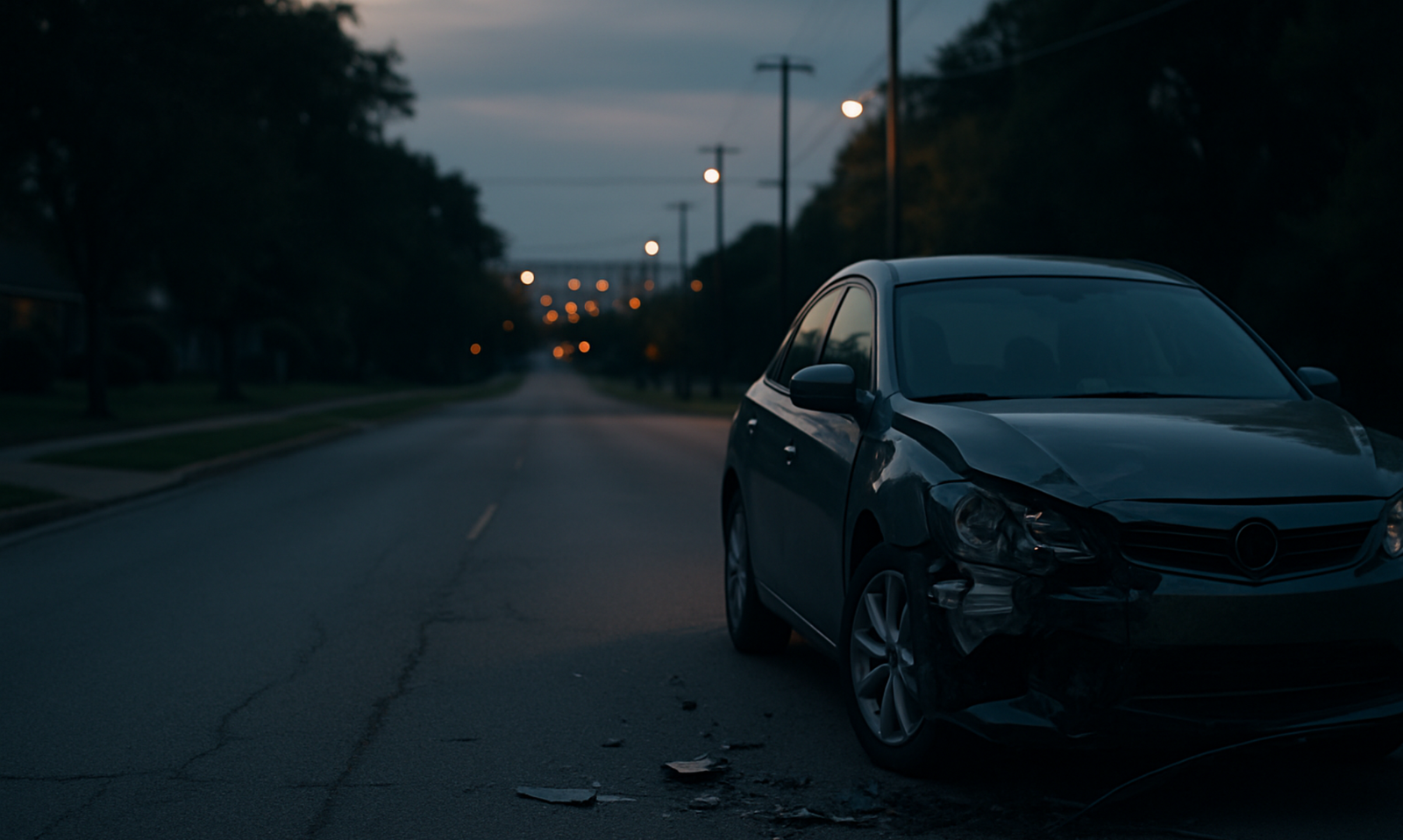

After a hit-and-run, compensation usually comes from your own insurance — not the driver who fled. Your Uninsured Motorist (UM) coverage is typically the primary source, because a fleeing driver is treated as uninsured. Acting fast matters: many policies require you to report a UM claim within 72 hours. A lawyer can help maximize a payout your own insurer has incentive to minimize.
Key Takeaways
- A fleeing driver is treated as uninsured, triggering your UM coverage.
- Report the hit-and-run to police and your insurer fast — often within 24–72 hours.
- UM, collision, and PIP/MedPay coverages can all apply, depending on your policy.
- Your payout is capped by your policy limits.
- Your own insurer still tries to minimize payouts — a lawyer can push back.
Who Pays After a Hit-and-Run?
Since the at-fault driver fled, you generally can’t collect from them — so compensation comes from your own policy. When a driver leaves the scene, they’re treated as uninsured under most state laws, which triggers your Uninsured Motorist (UM) coverage for both injuries and vehicle damage.
This is the same coverage that protects you against a driver with no insurance. For that broader scenario, see our guide on being hit by an uninsured driver.

What Should You Do Immediately After a Hit-and-Run?
Your actions in the first hours protect your claim. Don’t chase the fleeing car — prioritize safety, then move methodically:
- Pull over safely and check everyone for injuries.
- Call the police and file a report — often required within 24 hours.
- Photograph the damage, the scene, and any debris left behind.
- Get witness names and contact details.
- Notify your own insurer immediately to open a UM claim — often within 72 hours.
A police report is especially important for a hit-and-run, since it documents the crash and the missing driver. See why in our guide on police reports.
Which Coverages Apply to a Hit-and-Run?
Depending on your policy and state, several coverages can help — and knowing which applies avoids paying out of pocket:
- Uninsured Motorist Bodily Injury (UMBI) — medical bills, lost wages, and often pain and suffering.
- Uninsured Motorist Property Damage (UMPD) — vehicle damage, but not offered in every state, and some exclude hit-and-runs.
- Collision coverage — pays for your car’s damage regardless of fault; often the easiest route.
- PIP / MedPay — medical costs regardless of fault.
Why Is Timing So Important?
Deadlines are strict. Many insurers require an uninsured motorist claim to be filed within 72 hours, and some states require reporting a ‘phantom vehicle’ (one that caused a crash without contact) to police within 72 hours too. Missing these windows can jeopardize your claim entirely.
Some states also have a ‘physical contact’ rule, requiring the fleeing car to actually hit yours before UM applies — a complication when a driver runs you off the road without touching your vehicle. A lawyer knows how to navigate these state-specific traps.
How Much Can You Recover?
Your recovery is capped by your policy limits. If you carry $50,000 in UM coverage but suffered $20,000 in damages, you can claim up to your actual losses. Some states allow ‘stacking’ — combining coverage across multiple vehicles on your policy — which can raise your available limit substantially.
A lawyer helps ensure you claim everything you’re owed, including non-economic damages like pain and suffering, which your insurer may leave out of an initial offer.
Do You Need a Lawyer for a Hit-and-Run?
Often, yes. Even though you’re dealing with your own insurer, UM negotiations can be as adversarial as fighting another driver’s company — because your insurer still has a financial incentive to pay less. A lawyer can push for non-economic damages and handle the state-specific complexities. Most offer free consultations and work on contingency, so it’s low-risk — see our complete car accident lawyer guide.
Bottom line: after a hit-and-run, your own UM coverage is usually the path to compensation — but act fast, document everything, and know your policy’s deadlines and limits. Because your insurer still aims to minimize the payout, a lawyer can help you recover more, often at no upfront cost.
What Mistakes Should You Avoid After a Hit-and-Run?
A few common missteps can shrink or sink your claim. Avoid these to protect your recovery:
- Chasing the fleeing driver — it’s dangerous and can be treated as leaving the scene yourself.
- Delaying the police report — a late or missing report gives your insurer a reason to deny the UM claim.
- Assuming your rates will spike — in many states, a not-at-fault UM claim can’t be used to raise your premium.
- Accepting the first offer — initial UM offers routinely omit pain and suffering and future medical costs.
- Giving a recorded statement without advice — your words can be used to reduce the payout.
Because a hit-and-run turns your own insurer into the party writing the check, the relationship can quickly become adversarial. Keeping your paperwork tight and your statements careful preserves your leverage — and is exactly where a lawyer earns their contingency fee.
Frequently Asked Questions
Who pays after a hit-and-run accident?
Usually your own insurance, not the driver who fled. Because a fleeing driver is treated as uninsured, your Uninsured Motorist (UM) coverage typically pays for injuries and damage. Collision and PIP/MedPay coverage may also apply depending on your policy.
How soon must you report a hit-and-run?
Fast — file a police report often within 24 hours, and notify your own insurer to open a UM claim, sometimes within 72 hours. Some states also require reporting a ‘phantom vehicle’ crash within 72 hours. Missing these deadlines can jeopardize your claim.
Does uninsured motorist coverage cover hit-and-run?
Yes, in most cases — a fleeing driver is treated as uninsured, so UM coverage applies. Note some states have a ‘physical contact’ rule requiring the other car to actually hit yours, and some exclude hit-and-runs from UM property damage.
Do you need a lawyer for a hit-and-run claim?
Often yes. UM negotiations with your own insurer can be adversarial since they still aim to pay less, and state rules are complex. A lawyer can pursue pain and suffering and navigate the traps. Most offer free consultations on contingency.