
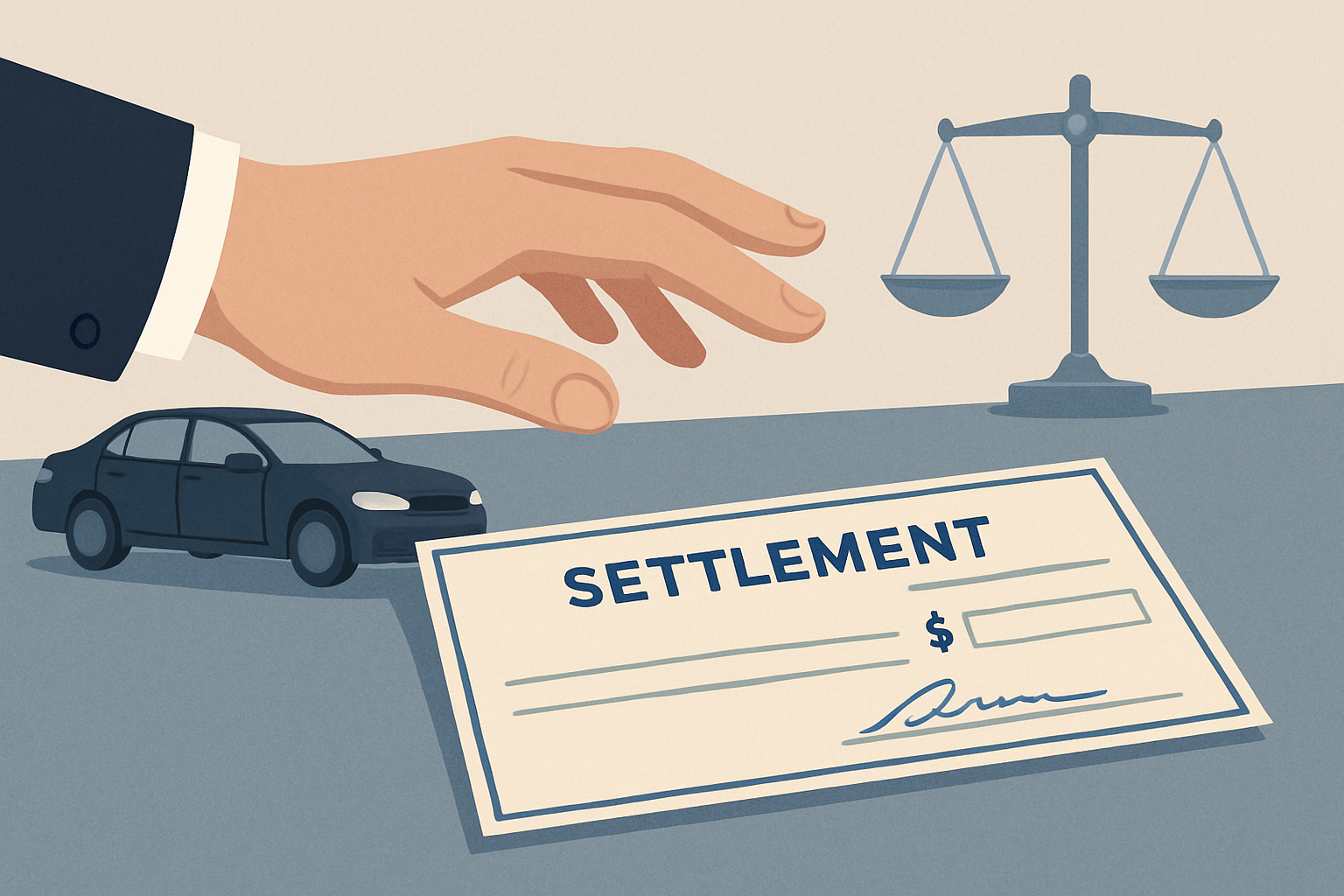
The insurer’s first settlement offer is almost always low — by design. It’s a business decision calibrated to close your case for the least money you’ll accept (Nolo, 2026). In most cases, you can — and should — evaluate it carefully before saying yes.
Key Takeaways
- First offers are almost always below your claim’s real value.
- Once you sign a release and settle, you can’t ask for more later.
- Rejecting an offer won’t hurt your claim — it starts the negotiation.
- Don’t settle before reaching maximum medical improvement.
Why Is the First Offer So Low?
Adjusters don’t work for you — their job is to settle for as little as possible to protect the insurer’s bottom line. The first offer is a starting point, not a fair valuation. It’s usually made early, before you know the full cost of your injuries, in the hope you’ll accept quickly and close the door on future recovery.
What’s the Risk of Settling Too Early?
Settlements are permanent. Before you get paid, you sign a “release” giving up your right to any further claim. If your injuries turn out worse than expected, you can’t reopen the case. That’s why you shouldn’t settle until your doctor confirms you’ve reached maximum medical improvement.
What Pressure Tactics Should You Watch For?
Adjusters may imply the offer is time-limited, or that consulting a lawyer will make it disappear. This is a pressure tactic, not a legal reality. While an offer can technically be withdrawn, it’s extremely unlikely. Don’t let artificial urgency rush you into a low settlement.
Can You Reject the Offer Without Risk?
Yes. Rejecting a low offer won’t hurt your claim — in fact, the insurer usually expects a counteroffer. Declining the first number simply begins negotiations. You can submit a counteroffer with supporting documentation, continue negotiating, or file a lawsuit if a fair deal can’t be reached.
When Might the First Offer Be Fair?
Occasionally. If liability is clear, injuries are minor, and all treatment is complete, a first offer may be close to fair. Even then, review the terms carefully and confirm that all current and future damages are covered before you accept and sign the release.
Got a settlement offer that feels low? A free attorney review can tell you if it’s fair before you sign.
How Should You Respond to a Low First Offer?
Don’t accept it, and don’t get angry — respond in writing with a reasoned counteroffer. Point to your documentation: medical bills, lost wages, and a fair pain-and-suffering figure. A calm, evidence-based reply signals that you know your claim’s value and won’t be pressured into an early lowball.
Ask the adjuster to justify their number too. Often they can’t support a low offer against solid documentation, which moves the negotiation toward a fairer figure.
How Do You Know What Your Claim Is Really Worth?
Start by adding up your economic damages — all medical bills, future treatment, lost wages, and property damage. Then account for non-economic damages like pain and suffering, which adjusters often estimate using a multiplier on your medical costs based on severity.
Your state’s fault rules can adjust the total if you share blame. For serious injuries, a free consultation with a contingency-fee attorney gives you an experienced read on value — and since they’re paid only if you win, there’s no upfront risk to getting that opinion.
What Are the Risks of Rejecting an Offer?
Rejecting a first offer is low-risk: it simply continues the negotiation, and insurers expect a counteroffer. The one thing to watch is your state’s statute of limitations — you must settle or file suit before it expires, so don’t let negotiations drag past that deadline.
The far bigger risk lies in accepting too soon. Once you sign a release, the claim is closed for good, even if new symptoms or costs appear later. When in doubt, a free attorney consultation can tell you whether an offer is fair before you decide.
Frequently Asked Questions
Will rejecting the first offer hurt my claim?
No. Rejecting a low offer won’t damage your claim. Insurers typically expect a counteroffer and view the first offer as the start of negotiations. You retain the right to negotiate for a fairer amount after declining.
Can the insurer take the offer back if I say no?
It’s technically possible but extremely unlikely. Adjusters sometimes imply the offer will vanish to pressure you, but this is rarely real. Don’t let that fear push you into accepting a settlement that undervalues your claim.
When should I accept a settlement offer?
Only after reaching maximum medical improvement and confirming the offer covers all current and future costs. Because settlements are final once you sign the release, never accept until you understand the full extent of your injuries.
Bottom line: the first offer is a starting point, not a fair conclusion. Rejecting it simply keeps the conversation going, while accepting too soon can close your claim forever. Value your case from your documented costs, counter with evidence, and get a free legal read before you sign anything serious.
Finally, keep every offer and counteroffer in writing, along with dates and the adjuster’s name. This running record protects you if the insurer later changes its story, and it makes the eventual fair settlement far easier to finalize without disputes over what was said.
Conclusion
The first offer is rarely the best offer. Because it’s designed to close your case cheaply — and because settling is permanent — evaluate it carefully, wait until you’ve reached maximum medical improvement, and don’t fear rejecting a lowball figure. For serious claims, a free legal consultation can help you respond.
Disclaimer: This article is for general informational purposes only and does not constitute legal advice. Consult a licensed attorney in your jurisdiction for advice about your specific situation.