
How Long Do Car Accident Lawyers Take to Settle a Case?

Client and lawyer reviewing progress

Most car accident cases with a lawyer settle within a few months to a year, though timelines vary widely. Simple, clear-fault claims can resolve in weeks, while serious injuries or disputed liability can take a year or more. A good lawyer won’t rush a settlement before you know the full extent of your injuries.

Last updated: July 2026.

New to this? Start with our complete guide: Car Accident Lawyer: When You Need One, Cost & How to Choose.

Key Takeaways

  • Typical lawyer-handled cases settle in a few months to about a year.
  • Simple, clear-fault claims can resolve faster; serious or disputed ones take longer.
  • Lawyers wait until you reach maximum medical improvement before settling.
  • Filing a lawsuit extends the timeline, but most cases still settle before trial.

What Determines How Long a Case Takes?

Several factors drive the timeline, and injury severity is the biggest. A lawyer won’t settle until you reach maximum medical improvement — the point where your condition stabilizes — because settling earlier risks leaving future costs uncovered. Disputed fault, multiple parties, and an uncooperative insurer all add time too.

Calendar and clock on an office desk

So the honest answer is ‘it depends.’ A minor claim with clear fault might settle in a couple of months, while a serious injury with contested liability can stretch well beyond a year.

How Long Does Each Type of Case Take to Settle?

Timelines vary with the case, but these ranges give a realistic picture of how long a lawyer typically takes to settle different car accident cases:

Case typeTypical time to settle
Property damage only, clear fault2–6 weeks
Minor injury, clear fault2–4 months
Moderate injury or some dispute4–9 months
Serious injury or disputed fault9 months–2 years
Case that goes to trial1–3 years
General estimates; your case may differ based on injuries, fault, and the insurer.

The single biggest variable is reaching maximum medical improvement — a lawyer won’t settle an injury case before your condition stabilizes, because a signed release is final. That is why serious cases sit at the long end of the range.

Why Won’t a Lawyer Settle Quickly?

It can feel slow, but there’s a good reason. Settling before you understand your full injuries and future costs means you could accept far less than your claim is worth — and once you sign a release, the case is closed for good, even if your condition worsens.

A good lawyer’s patience is protecting your recovery. Waiting for medical clarity and negotiating firmly usually produces a higher, fairer settlement than rushing to a quick number.

What Are the Stages of a Lawyer-Handled Case?

Understanding the sequence sets realistic expectations. Most injury cases move through predictable stages, each taking time you can’t fully control:

  • Investigation: gathering evidence and proving fault.
  • Medical treatment: continuing until maximum medical improvement.
  • Demand: the lawyer sends an itemized demand to the insurer.
  • Negotiation: offers and counteroffers, often over weeks.
  • Settlement or lawsuit: you settle, or file suit if no fair deal.

Payment usually follows a few weeks after a signed settlement, once the release and paperwork are processed.

Does Filing a Lawsuit Make It Take Longer?

Yes — litigation adds time. If the insurer won’t offer a fair amount and your lawyer files suit, the case enters discovery, depositions, and possibly trial preparation, which can add many months. However, most lawsuits still settle before trial.

Filing is often a strategic step to pressure a stalling insurer rather than a commitment to a courtroom. Your lawyer weighs the extra time against the likelihood of a better outcome.

How Can You Help Speed Up Your Settlement?

You can’t rush medical recovery, but you can remove avoidable delays. Respond promptly to your lawyer’s requests, keep thorough records of treatment and expenses, and follow your treatment plan consistently so there are no gaps for the insurer to exploit.

Staying organized and communicative keeps your case moving. The parts within your control — documentation and responsiveness — often make a real difference to the overall pace.

Bottom line: expect a few months to a year for a lawyer to settle, depending on injuries and disputes. Don’t mistake patience for delay — waiting until your injuries are clear usually means a bigger, fairer settlement. You can help by staying organized and responsive.

What Happens if You Settle Too Early?

Settling before you reach maximum medical improvement is one of the most costly mistakes in a car accident claim. If you accept a figure before your injuries are fully understood, you could be left paying for future treatment out of pocket — because a signed release is final and closes the case for good.

This is exactly why a good lawyer resists a quick settlement. The short-term appeal of fast cash rarely outweighs the risk of under-compensating a serious injury. Patience protects you from a decision you can’t undo.

Is a Longer Case Always Better?

Not necessarily — the goal is a fair settlement, not a slow one. A longer timeline usually reflects serious injuries or a disputed claim, where waiting genuinely produces a better outcome. But delay for its own sake helps no one.

A good lawyer moves your case as efficiently as the facts allow, pushing back only where patience adds value. If your case is dragging without a clear reason, it’s worth asking your lawyer for a status update and a realistic timeline.

Should You Wait or Take a Faster Offer?

It depends on your injuries. If your treatment is finished, fault is clear, and the offer is fair, a faster settlement is fine. But if you’re still recovering, taking a quick offer risks locking in a figure that ignores future costs — and you can’t reopen the claim later.

Talk it through with your lawyer before accepting any early offer. Their read on whether the number is fair — and whether waiting would likely produce a better result — is exactly the judgment you’re paying a contingency fee for.

Frequently Asked Questions

How long does a car accident lawyer take to settle?

Most cases settle within a few months to about a year. Simple, clear-fault claims can resolve faster, while serious injuries or disputed liability take longer. A good lawyer waits until you reach maximum medical improvement before settling.

Why is my car accident settlement taking so long?

Usually because your lawyer is waiting until you reach maximum medical improvement, or because fault is disputed or the insurer is stalling. Settling before your injuries are fully understood risks leaving future costs uncovered.

Does hiring a lawyer make a settlement take longer?

Sometimes slightly, because a lawyer insists on full documentation and won’t rush a lowball offer. But that patience usually produces a higher settlement, and in disputed cases a lawyer can actually speed up a stalling insurer.

How long after settling do you get paid?

Usually a few weeks after you sign the settlement release, once the paperwork is processed and any liens or fees are handled. Simple property-damage payouts can be faster than injury settlements.


Related Guides

Do You Need a Lawyer for a Car Accident That Wasn’t Your Fault?

Injured driver talking with a lawyer

Even when a crash clearly wasn’t your fault, you may still need a lawyer — especially if you were injured or the other insurer disputes liability. For a minor, no-injury accident with a fair offer, you can often handle it yourself. But once injuries or pushback appear, a lawyer usually protects and increases your recovery.

New to this? Start with our complete guide: Car Accident Lawyer: When You Need One, Cost & How to Choose.

Key Takeaways

  • Not being at fault doesn’t guarantee a fair payout — the other insurer still tries to pay less.
  • Skip the lawyer for a minor, no-injury crash with a fair offer.
  • Hire one if you’re injured, liability is disputed, or the offer is low.
  • Consultations are free and lawyers work on contingency — no fee unless you win.

Why Would You Need a Lawyer if It Wasn’t Your Fault?

It seems counterintuitive, but the at-fault driver’s insurer isn’t on your side. Their job is to pay as little as possible, so they may dispute how the crash happened, downplay your injuries, or make a low first offer. Being blameless doesn’t stop them from trying to reduce what they owe you.

Damaged car being photographed

A lawyer counters these tactics. They document your injuries properly, value the full claim including future costs, and negotiate from experience — which is why even a clear-fault case can benefit from representation when real money is at stake.

When Can You Handle It Yourself?

If the accident caused no injuries, fault is obvious, and the insurer’s offer covers your repair and costs, handling it yourself is reasonable. Document everything — photos, the police report, and repair estimates — then negotiate directly and accept a fair figure.

This works best for straightforward property-damage claims. The moment injuries appear or the insurer disputes liability, the calculation shifts toward getting legal advice.

When Should You Definitely Hire a Lawyer?

Certain signs mean representation is worth it, even in a not-at-fault crash. Any one of these can dramatically change your claim’s value or the difficulty of collecting:

  • You suffered injuries, especially serious or lasting ones.
  • The other insurer disputes or denies their driver’s fault.
  • The settlement offer clearly doesn’t cover your costs.
  • Multiple vehicles or parties are involved.
  • The at-fault driver was uninsured or underinsured.
  • You’re being pressured to sign a release quickly.

If any apply, a free consultation carries no risk and often reveals your claim is worth more than the insurer suggests.

Can the Other Driver’s Insurer Still Blame You?

Yes — and this is a key reason to be careful. In comparative-fault states, the other insurer may try to pin part of the blame on you to cut their payout, since every percentage of fault assigned to you reduces what you recover. Even a blameless driver can face this tactic.

A lawyer pushes back with evidence — the police report, photos, and witness statements — to keep fault where it belongs. For more on how blame is split, see our guide on comparative fault.

Does Hiring a Lawyer Cost You Anything Upfront?

No. Car accident lawyers almost always work on contingency, taking a percentage of your settlement only if they win, with no upfront or hourly fees. If they recover nothing, you generally owe no attorney fee, which makes getting advice low-risk.

Because the initial consultation is free too, you can learn what your not-at-fault claim is really worth before deciding. For a full breakdown, see our guide on what a car accident lawyer costs.

Bottom line: a not-at-fault crash doesn’t guarantee a fair payout. Handle a minor, no-injury claim yourself, but bring in a lawyer if you’re injured, fault is disputed, or the offer falls short. With free consultations and contingency fees, the cost of at least asking is low.

What Should You Do After a Not-at-Fault Crash?

Your actions right after the crash protect your claim, even when you’re blameless. Get medical care promptly if you feel any symptoms, since adrenaline can mask injuries for hours or days. Document the scene thoroughly and avoid admitting any fault, even casually.

Then notify your own insurer promptly — most policies require quick notice regardless of fault. Keep everything organized: photos, the police report number, medical records, and expenses. A clean record makes the other insurer far less able to dispute your claim or shift blame.

Can a Lawyer Help if the Other Driver Is Uninsured?

Yes, and this is a situation where legal help often matters most. If the at-fault driver has no insurance, you may need to turn to your own uninsured motorist (UM) coverage — and dealing with your own insurer on a UM claim can be surprisingly adversarial.

A lawyer helps you navigate the UM claim, prove your damages, and push for a fair payout up to your policy limit. For serious injuries that exceed those limits, they can also advise on pursuing the at-fault driver directly.

Frequently Asked Questions

Do I need a lawyer if the accident wasn’t my fault?

Not always — for a minor, no-injury crash with a fair offer, you can handle it yourself. But if you’re injured, liability is disputed, or the offer is low, a lawyer usually protects and increases your recovery. Consultations are free.

Will the other driver’s insurance treat me fairly?

Not necessarily. The at-fault driver’s insurer aims to pay as little as possible, so they may dispute fault, downplay injuries, or make a low offer — even when you’re blameless. Careful documentation, or a lawyer, helps counter this.

Can I be blamed even if the crash wasn’t my fault?

In comparative-fault states, the other insurer may try to assign you part of the blame to reduce their payout. Every percentage of fault cuts your recovery, so it’s worth pushing back with evidence or legal help.

How much does a lawyer cost for a not-at-fault accident?

Usually nothing upfront. Car accident lawyers work on contingency, taking a percentage only if they win and nothing if they lose. The consultation is free, so you can learn your claim’s value at no risk.

Related Guides

What Does a Car Accident Lawyer Do? (2026 Guide)

Lawyer explaining a case to a client

A car accident lawyer investigates your crash, proves who was at fault, values your claim, handles all insurer communication, and negotiates your settlement — taking these burdens off you while you recover. If a fair deal can’t be reached, they can file a lawsuit and represent you in court, though most cases settle first.

New to this? Start with our complete guide: Car Accident Lawyer: When You Need One, Cost & How to Choose.

Key Takeaways

  • A lawyer investigates the crash and gathers evidence to prove fault.
  • They accurately value your claim, including future medical costs.
  • They handle all insurer communication so you don’t harm your case.
  • They negotiate your settlement and can litigate if needed — on contingency.

How Does a Lawyer Investigate Your Accident?

Building a strong claim starts with evidence. A lawyer gathers the police report, photos, medical records, and witness statements, and may consult accident-reconstruction or medical experts in serious cases. This investigation establishes what happened and ties your injuries directly to the crash.

Lawyer on the phone negotiating

Thorough investigation matters because insurers look for any gap to reduce a payout. A well-documented case leaves far less room for them to dispute fault or downplay your injuries.

How Does a Lawyer Prove Who Was at Fault?

Proving liability is central to your recovery. Your lawyer uses the evidence — traffic laws, the police report, physical damage, and witness accounts — to show the other driver was responsible. In comparative-fault states, they also fight to keep blame from being shifted onto you.

This is high-stakes work, since every percentage of fault assigned to you can cut your compensation. Experience here often makes a real financial difference.

How Does a Lawyer Value Your Claim?

Valuing a claim is more than adding up bills. A lawyer accounts for both economic damages (medical costs, lost wages, property damage) and non-economic damages (pain and suffering), and crucially, they factor in future costs that people handling claims alone often miss.

  • Current and future medical treatment.
  • Lost wages and reduced earning capacity.
  • Property damage and out-of-pocket costs.
  • Pain, suffering, and long-term impact on daily life.

Getting this number right is where representation frequently pays for itself — an accurate valuation is the foundation of a fair settlement.

How Does a Lawyer Handle the Insurance Company?

Once retained, your lawyer takes over all communication with the insurers. This protects you from saying something — in a recorded statement, for example — that could be used to reduce your claim. They also counter common insurer tactics like delay, lowball offers, and disputed fault.

Removing yourself from these conversations is one of the biggest practical benefits. You focus on recovering while an experienced negotiator handles the pressure.

What Happens if Your Case Goes to Court?

The vast majority of car accident claims settle out of court. But if the insurer won’t offer a fair amount, your lawyer can file a lawsuit and represent you through discovery, negotiation, and trial if necessary. Even after filing, most cases still settle before reaching a jury.

Filing suit is often a negotiating step that signals you’re serious, rather than a guarantee of a courtroom battle. Knowing your lawyer can litigate strengthens your position throughout.

Bottom line: a car accident lawyer takes the investigation, valuation, negotiation, and legal legwork off your plate — and can litigate if a fair settlement isn’t offered. For injury claims, that expertise often recovers more than the contingency fee costs.

What Does a Lawyer Do During Settlement Negotiation?

Negotiation is where much of a lawyer’s value shows. After sending an itemized demand, they field the insurer’s response — usually a low counteroffer — and push back with evidence rather than emotion. They know what similar cases settle for, so they can spot and reject a lowball figure.

This back-and-forth can take weeks, with offers and counteroffers. An experienced negotiator keeps the pressure on, uses your documentation as leverage, and won’t let you accept a figure that ignores your full costs.

When Should You Bring a Lawyer Into Your Case?

Earlier is generally better for anything beyond a minor claim. A lawyer brought in early can preserve evidence, handle insurer communication before you say something harmful, and make sure you don’t miss deadlines or accept a premature offer.

That said, you can hire a lawyer at almost any point before signing a final release — many people start a claim themselves and bring in help once it gets complicated. Since consultations are free, there’s little downside to asking sooner.

Do You Always Need a Lawyer After a Crash?

No — for a minor, no-injury accident with clear fault and a fair offer, you can handle the claim yourself and keep the full settlement. A lawyer’s real value shows once there are injuries, disputed fault, or a low offer, where their investigation and negotiation typically recover more than the fee costs.

The honest guide is the stakes involved. The more serious the injuries or the more an insurer pushes back, the more a lawyer’s experience tends to pay for itself. Because consultations are free, you can weigh their estimate against the insurer’s offer before deciding.

Frequently Asked Questions

What exactly does a car accident lawyer do?

They investigate the crash, gather evidence, prove fault, value your claim (including future costs), handle all insurer communication, and negotiate your settlement. If needed, they file a lawsuit and represent you in court, though most cases settle first.

Is it worth getting a car accident lawyer?

For injury claims, usually yes — represented claimants often recover more, frequently enough to net more even after the contingency fee. For a minor, no-injury crash, you can often handle it yourself. A free consultation helps you decide.

Does a car accident lawyer go to court?

Usually not — most claims settle out of court. But if the insurer won’t offer a fair amount, your lawyer can file a lawsuit and represent you at trial. Even then, most cases settle before reaching a jury.

How does a lawyer get paid for a car accident?

Almost always on contingency — a percentage of your settlement, commonly around one-third, and nothing if they lose. There are usually no upfront or hourly fees, so getting legal help carries little financial risk.

Related Guides

What Percentage Does a Car Accident Lawyer Take? (2026)

Contingency fee agreement on a lawyer's desk

Most car accident lawyers take about one-third (33%) of your settlement on a contingency basis, though it commonly ranges from 25% to 40%. The percentage often rises if the case goes to trial. You typically pay nothing upfront and no fee at all if the lawyer doesn’t win.

Last updated: July 2026.

New to this? Start with our complete guide: Car Accident Lawyer: When You Need One, Cost & How to Choose.

Key Takeaways

  • The standard contingency fee is around one-third (33%) of the settlement.
  • Fees commonly range from 25% to 40% and can rise if the case goes to trial.
  • You usually pay no upfront or hourly fees — only a percentage if you win.
  • Case costs (filing fees, experts) are separate — ask how they’re handled.

What Is a Contingency Fee?

A contingency fee means your lawyer’s payment is contingent on winning. Instead of charging by the hour, they take an agreed percentage of your settlement or award, and if they recover nothing, you generally owe no attorney fee. This structure makes legal help accessible after a crash, even if you can’t pay upfront.

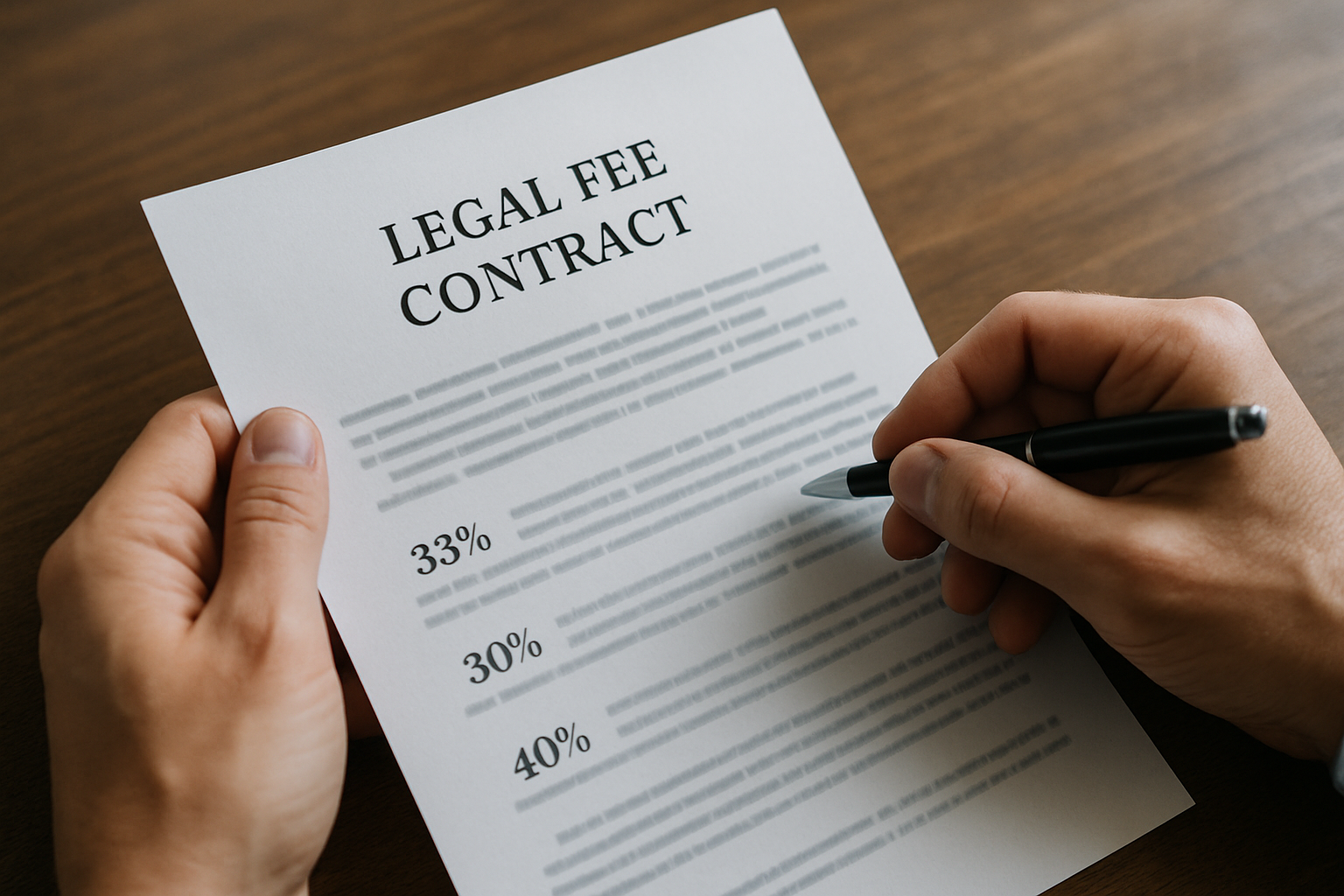
Reviewing a legal fee contract

It also aligns your lawyer’s interest with yours: the more they recover for you, the more they earn. Because of this, contingency fees are the standard arrangement in nearly all car accident and personal injury cases.

What Is the Standard Percentage?

The typical contingency fee is about one-third of the settlement, though the range runs from roughly 25% to 40% depending on the lawyer, the state, and the complexity of the case. Many firms use a sliding scale: a lower percentage if the case settles early, and a higher one if it requires filing a lawsuit or going to trial.

So a case that settles quickly might carry a 25% to 33% fee, while one that reaches trial could rise to 40%. Always get the specific percentages — and the triggers that change them — in writing before you sign.

What’s the Difference Between Fees and Case Costs?

This distinction catches many people by surprise. The contingency fee is the lawyer’s payment. Case costs are separate out-of-pocket expenses — court filing fees, medical record retrieval, expert witnesses, and postage. These can add up, especially in a complex case.

  • Fee: the lawyer’s percentage of the recovery.
  • Costs: filing fees, records, experts, and similar expenses.
  • Key question: are costs deducted before or after the fee is calculated?
  • Key question: do you owe costs if the case is lost?

Whether costs come out before or after the fee is calculated changes your net payout, so clarify it upfront.

How Does the Fee Affect Your Net Payout?

Consider a simple example. On a $30,000 settlement with a 33% fee, the attorney fee is about $10,000. If case costs are $2,000 and deducted separately, your net is roughly $18,000 — still often more than an unrepresented claimant would have recovered on the same crash.

That’s the trade-off worth understanding: the fee reduces your gross, but skilled representation frequently increases the total enough that you come out ahead. For a full breakdown, see our guide on what a car accident lawyer costs.

How Much Do Car Accident Lawyer Fees Take From Different Settlements?

Because the fee is a percentage, the dollar amount scales with your settlement. Here is what a standard 33% contingency fee looks like across common settlement sizes, and roughly what you keep before case costs:

SettlementLawyer fee (33%)You keep (approx.)
$10,000$3,300$6,700
$25,000$8,250$16,750
$50,000$16,500$33,500
$100,000$33,000$67,000
Estimates before separate case costs. A 40% trial fee would take proportionally more.

These figures show why the percentage matters more on larger settlements — and why a lawyer who recovers a bigger settlement can still leave you with more, even after the fee. Case costs (filing fees, experts) come out separately, so your true net depends on whether costs are deducted before or after the fee.

Can You Negotiate the Percentage?

Sometimes. Contingency percentages aren’t always fixed, and for a strong, straightforward claim a lawyer may agree to a lower rate. It never hurts to ask, and comparing fee agreements from two or three lawyers gives you leverage and a sense of the going rate.

That said, don’t choose on percentage alone. A lawyer who charges slightly more but recovers substantially more still leaves you better off. Weigh the fee against experience, communication, and your overall confidence in them.

Bottom line: expect a contingency fee of around one-third, ranging from 25% to 40% and often rising at trial, with no upfront cost and no fee if you lose. Get the percentage and cost terms in writing, compare a couple of lawyers, and weigh the fee against the value they add.

Why Does the Percentage Rise at Trial?

The jump reflects the extra work and risk. Settling a claim before a lawsuit is filed is relatively efficient. Once a case proceeds to litigation and trial, it demands far more time — discovery, depositions, expert witnesses, and court appearances — so the contingency percentage typically increases, often to around 40%.

This is why many fee agreements use a sliding scale tied to how far the case goes. Ask your lawyer exactly what triggers the higher rate, so you understand upfront how litigation would change your net recovery.

Is a Contingency Fee Worth It?

For most injury claims, yes. The fee reduces your gross settlement, but skilled representation frequently increases the total enough that you net more than you would alone — and you take on no upfront financial risk. If the lawyer recovers nothing, you generally owe no fee.

The arrangement is less compelling for minor, no-injury claims you could handle yourself. As always, a free consultation lets you compare a lawyer’s estimate of your claim’s value against the insurer’s offer before you decide.

Frequently Asked Questions

What percentage does a car accident lawyer usually take?

About one-third (33%) of the settlement is standard, with a common range of 25% to 40%. The percentage often rises if the case goes to trial. You typically pay no upfront fee and nothing at all if the lawyer doesn’t win.

Do I pay anything if my lawyer loses?

Under a contingency arrangement, you generally owe no attorney fee if the lawyer doesn’t win. However, some agreements still make you responsible for case costs, so confirm in writing whether you owe costs if the case is lost.

Are case costs included in the contingency fee?

No — case costs (filing fees, medical records, expert witnesses) are separate from the lawyer’s percentage. Ask whether costs are deducted before or after the fee is calculated, since that affects your net payout.

Can I negotiate my lawyer’s contingency fee?

Sometimes. Percentages aren’t always fixed, and for a strong, simple claim a lawyer may agree to a lower rate. Comparing fee agreements from a few lawyers gives you leverage, but weigh the fee against experience and results, not price alone.

How much does a car accident lawyer take from a $100,000 settlement?

At a standard 33% contingency fee, a lawyer would take about $33,000 from a $100,000 settlement, leaving you roughly $67,000 before case costs. If the case went to trial at a 40% fee, the lawyer’s share would be about $40,000. Case costs are deducted separately.

Related Guides

Best Car Accident Lawyer: How to Find & Choose One (2026)

Car accident lawyer meeting a client in a modern law office

To find the best car accident lawyer, focus on three things: a proven track record in personal injury, transparent contingency fees, and clear communication. Most reputable lawyers offer a free consultation, so you can compare several at no cost before deciding. The right fit often recovers far more than their fee.

New to this? Start with our complete guide: Car Accident Lawyer: When You Need One, Cost & How to Choose.

Key Takeaways

  • Choose a lawyer who focuses specifically on car accidents and personal injury.
  • Confirm they work on contingency — no fee unless you win.
  • Use free consultations to compare two or three lawyers before choosing.
  • Check reviews, state bar standing, and who will actually handle your case.

Where Should You Start Your Search?

Start with sources you can verify. Personal referrals from people who’ve had a similar claim are valuable, but back them up with independent research. State bar association directories let you confirm a lawyer is licensed and in good standing, and reputable review sites reveal patterns in how a firm treats clients.

Researching car accident lawyers on a laptop

Avoid choosing a lawyer purely from a billboard or a TV ad. Marketing spend says nothing about results. Build a short list of three or four candidates, then vet them properly rather than signing with the first name you see.

What Qualities Separate a Good Lawyer From a Great One?

Competence is the baseline; fit is what makes the difference. A great car accident lawyer combines relevant experience with clear, honest communication and a realistic view of your case. Look for these markers when you meet them:

  • Focus: personal injury and car accidents are their main practice, not a sideline.
  • Track record: experience with cases similar to yours in value and complexity.
  • Transparency: plain answers about fees, costs, and likely outcomes.
  • Communication: they explain things clearly and respond promptly.
  • Honesty: they give a realistic assessment, not inflated promises.

What Questions Should You Ask in the Consultation?

The free consultation is a two-way interview. Come prepared with your police report, medical records, and insurer correspondence, then ask direct questions. How much experience do you have with cases like mine? What is your fee, and who pays costs if we lose? Who will actually handle my case day to day?

Good lawyers welcome these questions and answer plainly. Vague or evasive replies — especially about fees or who does the work — are a signal to keep looking. For a full list, see our guide on questions to ask before hiring.

What Warning Signs Should Make You Walk Away?

Some behaviors are clear red flags. Be cautious of any lawyer who guarantees a specific settlement amount, since no one can promise a result. Pressure to sign immediately, vagueness about fees, or an unwillingness to say who will handle your case all suggest you should look elsewhere.

Because consultations are free, there is no cost to walking away and talking to someone else. Comparing a few lawyers is the single best way to avoid a poor fit and choose with confidence.

How Do Contingency Fees Affect Your Choice?

Nearly all car accident lawyers work on contingency, taking a percentage of your settlement — commonly around one-third — and nothing if they lose. This aligns their incentive with yours, but the exact percentage and how case costs are handled can vary between firms.

Don’t choose on price alone, though. A slightly higher fee from a lawyer who recovers substantially more still leaves you better off. Focus on overall value and trust, and get the fee agreement in writing before you commit.

Bottom line: the best car accident lawyer for you is experienced in cases like yours, transparent about fees, and easy to communicate with. Use free consultations to compare a few, watch for red flags, and choose on value and trust — not on advertising.

Should You Choose a Local or National Firm?

Both can work, but they offer different strengths. A local lawyer knows your state’s specific laws, the local courts, and often the insurers and adjusters you’ll deal with. A larger national firm may have more resources for complex, high-value cases, but you might work with support staff rather than a senior attorney.

For most car accident claims, a lawyer experienced in your state is the practical choice. Ask directly who will handle your case day to day — the answer matters more than the size of the firm’s advertising budget.

How Long Does It Take to Find the Right Lawyer?

You don’t need weeks. Building a short list and completing two or three free consultations can usually be done within a few days — and moving reasonably fast matters, because early legal involvement helps preserve evidence and protect your claim.

Just don’t rush the decision itself. Use those consultations to compare experience, fees, and communication style, then choose deliberately. A few days of careful vetting is a small investment for a decision that can shape your entire recovery.

Frequently Asked Questions

How do I know if a car accident lawyer is good?

Look for a focus on personal injury, a track record with similar cases, transparent contingency fees, strong reviews, and good standing with your state bar. A good lawyer communicates clearly and gives a realistic assessment rather than guaranteeing a specific result.

Is it worth hiring a car accident lawyer?

For injury claims, usually yes — represented claimants often recover more, frequently enough to net more even after the contingency fee. For a minor, no-injury crash, you can often handle it yourself. A free consultation helps you decide.

How much does it cost to hire a car accident lawyer?

Most work on contingency, taking a percentage of your settlement (commonly around one-third) and nothing if they lose. There are usually no upfront or hourly fees. Always confirm the exact percentage and who pays case costs in writing.

How many lawyers should I consult before choosing?

Two or three is a smart approach, and since consultations are typically free, it costs only time. Comparing their answers on experience, fees, case value, and communication helps you spot the best fit and any red flags.

Related Guides

Car Accident Lawyer vs. Handling It Yourself: Which Is Better?

Shaking hands with a car accident lawyer in an office

Whether to hire a lawyer or handle a car accident claim yourself comes down to injuries and disputes. For a minor, no-injury crash with clear fault, many people settle directly with the insurer. But once injuries are serious or fault is contested, a lawyer’s experience often recovers more than their fee costs.

New to this? Start with our complete guide: Car Accident Lawyer: When You Need One, Cost & How to Choose.

Key Takeaways

  • Handle it yourself for minor, no-injury crashes with clear fault and a fair offer.
  • Hire a lawyer when injuries are serious, fault is disputed, or the offer is low.
  • Lawyers work on contingency — no fee unless you win.
  • Free consultations let you compare your options at no cost or risk.

When Can You Handle a Claim Yourself?

Some claims genuinely don’t need a lawyer. If there are no injuries, fault is obvious, and the insurer’s offer covers your costs, handling it yourself keeps the entire settlement in your pocket. The key is honest documentation: photos, the police report, repair estimates, and a clear record of expenses.

Negotiating a car insurance claim by phone

Doing it yourself works best for straightforward property-damage claims. You negotiate directly with the adjuster, supply your evidence, and accept a fair figure. The moment injuries or disputes enter the picture, though, the calculation changes.

When Is Hiring a Lawyer the Better Choice?

Certain situations tip the balance firmly toward representation. Any one of these usually means a lawyer will protect — and often increase — your recovery:

  • Serious, permanent, or still-developing injuries.
  • Disputed or denied fault.
  • A settlement offer that clearly doesn’t cover your costs.
  • Multiple vehicles or parties involved.
  • An uninsured or underinsured at-fault driver.
  • Pressure to sign a release quickly.

Does a Lawyer Actually Recover More Money?

For injury claims, the evidence generally favors representation. Lawyers know how to value a claim accurately — including future medical costs and pain and suffering that people handling claims alone often overlook — and they negotiate from experience with what similar cases settle for.

The higher recovery frequently more than offsets the contingency fee. For a no-injury claim, though, the fee may not be justified, which is why the injury question is the real dividing line.

What Are the Risks of Going It Alone?

The biggest risk of self-handling is undervaluing your claim. Insurers negotiate these cases daily and can tell when a claimant is unsure of their case’s worth. Once you accept and sign a release, that money is final — you can’t reopen the claim even if injuries worsen.

The second risk is procedure: missing your state’s filing deadline, giving a recorded statement that hurts your case, or accepting a lowball first offer. A lawyer guards against all three, which is why the stakes of the case should drive your decision.

How Do You Decide Which Route to Take?

Weigh complexity and stakes. A minor, clear-cut, no-injury claim is a reasonable do-it-yourself project. Anything involving real injuries, disputed fault, or a low offer justifies at least a free consultation, since the downside of asking is minimal.

Because most lawyers work on contingency and consultations are free, you can get an experienced read on your claim’s value before deciding. That single conversation often makes the choice obvious.

Bottom line: handle a minor, no-injury crash yourself, but bring in a lawyer the moment injuries, disputed fault, or a low offer appear. With free consultations and contingency fees, the cost of at least asking is low — and for serious claims, representation usually pays for itself.

How Does Your State’s Law Affect the Decision?

Your state’s rules can tip the balance toward hiring a lawyer. In no-fault states, strict thresholds control when you can step outside the system to sue, and the paperwork is unforgiving. In comparative-fault states, the percentage of blame assigned to you directly cuts your payout — a technical fight where experience helps.

If your state has complex rules or a short filing deadline, the risk of a costly mistake handling the claim alone rises. When the legal framework is complicated, a free consultation is worth it even for a claim that seems moderate.

What Does a Lawyer Actually Do for You?

Understanding the work clarifies the value. Beyond negotiation, a car accident lawyer investigates fault, gathers evidence and expert opinions, values your claim including future costs, handles all insurer communication, and meets every procedural deadline.

Each of those tasks is a place where an unrepresented claimant can lose money or make a mistake. That’s why, for anything beyond a simple no-injury claim, the question is less about cost and more about how much is at stake.

In practice, the safest rule of thumb is simple: if you have to ask whether your case is too complex to handle alone, that uncertainty itself is a good reason to book a free consultation before making any decision.

Frequently Asked Questions

Can I settle a car accident claim without a lawyer?

Yes, especially for minor, no-injury crashes with clear fault and a fair offer. Document everything, negotiate directly with the adjuster, and don’t sign until the figure covers your costs. For serious injuries or disputes, a lawyer usually recovers more.

Do lawyers get you more money for a car accident?

For injury claims, typically yes — represented claimants often recover more, frequently enough to net more even after the contingency fee. Lawyers value claims accurately and negotiate from experience. For no-injury claims, the fee may not be justified.

What are the risks of handling a claim myself?

Mainly undervaluing your claim and procedural mistakes — missing a filing deadline, giving a harmful recorded statement, or accepting a lowball offer. Once you sign a release, the settlement is final, even if injuries later worsen.

When should I definitely hire a lawyer?

When injuries are serious, fault is disputed or denied, the offer is too low, multiple parties are involved, or the at-fault driver is uninsured. Any of these can dramatically change your claim’s value and how hard the insurer fights.

Related Guides

5 Questions to Ask a Car Accident Lawyer Before Hiring

A checklist of questions on a clipboard beside a lawyer's desk, professional

A free consultation isn’t just for the lawyer to evaluate you — it’s your chance to evaluate them. Asking the right questions up front can save you from a bad fit, surprise costs, or a lawyer who won’t give your case attention. Here are the questions that matter most.

New to this? Start with our complete guide: Car Accident Lawyer: When You Need One, Cost & How to Choose.

A legal gavel representing questions to ask a car accident lawyer

Key Takeaways

  • Ask about experience with cases like yours, not just car accidents generally.
  • Get the exact contingency percentage and who pays case costs if you lose.
  • Ask who actually handles your case — the lawyer or a paralegal.
  • Most consultations are free, so use them to compare 2–3 lawyers.

1. How Much Experience Do You Have With Cases Like Mine?

A lawyer who handles car accident injury claims daily is different from a general practitioner. Ask how many cases like yours they’ve handled, their typical results, and whether they’ve taken cases to trial. Specific experience with your injury type and your state’s laws matters most.

2. What Is Your Fee, and Who Pays Costs If We Lose?

Get the exact contingency percentage in writing — usually around 33%, up to 40% at trial. Crucially, ask whether you must repay “case costs” (filing fees, expert witnesses, records) if the case loses. Some firms absorb these; others bill you. This is the single most overlooked question.

3. Who Will Actually Handle My Case?

At larger firms, the lawyer you meet may not be the one doing the work. Ask whether the attorney or a paralegal manages your case day-to-day, who you’ll communicate with, and how quickly they typically respond. You want to know who’s really accountable.

4. What Is My Case Worth, and What Are the Risks?

A good lawyer won’t promise a number, but should explain how they value your claim — medical bills, lost wages, pain and suffering — and the honest risks. Be wary of anyone who guarantees a big payout; outcomes depend on evidence, your state’s fault rules, and insurance limits.

5. How Long Will My Case Take?

Timelines vary — simple cases settle in 3 to 6 months, complex ones can take a year or more. Ask for a realistic estimate and what could speed it up or slow it down. This sets expectations and reveals whether the lawyer communicates clearly.

Use free consultations to compare a few lawyers before you commit — it costs nothing.

Why Do These Questions Matter So Much?

Hiring the right lawyer can be the difference between a lowball settlement and full compensation, so the interview matters. These questions reveal not just competence but fit — whether the lawyer communicates clearly, has handled cases like yours, and structures fees in a way you understand.

A good attorney will welcome these questions and answer them plainly. Vague or evasive answers, especially about fees or who will handle your case, are a signal to keep looking.

What Red Flags Should Make You Walk Away?

Just as important as good answers are the warning signs. Be cautious of any lawyer who exhibits these behaviors during your consultation:

  • Guarantees a specific settlement amount — no one can promise results.
  • Is vague or evasive about fees and case costs.
  • Pressures you to sign immediately.
  • Won’t say who will actually work on your case.
  • Has poor reviews or an unclear standing with the state bar.

Because the initial consultation is free, you can — and should — talk to more than one lawyer before deciding. Comparing answers helps you choose with confidence.

How Many Lawyers Should You Consult?

Talking to two or three lawyers before deciding is a smart move, and because initial consultations are typically free, it costs you nothing but time. Comparing their answers on experience, fees, case value, and communication style helps you spot both strong candidates and red flags.

You’re not obligated to hire the first lawyer you meet. The goal is to find someone competent, transparent, and easy to work with — and a few conversations make that choice far clearer than settling on the first name you find.

What Should You Bring to the Consultation?

Come prepared so the lawyer can give you a meaningful assessment. Bring the police report, photos, medical records and bills, insurance information, and any correspondence with the insurer. The more complete your file, the better the lawyer can estimate your case’s value.

Having everything organized also signals that you’re a serious, cooperative client — and it makes the free consultation far more productive for both sides.

Frequently Asked Questions

Should I meet more than one lawyer?

Yes, if you can. Since most consultations are free, meeting 2–3 lawyers lets you compare experience, fees, and communication style. Pick the one who explains things clearly and seems genuinely interested in your case.

What documents should I bring to a consultation?

Bring the police report, photos of the crash and injuries, medical records and bills, insurance information, and any correspondence with the insurer. The more complete your documentation, the better the lawyer can assess your case.

Is the consultation really free?

For most car accident lawyers, yes. The free consultation lets you discuss your case and options with no obligation. Confirm it’s free when you book, and remember you’re under no pressure to hire them afterward.

Bottom line: the right questions turn a nerve-wracking decision into a confident one. Ask about experience, fees, who handles your case, its likely value, and the timeline — then compare a couple of free consultations. Clear, honest answers point you to the lawyer worth hiring.

Conclusion

The free consultation works both ways — use it to vet the lawyer. Ask about relevant experience, the exact fee and cost structure, who handles your case, realistic value and risks, and the timeline. Comparing two or three lawyers helps you find one you trust before you commit.

Related Guides

When Should You Hire a Car Accident Lawyer?

A person shaking hands with a lawyer in a professional office symbolizing hiring

Not every crash needs a lawyer — but the wrong call can cost you thousands. The rule of thumb: handle it yourself only if there are no injuries, clear fault, and a fair offer. The moment injuries, disputed fault, or a denial appear, it’s worth talking to an attorney (Super Lawyers, 2026).

New to this? Start with our complete guide: Car Accident Lawyer: When You Need One, Cost & How to Choose.

A court gavel representing when to hire a car accident lawyer

Key Takeaways

  • You may not need a lawyer for minor, no-injury crashes with clear fault.
  • Hire one for injuries, disputed fault, denials, or lowball offers.
  • Represented claimants recover 3.5x more on average (Insurance Research Council).
  • Most consultations are free and lawyers work on contingency — low risk to ask.

When You Probably Don’t Need a Lawyer

Some claims are simple enough to handle alone. If there are no injuries, fault is clear and uncontested, and the insurer offers a fair amount that covers your repairs, a lawyer’s fee may cost more than it adds. Property-damage-only fender-benders often fall into this category.

When You Should Hire One

Certain red flags make legal help worthwhile. Consider hiring a lawyer when:

  • You suffered injuries or face significant medical bills
  • Fault is disputed, or you’re in a strict contributory-negligence state
  • The insurer denied your claim or is pressuring you to settle fast
  • You’re asked to sign a release before treatment is complete
  • A serious injury, permanent disability, or fatality is involved

Does a Lawyer Actually Get You More?

Often, yes. The Insurance Research Council found that represented claimants recover about 3.5 times more on average than those who handle claims alone — which usually more than covers the contingency fee. Insurers also tend to take represented claims more seriously, knowing a lawsuit is possible.

What Does a Car Accident Lawyer Do?

A lawyer handles the entire claim so you can focus on recovery: investigating the crash, gathering evidence, calculating your full damages (including future costs), negotiating with the adjuster, and filing a lawsuit if needed. Because they work on contingency, their incentive is to maximize your recovery, not just close the file.

Unsure if your case needs a lawyer? A free consultation costs nothing and clarifies your options.

What Warning Signs Mean You Should Call a Lawyer?

Certain red flags signal that a claim has outgrown a do-it-yourself approach. If you notice any of these, a free consultation is worth it before you go further:

  • The insurer disputes or denies fault.
  • Your injuries are serious, permanent, or still developing.
  • Multiple vehicles or parties are involved.
  • The settlement offer clearly doesn’t cover your costs.
  • You’re being pressured to sign a release quickly.
  • The at-fault driver was uninsured or underinsured.

Any one of these can dramatically change what your claim is worth — and how hard the insurer will fight it.

How Soon After a Crash Should You Hire One?

Earlier is generally better for anything beyond a minor claim. An attorney brought in early can preserve evidence, handle insurer communication before you say something harmful, and make sure you don’t miss deadlines or accept a premature offer.

There’s also the statute of limitations to consider — waiting too long can cost you the right to sue entirely. Since consultations are free and most lawyers work on contingency, there’s little downside to getting advice sooner rather than later.

Can You Hire a Lawyer After Starting a Claim Yourself?

Yes. Many people begin handling a claim alone and bring in a lawyer once it gets complicated — fault is disputed, the offer is too low, or injuries turn out to be serious. You can switch to representation at almost any point before you sign a final release.

The one caveat is timing: the earlier a lawyer joins, the more they can do to preserve evidence and avoid mistakes. If a claim starts feeling out of your depth, it’s better to get advice sooner than to wait until you’ve already accepted a bad offer.

Does Hiring a Lawyer Mean You’ll Go to Court?

Usually not. The vast majority of car accident claims settle out of court, even when a lawyer is involved. Hiring an attorney is more often about stronger negotiation and accurate valuation than about litigation.

If a fair settlement can’t be reached, filing a lawsuit becomes an option — but even then, most cases settle before trial. Representation increases your leverage without necessarily putting you in a courtroom.

Frequently Asked Questions

Is it worth getting a lawyer for a minor accident?

Usually not, if there are no injuries, fault is clear, and the offer is fair. But even “minor” crashes can cause delayed injuries like whiplash, so see a doctor first. If injuries appear or the offer seems low, a free consultation is worthwhile.

How soon should I contact a lawyer?

The sooner the better if injuries or disputes are involved. Early involvement preserves evidence, prevents mistakes with insurers, and ensures you don’t miss your state’s filing deadline. Most consultations are free.

What if I already accepted a settlement?

Once you sign a release, the settlement is usually final and can’t be reopened, even if your injuries worsen. That’s why it’s best to consult a lawyer before signing, especially if injuries are still being treated.

Bottom line: skip the lawyer for a minor, no-injury fender-bender, but call one the moment fault is disputed, injuries are serious, or an offer falls short. Because consultations are free and fees are contingent, getting advice early carries little risk and often protects far more than it costs.

Ultimately, the decision comes down to complexity and stakes: the more serious your injuries or the more an insurer pushes back, the more a lawyer’s experience tends to pay for itself.

Conclusion

Handle a truly minor, no-injury crash yourself; bring in a lawyer the moment injuries, disputed fault, denials, or settlement pressure appear. With free consultations and contingency fees, the downside of at least asking is low — and represented claimants often recover substantially more.

Related Guides

How Much Does a Car Accident Lawyer Cost?

A contingency-fee agreement document with a percentage symbol and a pen on a desk

Most car accident lawyers cost nothing upfront. They work on a contingency fee — typically about 33% if your case settles before a lawsuit, rising to 40% if it goes to trial (Nolo, 2026). You only pay if they win.

New to this? Start with our complete guide: Car Accident Lawyer: When You Need One, Cost & How to Choose.

Courtroom gavel representing car accident lawyer fees

Key Takeaways

  • Most car accident lawyers charge nothing upfront — they use contingency fees.
  • The standard fee is about 33% if settled before trial, up to 40% if it goes to trial.
  • “Case costs” (filing fees, records) are separate from the lawyer’s percentage.
  • Some states cap fees; most lawyers offer a free first consultation.

What Is a Contingency Fee?

A contingency fee means the lawyer’s payment is “contingent” on winning. You pay nothing upfront, and the fee comes out of your settlement only if they recover money for you. If they lose, they collect no fee. This aligns their incentive with yours — they only get paid when you do.

How Much Is the Standard Percentage?

The most common figure is one-third (33%), though the range runs from about 20% to 40% (Mighty, 2026). The American Bar Association cites 33.3% as the industry norm, rising toward 40% for cases that require a lawsuit or trial.

Why the Percentage Changes (Sliding Scale)

Many firms use a stepped scale based on how far the case goes:

  • 25% — settled by negotiating with the adjuster, no lawsuit filed
  • 33% — a lawsuit is filed but the case settles before trial
  • 40% — the case goes to trial

The more work and risk involved, the higher the percentage.

Fees vs. Case Costs — Know the Difference

The lawyer’s fee is their percentage. Case costs are separate out-of-pocket expenses — court filing fees, expert witnesses, police reports, medical records. Most firms advance these and deduct them from your settlement at the end. But read the fine print: some agreements make you repay costs even if you lose, and costs can reach thousands.

A Sample Calculation

If your lawyer charges 33% and you win a $90,000 settlement, the fee is $30,000. After subtracting any case costs, you receive the rest. Always get the fee agreement in writing so you know exactly what comes out.

Most car accident lawyers offer a free consultation — there’s little downside to asking.

Are There Any Upfront or Hourly Fees?

With a contingency-fee arrangement — standard in car accident cases — there are typically no upfront or hourly charges. The lawyer is paid a percentage of your settlement only if they win. If they don’t recover anything, you generally owe no attorney fee, which is what makes legal help accessible after a crash.

Always confirm this in the written fee agreement. Ask specifically whether you owe anything if the case is lost, and whether case costs (separate from the fee) come out of your recovery or are absorbed by the firm.

Is Hiring a Lawyer Worth the Cost?

For minor, no-injury claims, the fee may not be justified — you can often handle those yourself. But for injury claims, studies and industry data consistently show represented claimants tend to recover more, frequently enough to net more even after the contingency fee is deducted.

The value comes from accurate claim valuation, skilled negotiation, and knowing what similar cases settle for. Because the initial consultation is usually free, you can get an experienced opinion on whether representation makes financial sense before committing.

How Does the Fee Compare to Handling It Yourself?

The contingency fee only pays off if the lawyer adds more value than they cost. For serious injury claims, the data generally favors representation — the higher settlements often more than offset the fee. For minor, no-injury claims, the math can flip, and self-handling keeps more in your pocket.

The honest answer depends on your case. A free consultation lets you compare a lawyer’s estimate of your claim’s value against what the insurer is offering, so you can decide whether the fee is worth it before committing.

What Questions Should You Ask About Fees?

Before signing, get the fee terms in writing and ask pointed questions: What percentage do you take? Does it change if the case goes to trial? Who pays case costs if we lose? Are costs deducted before or after your fee is calculated?

Clear answers prevent unpleasant surprises when the settlement arrives. A reputable lawyer will explain all of this plainly — evasiveness about fees is itself a warning sign.

Frequently Asked Questions

Do I pay a car accident lawyer if I lose?

Usually you pay no fee if you lose, since the fee is contingent on winning. But “case costs” can be different — some agreements require you to repay those even in a loss. Read your contingency agreement’s fine print carefully.

Can I negotiate the contingency fee?

Sometimes, especially if the case is straightforward and the lawyer does less work. There’s no guarantee, but it’s worth asking — for example, if the insurer settles quickly after a single demand letter.

Are lawyer fees capped by law?

In some states, yes. Florida uses a tiered cap (33.3% up to $1 million, less above that), and Michigan limits fees to one-third. Check your state’s rules, since caps vary widely.

Bottom line: contingency fees mean you usually pay nothing upfront and nothing if you lose — the lawyer takes a percentage only when you win. For injury claims, that structure makes experienced help accessible, and a free consultation lets you weigh the fee against your claim’s likely value before deciding.

Conclusion

A car accident lawyer typically costs about 33% of your recovery (up to 40% at trial), with no upfront payment and case costs billed separately. Because consultations are usually free and you pay nothing unless you win, there’s little risk in at least asking a lawyer about your situation.

Related Guides

How Is Fault Determined in a Car Accident?

A magnifying glass over a car accident diagram symbolizing fault investigation

Fault determines who pays after a crash, and it’s decided by evidence — not by who apologizes at the scene. Insurers and, if needed, courts weigh police reports, photos, witness statements, and traffic laws to assign responsibility. In some states, being even 1% at fault can bar your recovery entirely.

Last updated: July 2026.

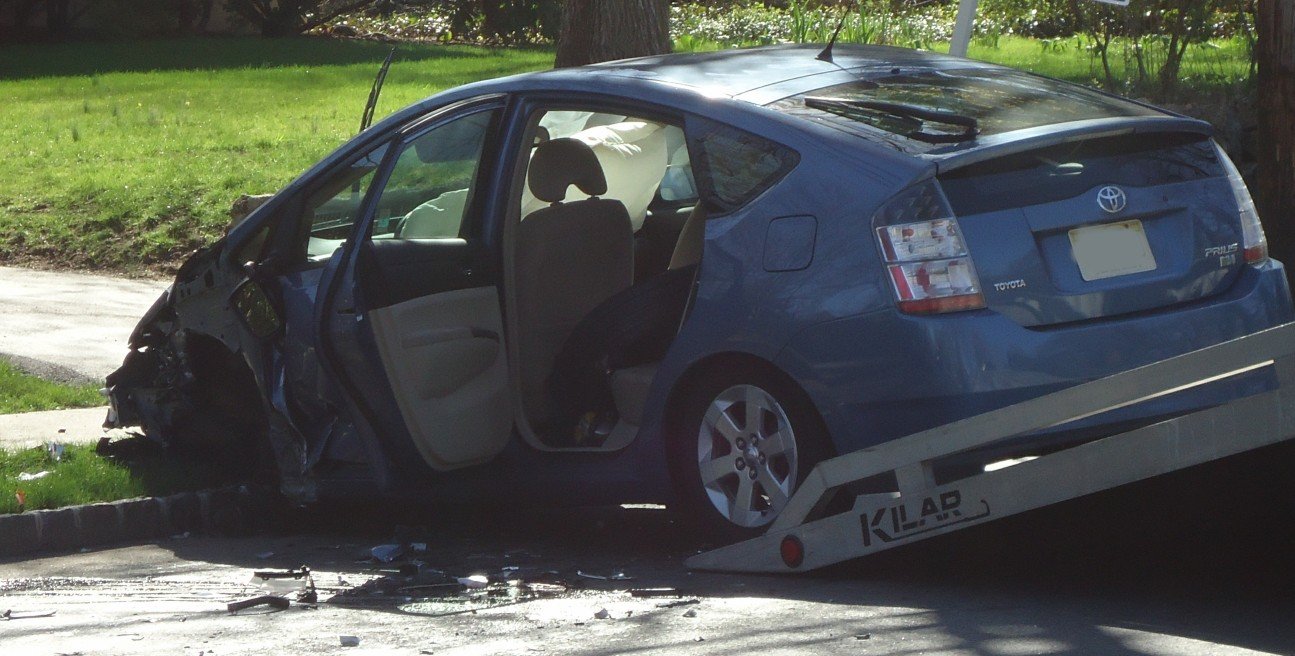
Crash scene with deployed airbags used to help determine fault

Key Takeaways

  • Fault is decided by evidence, not on-the-spot apologies.
  • Police reports, photos, and witness statements carry the most weight.
  • Shared-fault rules vary by state and can reduce or block your recovery.
  • Never admit fault at the scene — let the evidence speak.

Who Decides Who Is at Fault?

In most cases, insurance adjusters make the first fault determination by reviewing the evidence. If the parties dispute it and the case goes to court, a judge or jury decides. Either way, the decision rests on documented facts — which is why what you collect at the scene matters so much.

What Evidence Is Used to Determine Fault?

Several types of evidence carry the most weight when assigning fault:

  • Police report — a neutral account, often including the officer’s assessment
  • Photos and video — vehicle damage, skid marks, traffic signals, dashcam footage
  • Witness statements — neutral third parties who saw the crash
  • Traffic laws — which driver violated a rule (e.g., ran a red light)
  • Vehicle damage patterns — which can show how the collision occurred

What Are the Rules for Fault Determination in a Car Accident?

Fault determination rules are the framework insurers and courts follow to assign blame. While the exact wording varies by state, the same core principles drive nearly every decision:

  • Duty of care — every driver must operate their vehicle safely and follow traffic laws.
  • Breach — a driver who violates a rule (speeding, running a red light) breached that duty.
  • Causation — the breach must have actually caused the crash, not just coincided with it.
  • Right-of-way rules — who legally had priority often decides fault at intersections.
  • Presumption rules — rear-end and left-turn crashes carry near-automatic fault presumptions.

These rules apply whether you are in the US or elsewhere — the same duty-breach-causation logic underpins fault determination rules in the UK and most common-law countries, though thresholds and comparative-fault limits differ. Once fault is assigned, your state’s no-fault or at-fault system decides how much you can actually recover.

How Does Shared Fault Affect Your Claim?

Many crashes involve shared blame, and your state’s rules decide what that means. In pure comparative states, a 20% fault finding cuts a $100,000 award to $80,000. In strict contributory-negligence states like North Carolina, being even 1% at fault can bar recovery entirely.

Why You Should Never Admit Fault

A casual “I’m sorry” at the scene can be treated as an admission of fault, even if the other driver was mostly responsible. Stick to the facts with police and insurers, avoid speculation, and let the evidence determine fault. This single habit can protect thousands of dollars in your claim.

Being blamed for a crash that wasn’t your fault? A free attorney review can help you fight back.

How Do Insurance Companies Assign Fault?

After a crash, each driver’s insurer investigates and assigns a percentage of fault based on the evidence: the police report, photos, statements, vehicle damage, and traffic laws. In many cases the insurers negotiate with each other to agree on an allocation, which then drives who pays what.

Certain situations carry near-automatic fault presumptions — for example, rear-end collisions usually place fault on the driver behind, and left-turn crashes often fall on the turning driver. But these are starting points, not absolutes, and strong evidence can shift them.

What Can You Do If You Disagree With the Fault Decision?

You are not stuck with an insurer’s fault finding. If you believe it’s wrong, you can dispute it by submitting additional evidence — new photos, witness statements, a dashcam clip, or the full police report — and asking for a formal review.

  • Request the insurer’s reasoning for the fault decision in writing.
  • Provide any evidence that contradicts their version.
  • Get statements from witnesses who saw the crash.
  • Escalate to a supervisor or file a complaint with your state insurance department.
  • Consult an attorney if the fault dispute involves significant money.

Because shared-fault rules can sharply cut your payout, even a small change in the assigned percentage can be worth fighting for.

How Does Fault Affect What You Can Recover?

Fault and money are directly linked. In most states, your compensation is reduced by your share of fault — a 20% fault finding cuts a $50,000 recovery to $40,000. In a handful of strict “contributory negligence” states, being even 1% at fault can bar you from recovering anything at all.

That’s why the fault percentage is often the most fiercely negotiated part of a claim. Even a small shift can mean thousands of dollars, so it pays to document the crash thoroughly and challenge any fault finding you believe is unfair.

Can Fault Be Split Between Both Drivers?

Yes — shared fault is common. Insurers often assign a percentage to each driver, such as 70/30, based on the evidence. Under comparative negligence rules, your recovery is then reduced by your share. Because even a modest change in that split can shift thousands of dollars, it’s worth documenting the crash carefully and disputing any percentage you believe is unfair.

Frequently Asked Questions

Does the police report decide who is at fault?

Not entirely. A police report carries significant weight and often includes the officer’s opinion, but insurers and courts make the final call using all available evidence. A report can be challenged with photos, witnesses, and other proof.

What if both drivers are partly at fault?

Your recovery depends on your state’s shared-fault rule. Most states reduce your award by your percentage of blame. A few strict states bar recovery if you’re even slightly at fault, so clear evidence of the other driver’s responsibility is critical.

Can fault be changed after the insurer decides?

Yes. An insurer’s fault determination isn’t final. You can dispute it with additional evidence, and if negotiation fails, the matter can go to court. An attorney can help gather proof and challenge an unfair fault decision.

What are the rules for determining fault in a car accident?

Fault is determined using duty of care, breach of that duty, and causation. Insurers weigh the police report, photos, witness statements, traffic-law violations, and right-of-way rules. Rear-end and left-turn crashes carry near-automatic fault presumptions that strong evidence can still shift.

Bottom line: fault decides who pays and how much, so it’s worth protecting. Document the scene thoroughly, avoid admitting blame, and don’t accept an unfair fault percentage without challenging it — even a few points can be worth thousands of dollars.

Conclusion

Fault is the foundation of every car accident claim, and it’s built on evidence. Document the scene thoroughly, never admit blame, and understand your state’s shared-fault rules. When fault is disputed — especially in strict states — a free legal consultation can protect your right to recover.

Related Guides