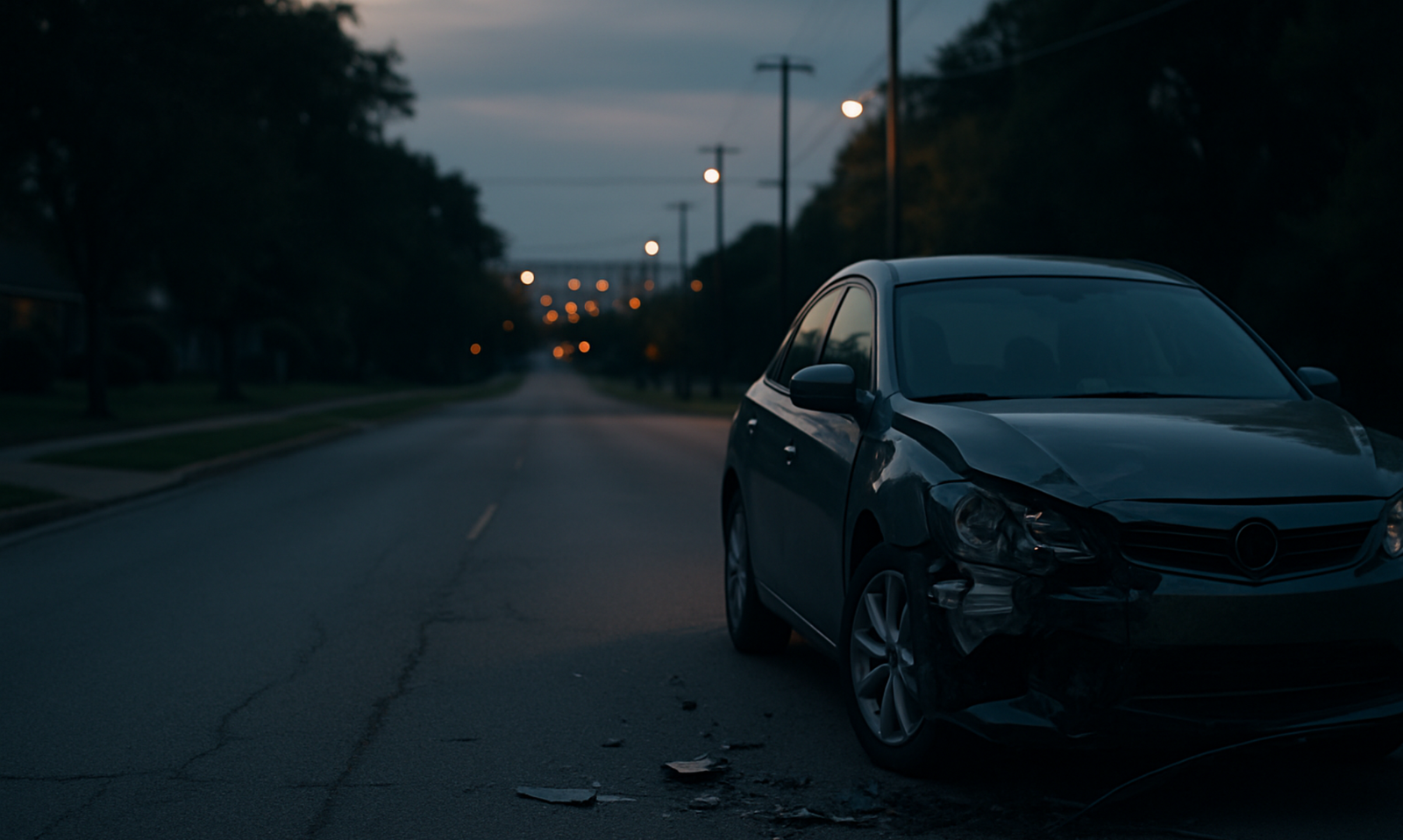
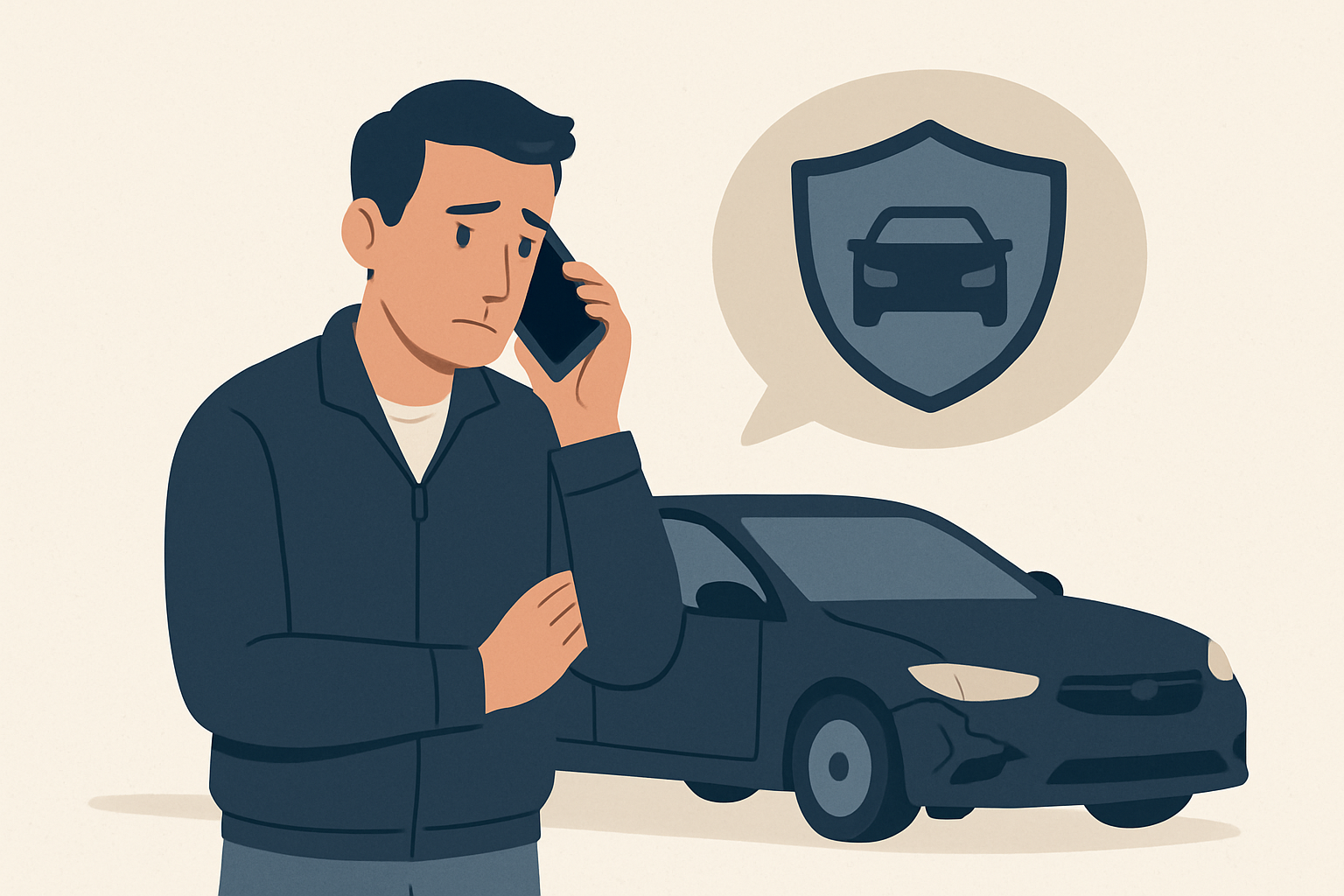
If an uninsured driver — or a hit-and-run driver — causes your crash, your own Uninsured Motorist (UM) coverage usually becomes your main path to compensation (Progressive, 2026). In most states, a driver who flees is treated as “uninsured,” so the same coverage applies.
Key Takeaways
- Your Uninsured Motorist (UM) coverage is usually your main recovery source.
- Hit-and-runs are typically treated as “uninsured” claims.
- UM claim deadlines can be short — sometimes as few as 30 days.
- Suing an uninsured driver rarely pays, since they often have no assets.
What Should You Do at the Scene?
Call 911 and get a police report — it’s especially important with uninsured drivers and hit-and-runs (State Farm, 2026). Document everything with photos, and for a hit-and-run, note any plate, make, or model details. Don’t chase a fleeing driver — your safety comes first.
What Is Uninsured Motorist (UM) Coverage?
UM coverage steps in when the at-fault driver has no insurance — your own insurer essentially “stands in the shoes” of the at-fault driver. It usually has two parts:
- Uninsured Motorist Bodily Injury (UMBI): covers your injuries
- Uninsured Motorist Property Damage (UMPD): covers damage to your car (in some states)
UM coverage can even apply if you’re hit as a pedestrian or in someone else’s car.
How Do You File a UM Claim?
Report the claim to your own insurer as soon as possible and ask whether UM coverage applies. Watch the deadline closely — some insurers allow as few as 30 days for UM claims (Nolo, 2026). An adjuster will investigate, so keep your police report, photos, and medical records ready.
What Other Coverage Can Help?
If you don’t have UM coverage, or want to supplement it, these may help:
- Collision coverage — repairs your car regardless of fault (after your deductible)
- MedPay or PIP — covers medical bills regardless of fault
- Health insurance — a fallback for medical costs (not lost wages)
Can You Sue an Uninsured Driver?
You can, but manage expectations. Even if you win a judgment, drivers who can’t afford insurance often have no assets to collect from — so enforcing it can be a losing battle. For most people, a UM claim through their own policy is the realistic path to compensation.
UM claim denied or delayed? A free attorney review can help you push your own insurer.
What If Your Damages Exceed Your UM Coverage?
Uninsured motorist coverage only pays up to your policy limit, so a severe injury can exceed it. If that happens, you may be able to pursue the at-fault driver personally for the remainder — though collecting from someone who couldn’t afford insurance is often difficult in practice.
This is exactly why carrying higher UM limits is worth considering. Because uninsured and underinsured drivers are common, robust UM coverage is one of the most valuable protections on your own policy, and it typically costs relatively little to increase.
How Does Underinsured Motorist Coverage Differ?
Uninsured motorist (UM) coverage applies when the at-fault driver has no insurance at all. Underinsured motorist (UIM) coverage kicks in when they have insurance, but not enough to cover your damages. Many policies bundle them together as UM/UIM.
With UIM, you first collect the at-fault driver’s limited coverage, then your own UIM policy makes up the difference up to your limit. Filing these claims is done with your own insurer, so keep the same careful documentation you would use against any other insurance company.
Why Is Uninsured Motorist Coverage So Important?
A large share of drivers on the road carry no insurance or too little, which means the risk of being hit by one is real. Without UM/UIM coverage, you could be stuck paying your own medical bills after a crash that wasn’t your fault — and trying to collect from an uninsured driver personally is often fruitless.
For a relatively small addition to your premium, UM/UIM shifts that risk to your insurer. It’s widely regarded as one of the most valuable coverages you can carry, precisely because it protects you from other people’s failure to insure.
Frequently Asked Questions
Does my insurance cover a hit-and-run?
Usually yes, through Uninsured Motorist coverage, since a fleeing driver is typically treated as “uninsured.” Collision coverage can also repair your car. Report the hit-and-run to police quickly — often within 24 to 72 hours — to protect your claim.
How long do I have to file an uninsured motorist claim?
Deadlines can be short — some insurers allow as few as 30 days for UM and underinsured claims. File as soon as you learn the other driver has no or insufficient insurance. Check your policy and report promptly to avoid losing coverage.
What if I don’t have uninsured motorist coverage?
You may still use collision coverage for vehicle damage and MedPay or PIP for medical bills, both of which apply regardless of fault. Health insurance can help with medical costs. Suing the driver directly is an option but often doesn’t pay.
Bottom line: being hit by an uninsured driver is stressful, but the right coverage turns a potential disaster into a manageable claim. Report it properly, lean on your UM/UIM coverage, and document everything as you would against any insurer. If your damages exceed your limits, get legal advice before signing anything.
Conclusion
Being hit by an uninsured or hit-and-run driver is stressful, but you usually have options. Call the police, document everything, and file promptly under your own UM coverage — mindful of short deadlines. Because rules vary by state, a free legal consultation can help with serious or disputed claims.
Disclaimer: This article is for general informational purposes only and does not constitute legal or insurance advice. Coverage and rules vary by state and policy. Check your policy and consult a licensed attorney or your insurer about your specific situation.