
In 2024, roughly 2.42 million people were injured in motor vehicle crashes across the United States (Advocates for Highway and Auto Safety, citing NHTSA, 2025). The minutes right after a crash shape your health, your insurance claim, and any legal case. This guide walks you through what to do, step by step.

Key Takeaways
- Never leave the scene — stop, turn on hazards, and check for injuries first.
- Call 911 and get a police report; it is critical for insurance and legal claims.
- See a doctor even if you feel fine — some injuries appear hours or days later.
- Document everything and avoid admitting fault at the scene.
What Should You Do Immediately After a Car Accident?
Stop your vehicle, stay calm, and check everyone for injuries before doing anything else. Leaving the scene of an injury crash is a crime in every U.S. state. Move to the shoulder if the cars are drivable and it is safe, then turn on your hazard lights to warn other drivers.
If anyone is hurt or the road is blocked, leave the vehicles where they are and wait for police. Your safety comes before paperwork.
When Should You Call 911 and the Police?
Call 911 any time there are injuries, major damage, or a disagreement about fault. A police report creates an official record that insurers and attorneys rely on. With about 36,640 people projected to have died in crashes in 2025 (NHTSA, 2026), responders treat every call seriously.
Even for minor fender-benders, many states require you to report a crash involving injury or damage above a set dollar amount. When in doubt, call.
What Information Should You Exchange and Document?
Collect every detail you can before leaving the scene — memories fade and cars get repaired fast. Strong documentation is the single biggest factor in how smoothly a claim goes.
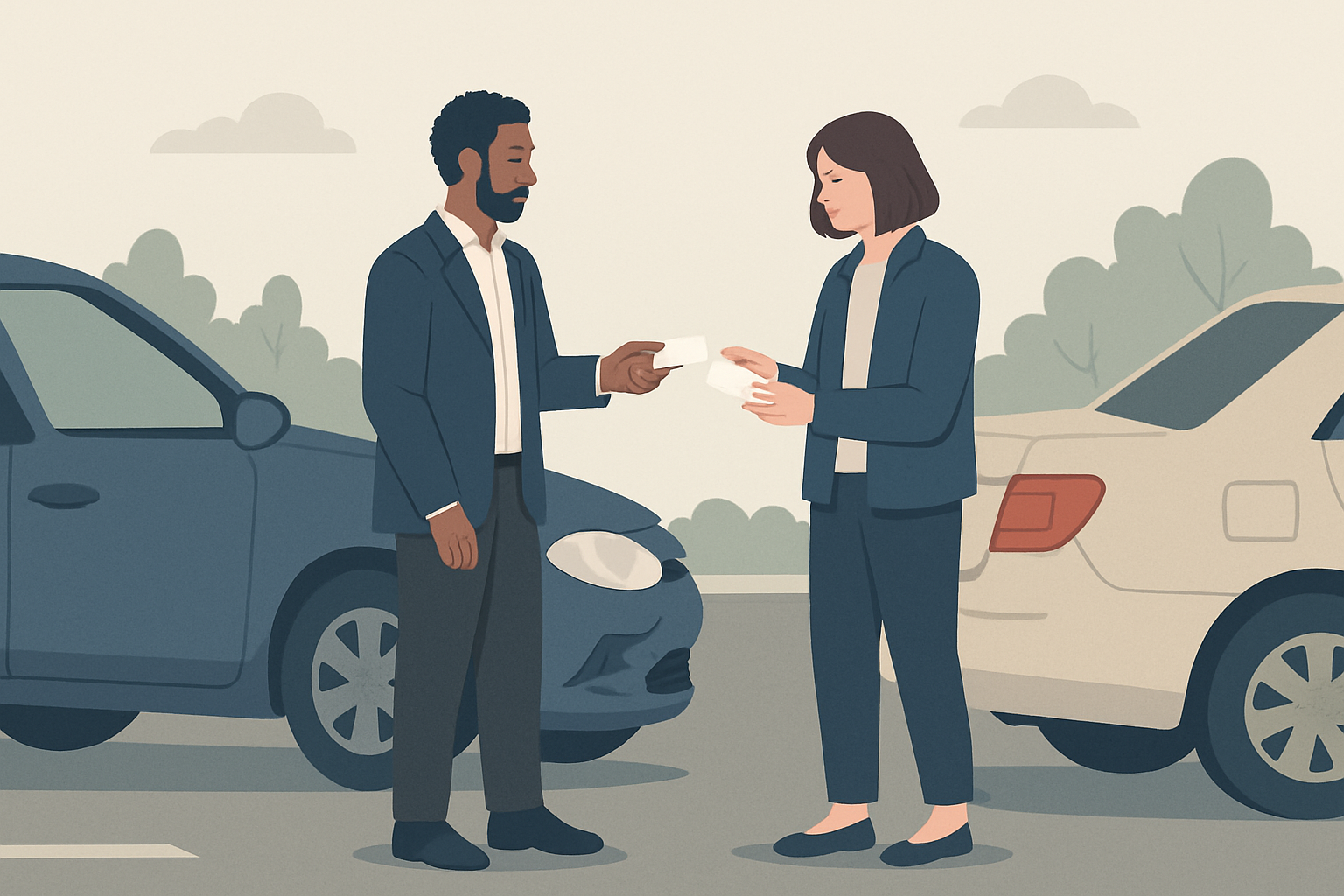
Exchange with the other driver
- Full name and contact information
- Driver’s license number
- License plate and vehicle make/model
- Insurance company and policy number
Document the scene yourself
- Photos of all vehicle damage, from multiple angles
- Road conditions, traffic signs, and signals
- Any visible injuries
- Names and phone numbers of witnesses
Why You Should Avoid Admitting Fault
Stick to the facts and never say “I’m sorry” or “it was my fault” at the scene. Fault is decided later by insurers and, if needed, the courts — based on evidence, not on-the-spot apologies. A casual admission can be used against you even if the other driver was mostly responsible.
Describe what happened plainly to the police, but avoid speculation about who caused the crash.
When Should You See a Doctor and Notify Your Insurer?
See a doctor as soon as possible — even if you feel fine. Injuries like whiplash, concussions, and internal trauma often show up hours or days later. Prompt medical records also link your injuries directly to the crash, which protects any future claim.
Notify your insurance company quickly to start the claims process. Give them the facts and your documentation, but you are not required to give a recorded statement to the other driver’s insurer.
Injured in a crash that wasn’t your fault? A local attorney can review your case for free.
Find out what your claim may be worth before talking to the insurance company.
How Do You Deal With the Other Driver’s Insurance Company?
Soon after a crash, the other driver’s insurer (the “third-party” adjuster) may call you. Be polite but cautious. You are not required to give a recorded statement to the other side’s insurance company, and doing so early — before you know the full extent of your injuries — can hurt your claim. Stick to basic facts: the date, location, and that a crash occurred.
Avoid speculating about fault, your injuries, or your speed. A simple “I’m still being evaluated by my doctor” is enough. Anything you say can be used to reduce or deny your payout, so it is often wise to let your own insurer or an attorney handle communication with the other side.
What Mistakes Should You Avoid After a Crash?
Certain missteps in the first days can quietly undermine a claim. The most common ones are easy to avoid once you know them:
- Skipping medical care: gaps in treatment let insurers argue you weren’t really hurt.
- Posting on social media: photos or check-ins can be used to dispute your injuries.
- Accepting a fast cash offer: early lowball settlements rarely cover long-term costs.
- Throwing away evidence: keep damaged items, receipts, and the police report number.
- Admitting fault: even a casual “I’m sorry” can be treated as an admission.
Document everything in one place — a folder or phone note with photos, medical visits, and expenses. Good records are the single most useful thing you can build in the days after a crash, and they make any later claim far stronger.
Frequently Asked Questions
How long do I have to file a car accident claim?
Most U.S. states give you 2 to 3 years to file a personal injury claim after a car accident, though some are shorter. The deadline (called the statute of limitations) varies by state, so check your state’s rules or ask an attorney before time runs out.
Should I call the police for a minor accident?
Yes, in most cases. A police report creates an official record even for minor crashes, and many states legally require reporting if there is injury or damage above a set amount. It also protects you if the other driver later changes their story.
Do I need a lawyer after a car accident?
Not always. For minor crashes with no injuries, you may handle it yourself. But if you were injured, fault is disputed, or the insurer offers a low settlement, a lawyer can often increase your recovery. Most offer free consultations.
Conclusion
The steps you take in the first hour after a crash can protect your health and your claim for months afterward. Stay safe, call for help, document everything, and get checked by a doctor. When injuries or disputes are involved, talking to a qualified attorney is often the smartest next step.
Disclaimer: This article is for general informational purposes only and does not constitute legal advice. Laws vary by state and change over time. Consult a licensed attorney in your jurisdiction for advice about your specific situation.